
What are the advantages and disadvantages of through-hole and surface-mount components?
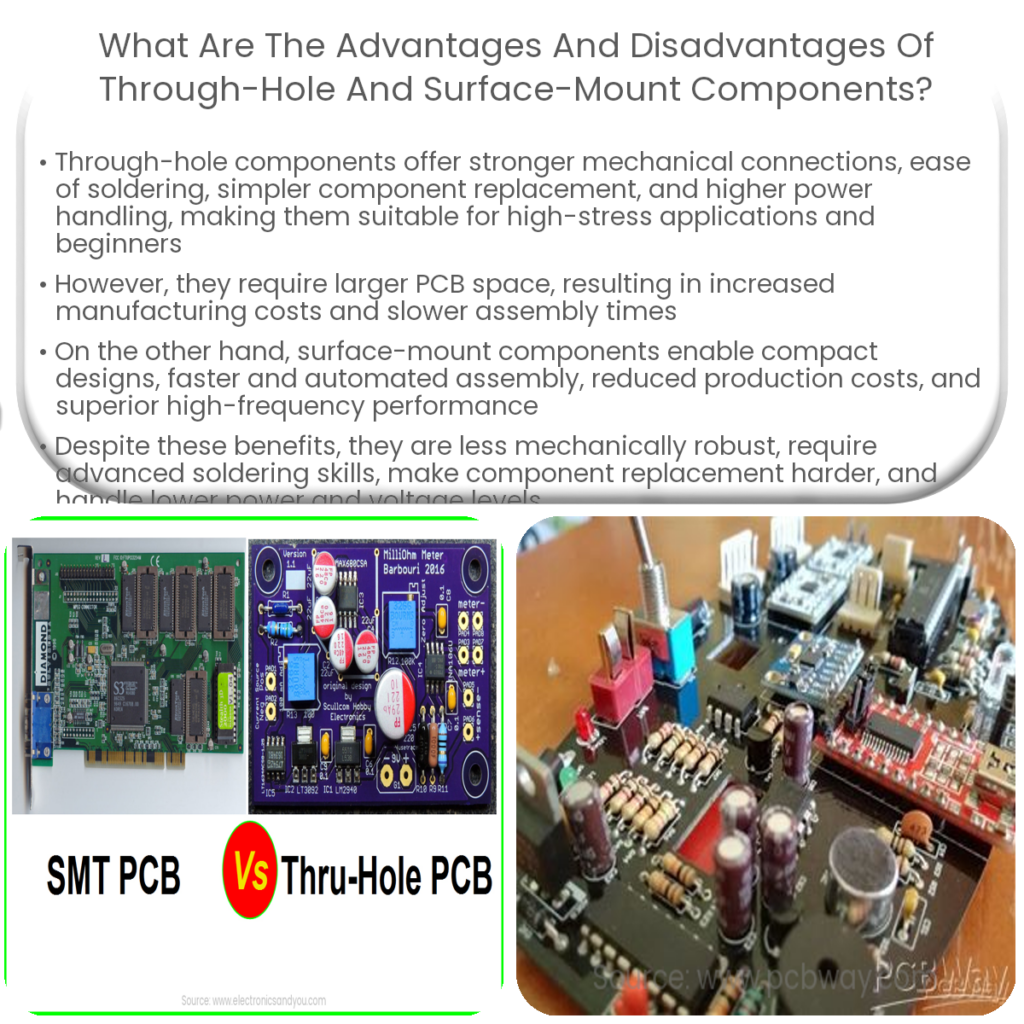
Through-hole components offer stronger connections and easier soldering, while surface-mount components enable compact designs and faster assembly.
Through-hole components offer stronger connections and easier soldering, while surface-mount components enable compact designs and faster assembly.
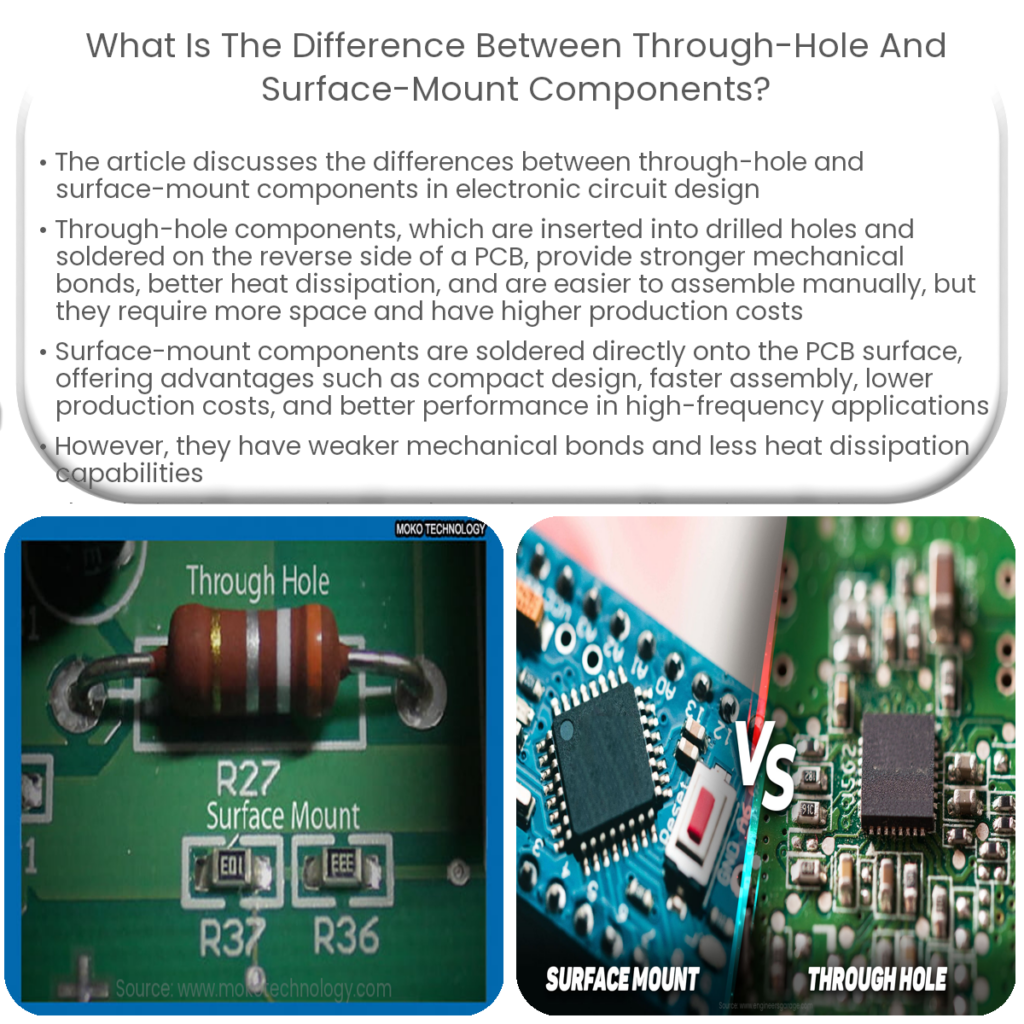
Through-hole components have leads that pass through holes in a PCB, while surface-mount components are soldered directly onto the PCB surface.

PCB fabrication methods include subtractive, additive, semi-additive, and PCB milling, each with different advantages and suited for specific projects.

To design a PCB, create a schematic, choose design software, design layout, add power/ground planes, check rules, generate Gerber files, and fabricate.
A printed circuit board (PCB) is a flat insulating material with copper layers used to mount and connect electronic components in various devices.

To use a breadboard, insert components into terminal strips, connect power supply to bus strips, use jumper wires for connections, and test the circuit.

A breadboard is a tool for creating temporary electrical connections in electronic circuits without soldering, ideal for prototyping and testing.

To start with Raspberry Pi projects, choose a model, gather components, install the operating system, set up the Pi, and explore online resources.

A Raspberry Pi is a small, affordable single-board computer designed for teaching computer science, programming, and running various applications.

To start Arduino programming, gather components, download and install Arduino IDE, connect the board, configure IDE, write and upload a sketch.

The primary purpose of this project is to help the public to learn some exciting and important information about electricity and magnetism.
Our Website follows all legal requirements to protect your privacy. Visit our Privacy Policy page.
The Cookies Statement is part of our Privacy Policy.
The information contained on this website is for general information purposes only. This website does not use any proprietary data. Visit our Editorial note.
It’s simple:
1) You may use almost everything for non-commercial and educational use.
2) You may not distribute or commercially exploit the content, especially on another website.


