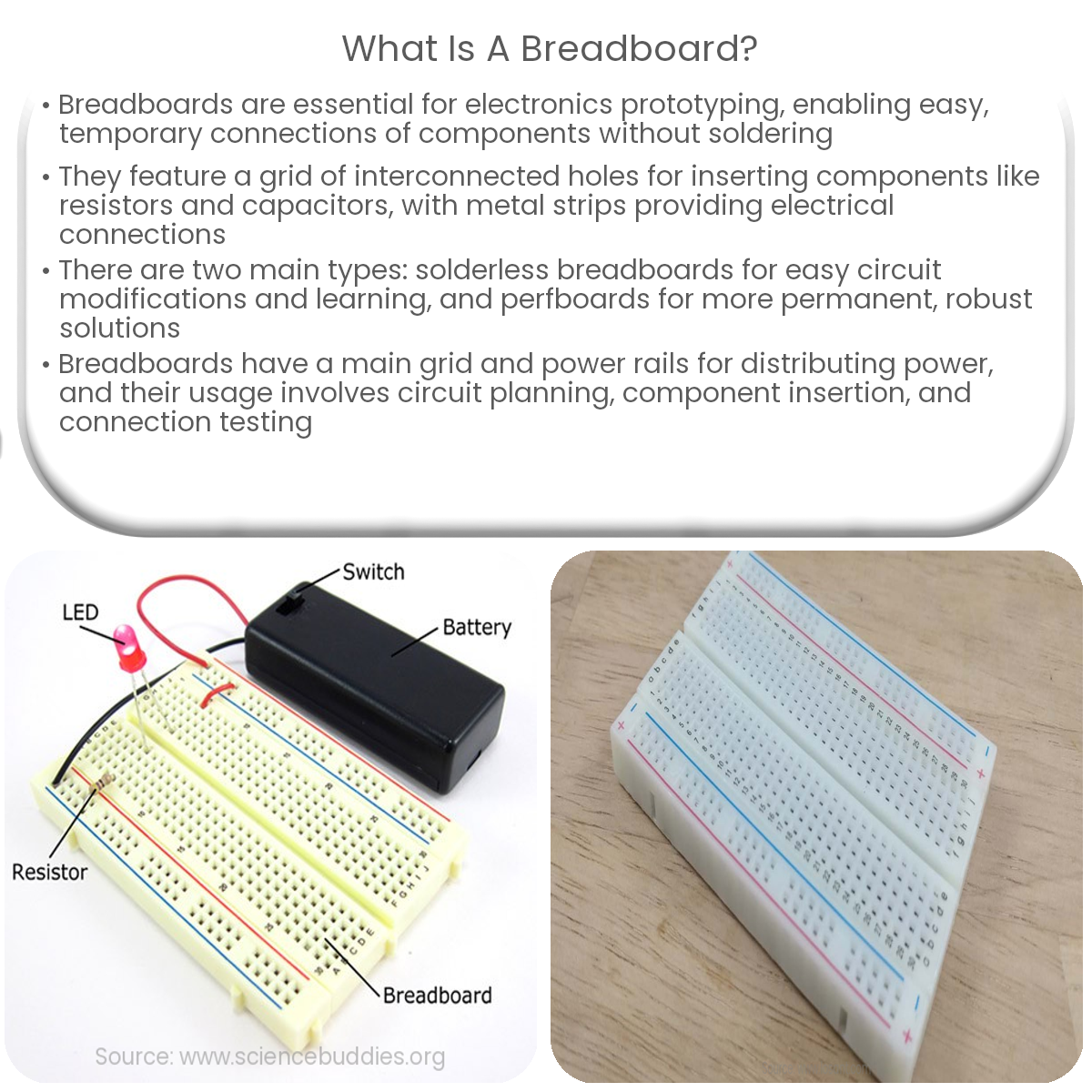
A breadboard is a tool for creating temporary electrical connections in electronic circuits without soldering, ideal for prototyping and testing.
Introduction to Breadboards
A breadboard is an essential tool for electronics prototyping, allowing for the easy and temporary connection of electronic components and circuits without the need for soldering. It is an invaluable tool for hobbyists, students, and professionals alike, enabling the construction and testing of circuit designs before committing to a more permanent solution.
How Breadboards Work
Breadboards have a grid of interconnected holes in which electronic components, such as resistors, capacitors, and integrated circuits, can be inserted. These holes are connected by metal strips or bus bars beneath the surface, providing electrical connections between inserted components. The breadboard’s layout is designed to accommodate standard through-hole components and jumper wires, simplifying the process of building and modifying circuits.
Types of Breadboards
There are two main types of breadboards:
Breadboard Layout and Power Rails
Breadboards typically have two sections: the main grid and the power rails. The main grid consists of horizontal rows that are electrically connected in groups, usually of five. Components inserted into the same group are electrically connected. The power rails run vertically along the sides of the breadboard and are used to distribute power and ground connections throughout the circuit. Some breadboards feature detachable power rails for added flexibility.
Using a Breadboard
Here are some basic steps to using a breadboard:
Conclusion
Breadboards are an indispensable tool in electronics, allowing for rapid prototyping and testing of circuits without the need for soldering. By understanding their layout and usage, you can quickly and efficiently bring your electronic designs to life.