
What is the color code for resistors?

Resistor color codes are a standardized system using colored bands to indicate resistance values and tolerances on resistors, ensuring accurate identification.
Resistor color codes are a standardized system using colored bands to indicate resistance values and tolerances on resistors, ensuring accurate identification.

Different types of resistors include fixed resistors, variable resistors, and specialized resistors like thermistors, varistors, and photoresistors.
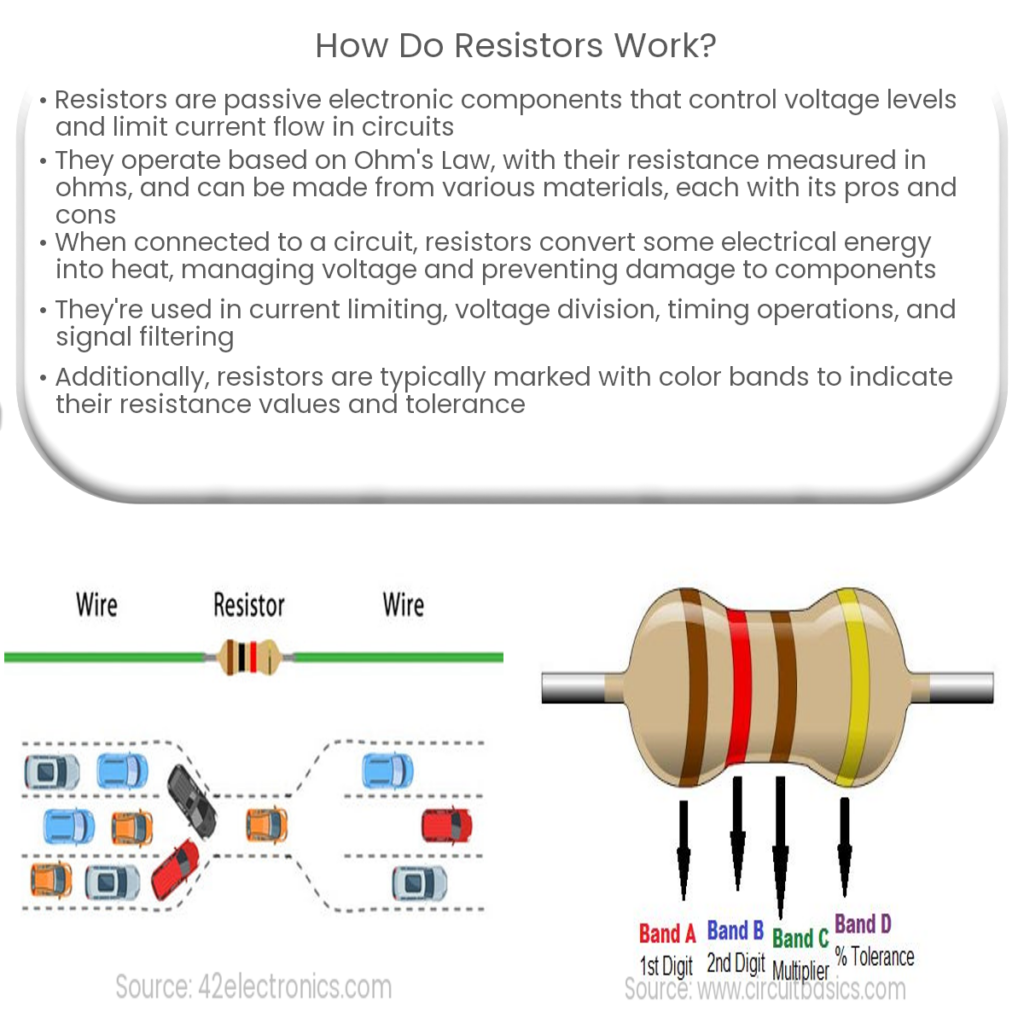
Resistors impede current flow, converting electrical energy into heat, allowing control of voltage levels, current limiting, filtering, and timing.
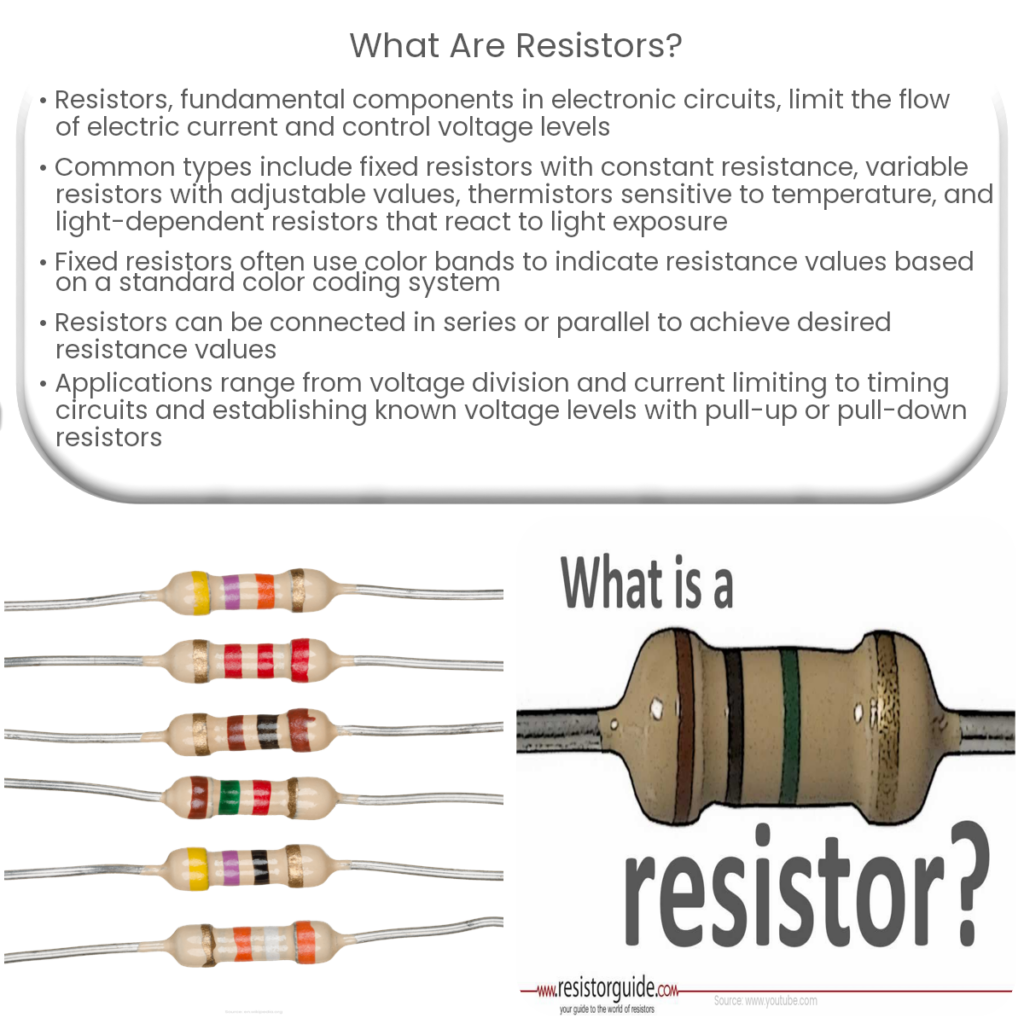
Resistors are electronic components that limit current flow and control voltage levels in circuits, used in applications like voltage division and timing.
Voltage, current, and resistance are related by Ohm’s Law, which states V = I * R, where V is voltage, I is current, and R is resistance.
Ohm’s Law relates voltage, current, and resistance in a linear relationship, making it a fundamental principle for analyzing and designing circuits.
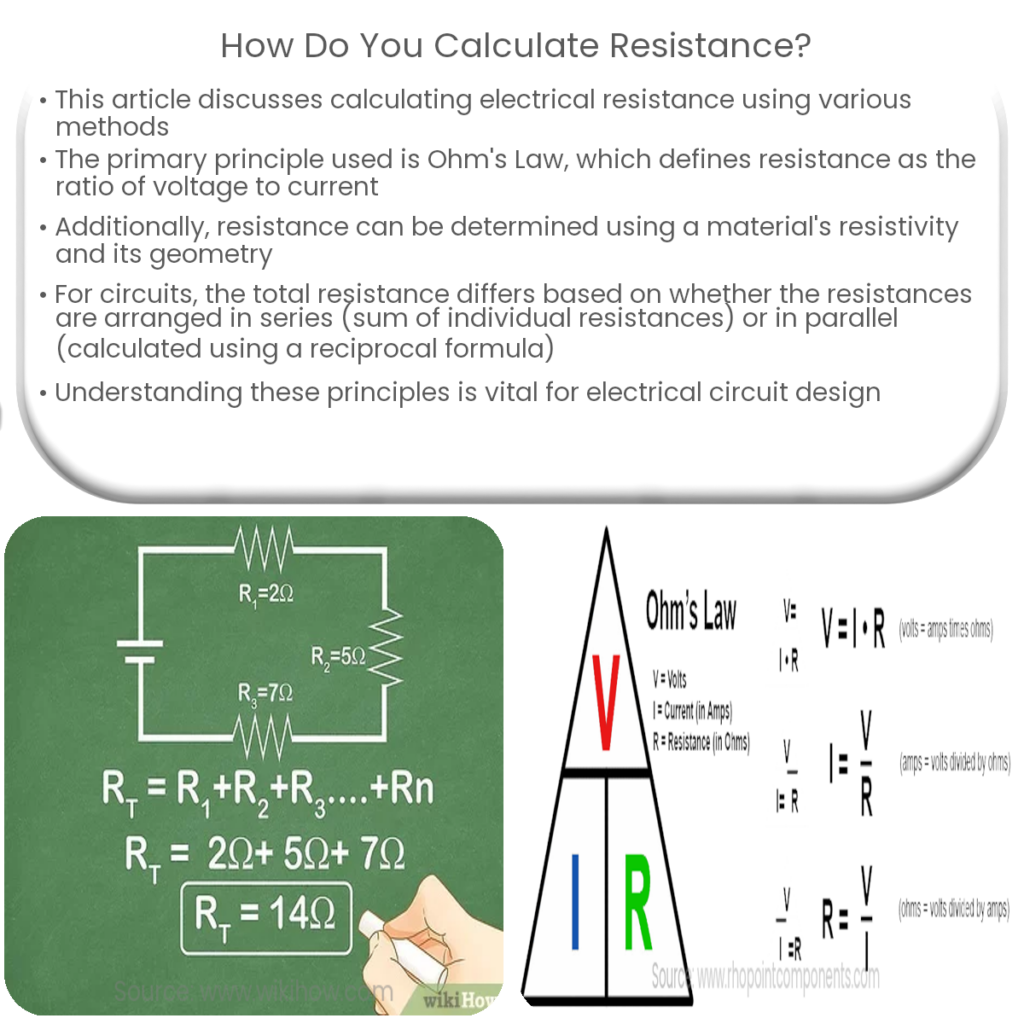
To calculate resistance, use Ohm’s Law (R = V/I), resistivity formula (R = (ρ × L) / A), or add resistances in series and use reciprocal formula for parallel.

The unit of resistance is called the Ohm, represented by the Greek symbol Omega (Ω), and is named after German physicist Georg Simon Ohm.

Resistance is the opposition a material presents to the flow of electric current, affecting how easily electrons can move through a conductor.

Insulators are materials with high electrical resistance, used to prevent unintended current flow and protect users from electric shock.

The primary purpose of this project is to help the public to learn some exciting and important information about electricity and magnetism.
Our Website follows all legal requirements to protect your privacy. Visit our Privacy Policy page.
The Cookies Statement is part of our Privacy Policy.
The information contained on this website is for general information purposes only. This website does not use any proprietary data. Visit our Editorial note.
It’s simple:
1) You may use almost everything for non-commercial and educational use.
2) You may not distribute or commercially exploit the content, especially on another website.


