
How do you calculate the total resistance in a parallel circuit?
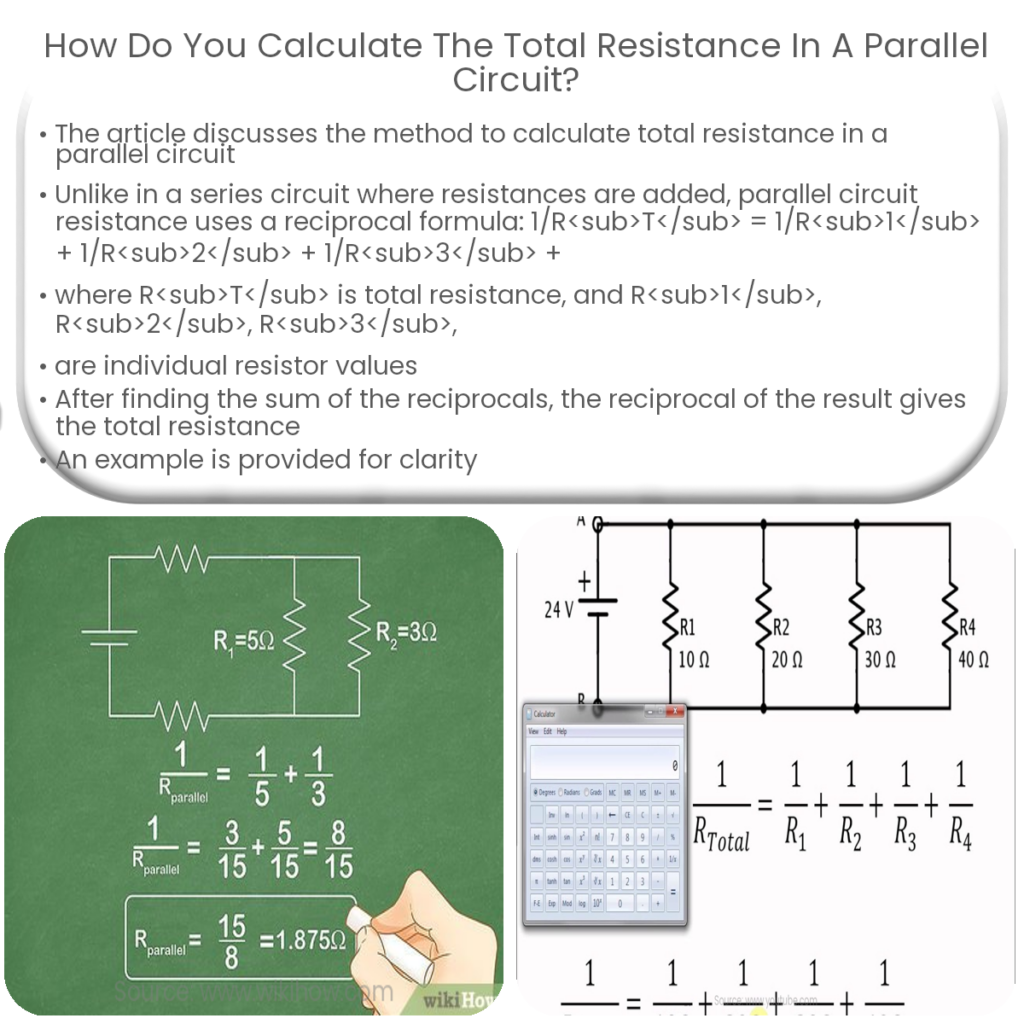
In a parallel circuit, total resistance is calculated using the formula: 1/RT = 1/R1 + 1/R2 + 1/R3 + … . Take the reciprocal of the sum to get RT.
In a parallel circuit, total resistance is calculated using the formula: 1/RT = 1/R1 + 1/R2 + 1/R3 + … . Take the reciprocal of the sum to get RT.

To calculate total resistance in a series circuit, add the individual resistances of all components in the circuit.
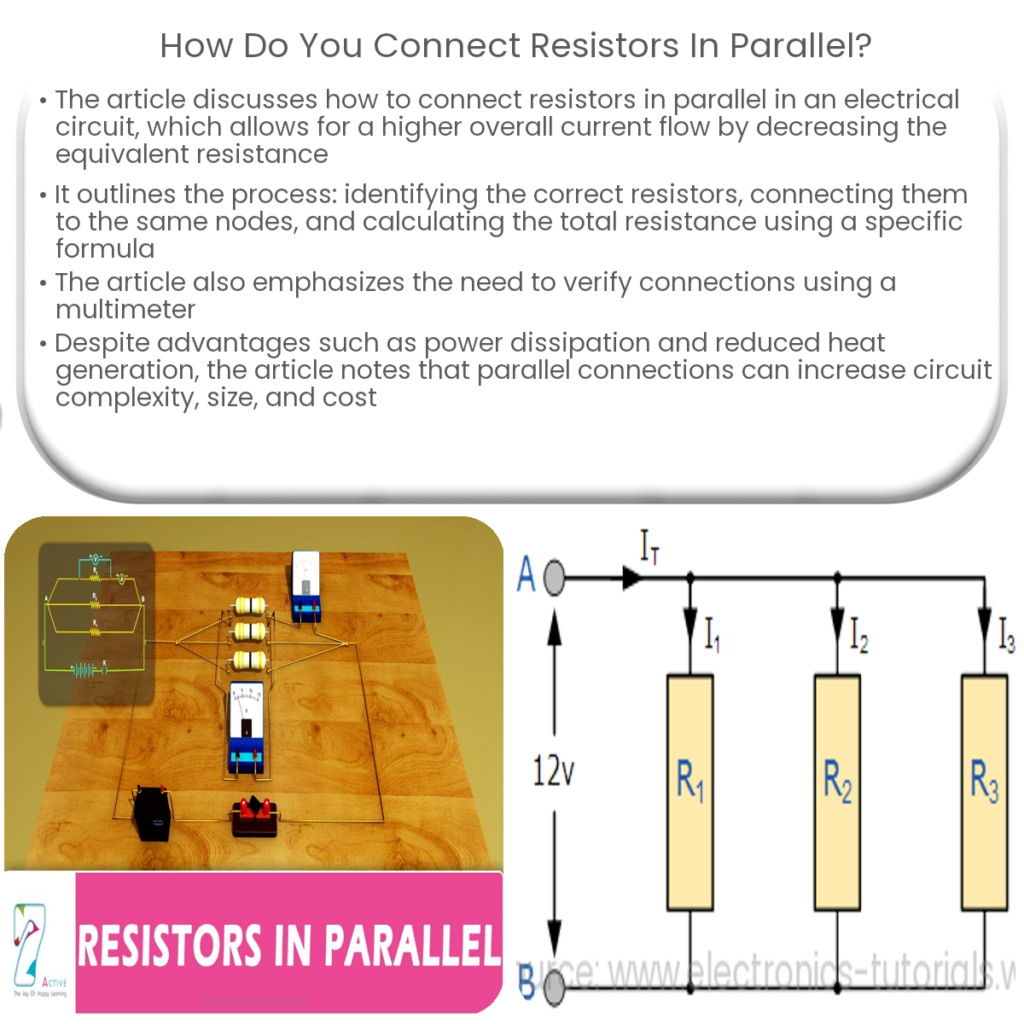
To connect resistors in parallel, connect their leads to the same nodes in the circuit, so they share the same voltage and their currents add up.
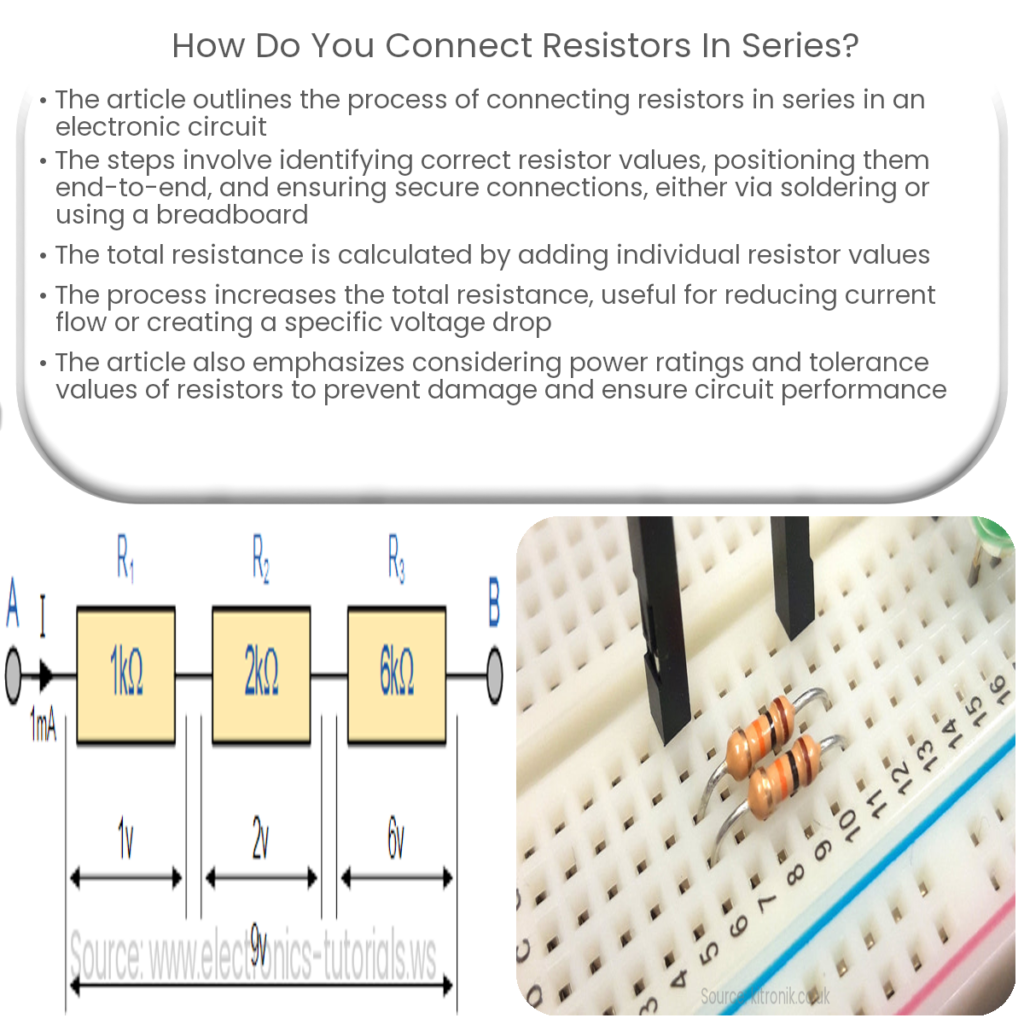
Connecting resistors in series involves placing them end-to-end, soldering or connecting leads, and calculating the total resistance by adding values.

A photoresistor is an electronic component that changes its resistance based on the amount of light it’s exposed to, often used in light sensing.

A thermistor is a temperature-sensitive resistor, with resistance changing based on temperature, used for sensing, control, and protection.

A rheostat is a variable resistor used to control electric current flow in a circuit by adjusting resistance, often found in light dimmers or motor speed controllers.
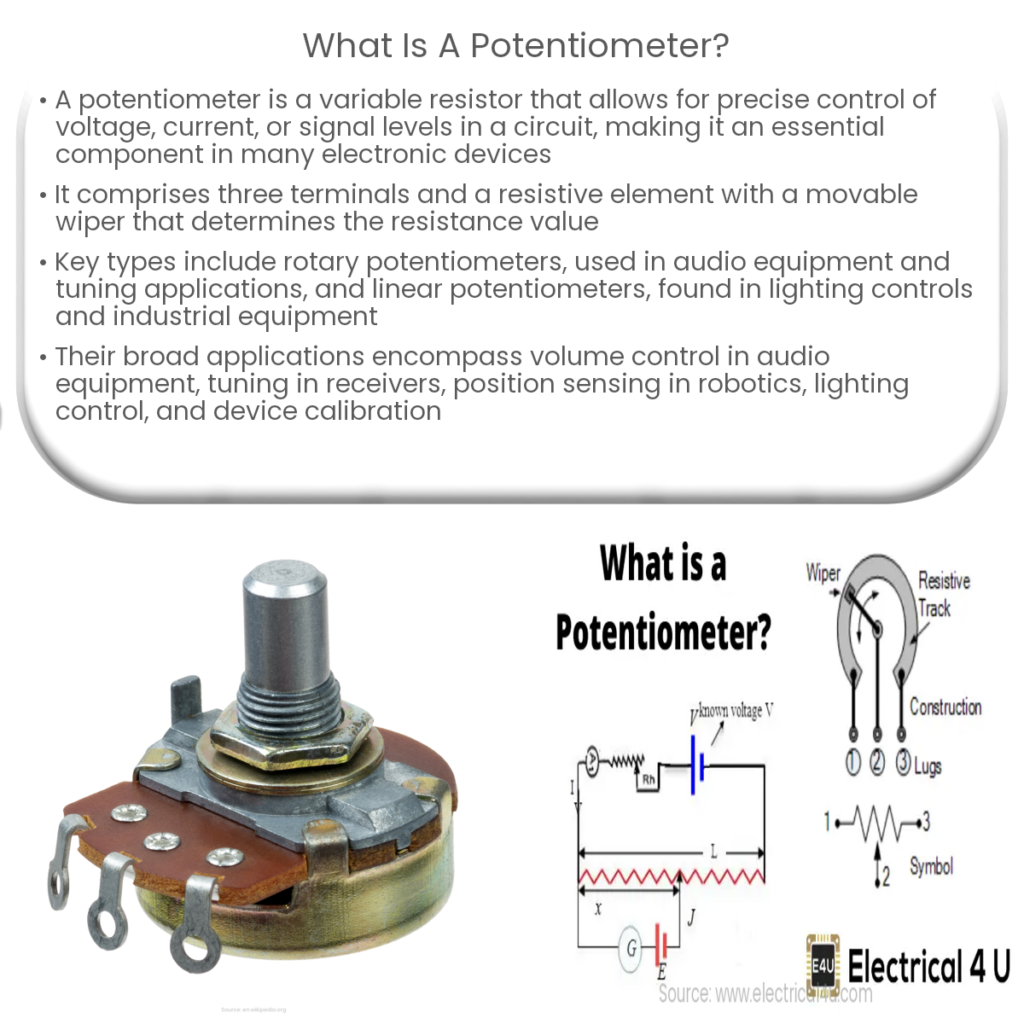
A potentiometer is a variable resistor used to control voltage or current in a circuit, often found in audio equipment, lighting control, and robotics.
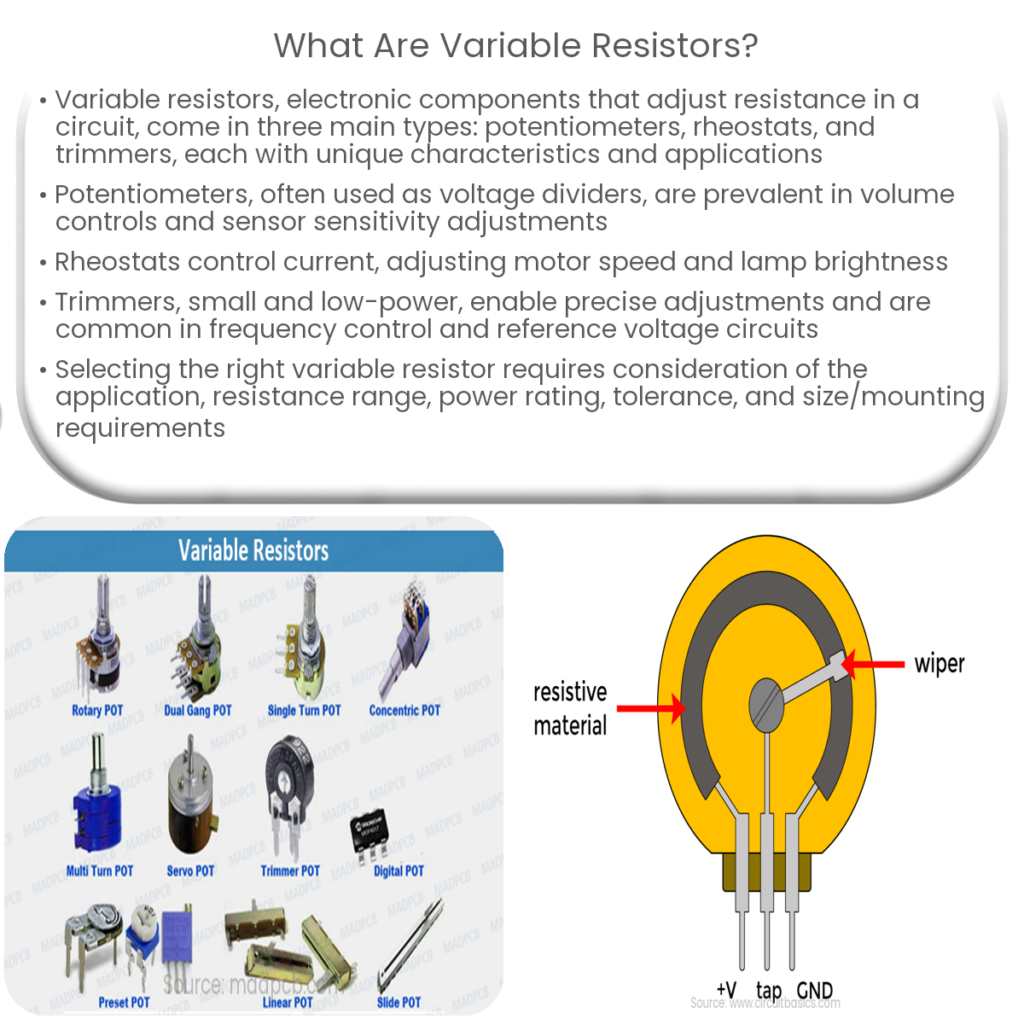
Variable resistors are components that allow adjustable resistance in a circuit, with types including potentiometers, rheostats, and trimmers.
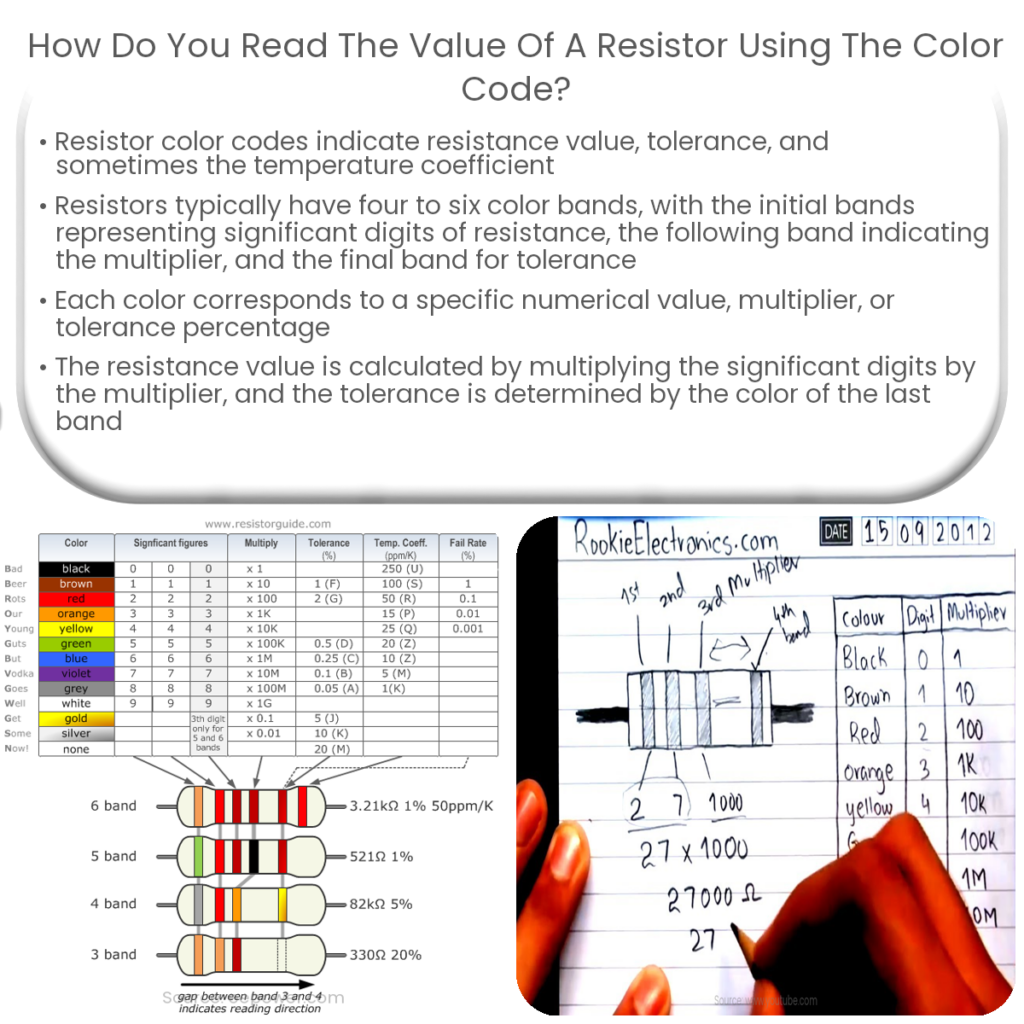
To read a resistor’s value, identify the color bands, decode the significant digits, multiplier, and tolerance, then calculate the resistance in oh

The primary purpose of this project is to help the public to learn some exciting and important information about electricity and magnetism.
Our Website follows all legal requirements to protect your privacy. Visit our Privacy Policy page.
The Cookies Statement is part of our Privacy Policy.
The information contained on this website is for general information purposes only. This website does not use any proprietary data. Visit our Editorial note.
It’s simple:
1) You may use almost everything for non-commercial and educational use.
2) You may not distribute or commercially exploit the content, especially on another website.


