
What is direct current (DC)?
Direct current (DC) is a type of electrical current that flows in a single, constant direction, maintaining a stable voltage and polarity.
Direct current (DC) is a type of electrical current that flows in a single, constant direction, maintaining a stable voltage and polarity.
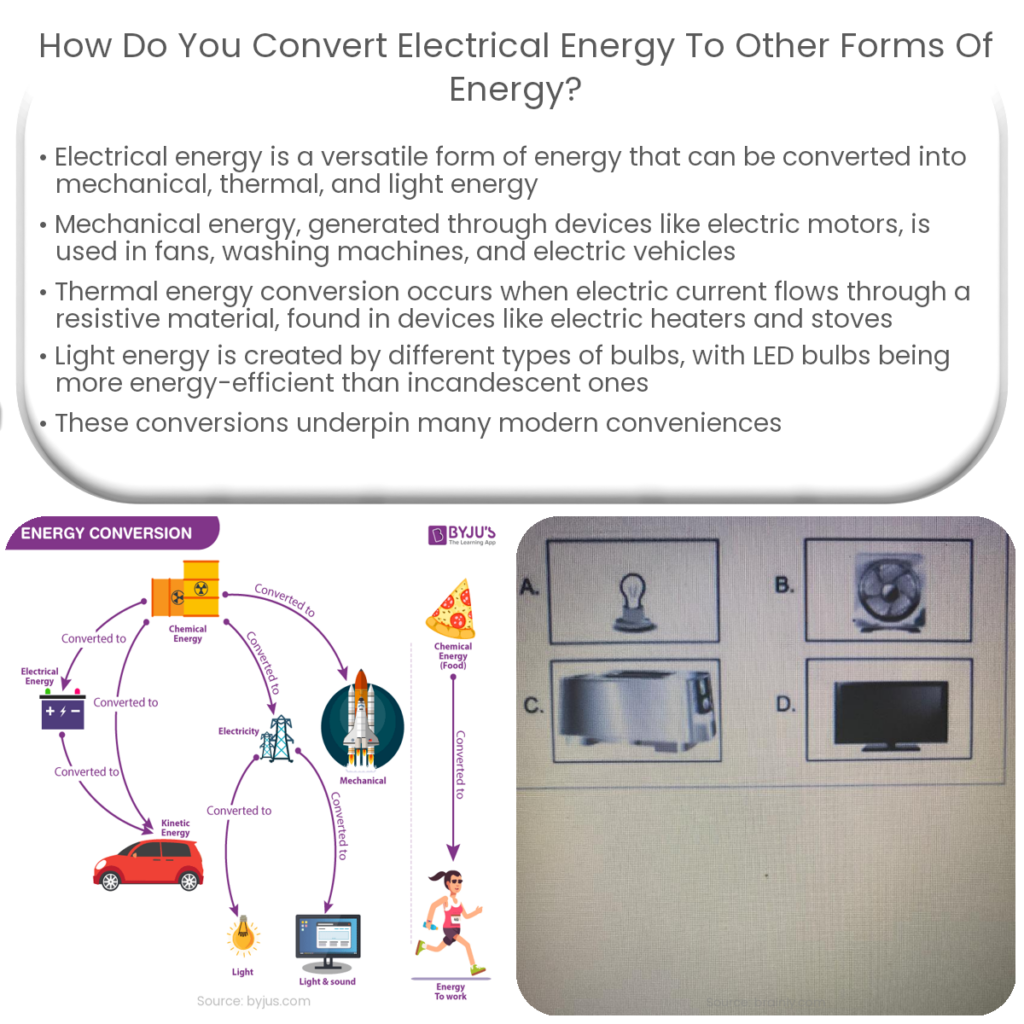
Electrical energy is converted into mechanical, thermal, and light energy through electric motors, resistive heating, and different types of bulbs.
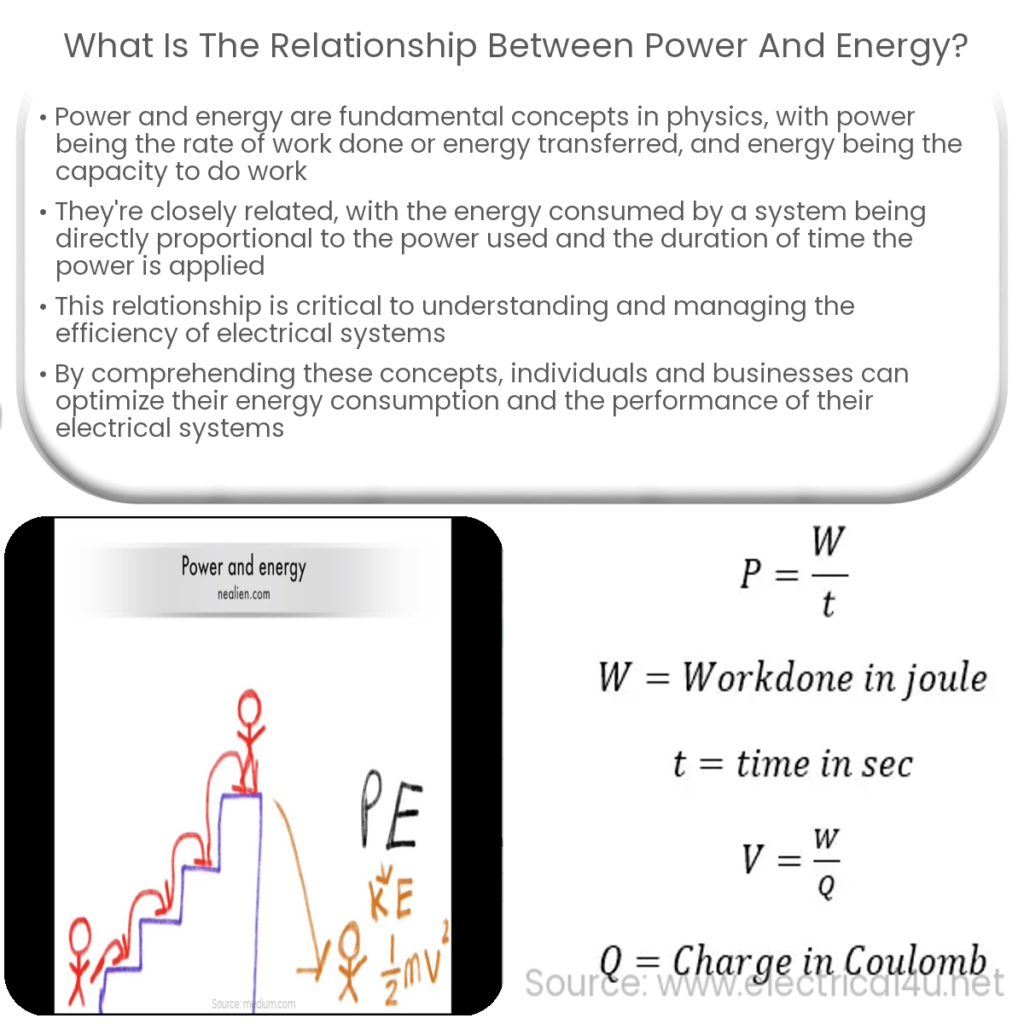
Power is the rate of energy transfer, while energy represents the total work done. They’re related by the formula: Energy = Power × Time.

The unit of electrical energy is the joule (J), but for practical purposes, kilowatt-hour (kWh) is more commonly used to measure electricity consumption.
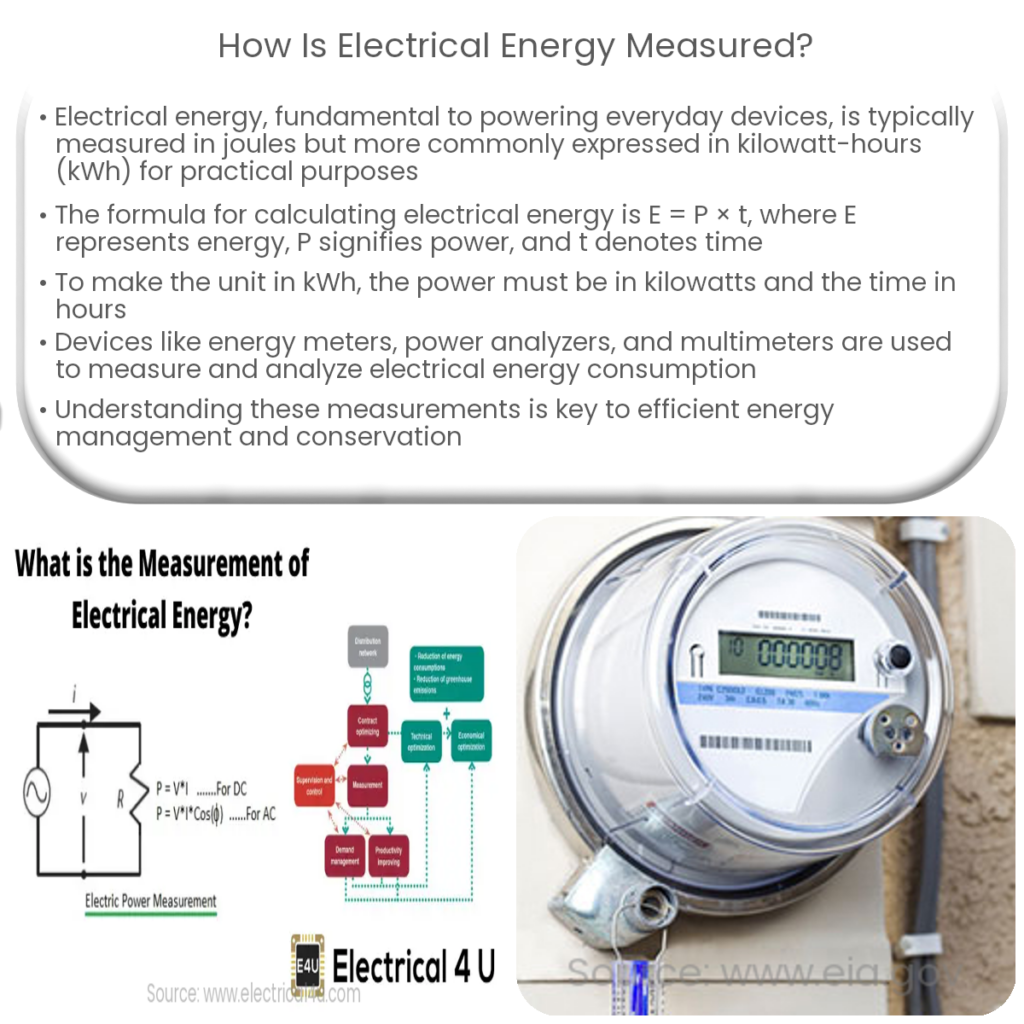
Electrical energy is measured in joules (J) or, more commonly, in kilowatt-hours (kWh) using devices such as energy meters, power analyzers, and multimeters.
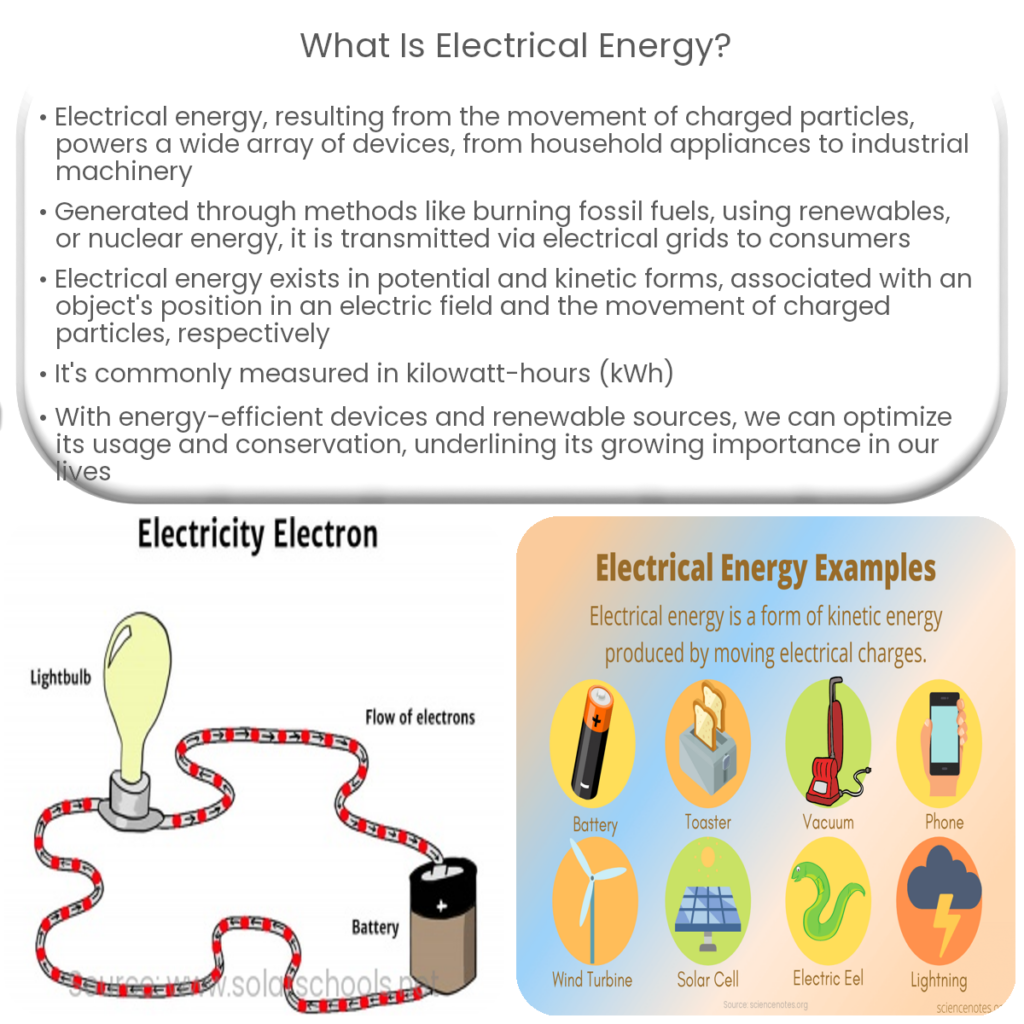
Electrical energy is a form of energy resulting from the movement of charged particles, like electrons, and is widely used to power various devices.
Power is the rate of energy conversion, and it’s directly proportional to the product of voltage and current (P = VI) in an electrical circuit.

To calculate power, use P = W/t for mechanical power, P = V × I for electrical power, and P = τ × ω for rotational power, based on the system type.
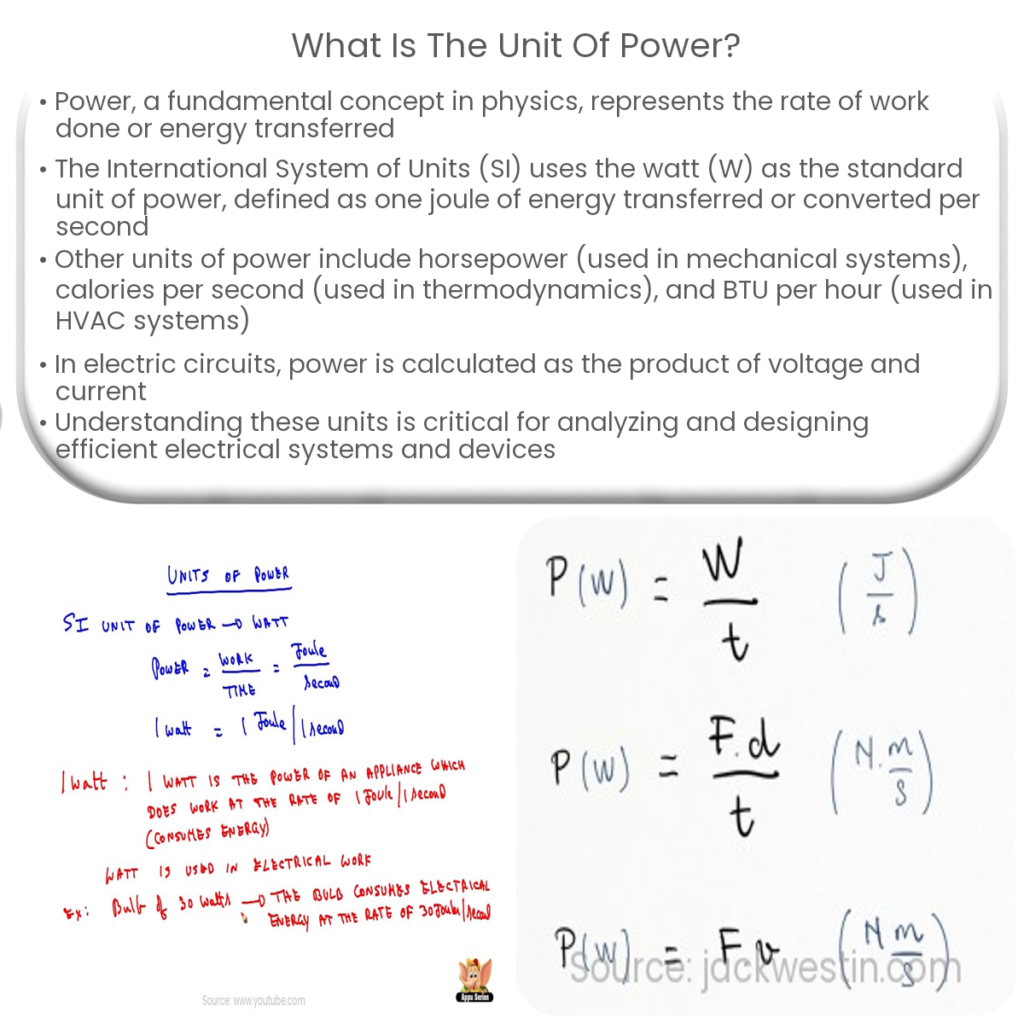
The unit of power in the International System of Units (SI) is the watt (W), named after Scottish inventor James Watt.

Power is the rate at which work is done or energy is transferred, crucial in electrical, mechanical systems, transportation, and energy production.

The primary purpose of this project is to help the public to learn some exciting and important information about electricity and magnetism.
Our Website follows all legal requirements to protect your privacy. Visit our Privacy Policy page.
The Cookies Statement is part of our Privacy Policy.
The information contained on this website is for general information purposes only. This website does not use any proprietary data. Visit our Editorial note.
It’s simple:
1) You may use almost everything for non-commercial and educational use.
2) You may not distribute or commercially exploit the content, especially on another website.


