
What is the relationship between resistance, current, and voltage in a resistor?
In a resistor, Ohm’s Law governs the relationship between resistance, current, and voltage: V = I * R, where V is voltage, I is current, and R is resistance.
In a resistor, Ohm’s Law governs the relationship between resistance, current, and voltage: V = I * R, where V is voltage, I is current, and R is resistance.

Consider resistance value, power rating, tolerance, temperature coefficient, resistor type, and package size to choose the right resistor for your application.
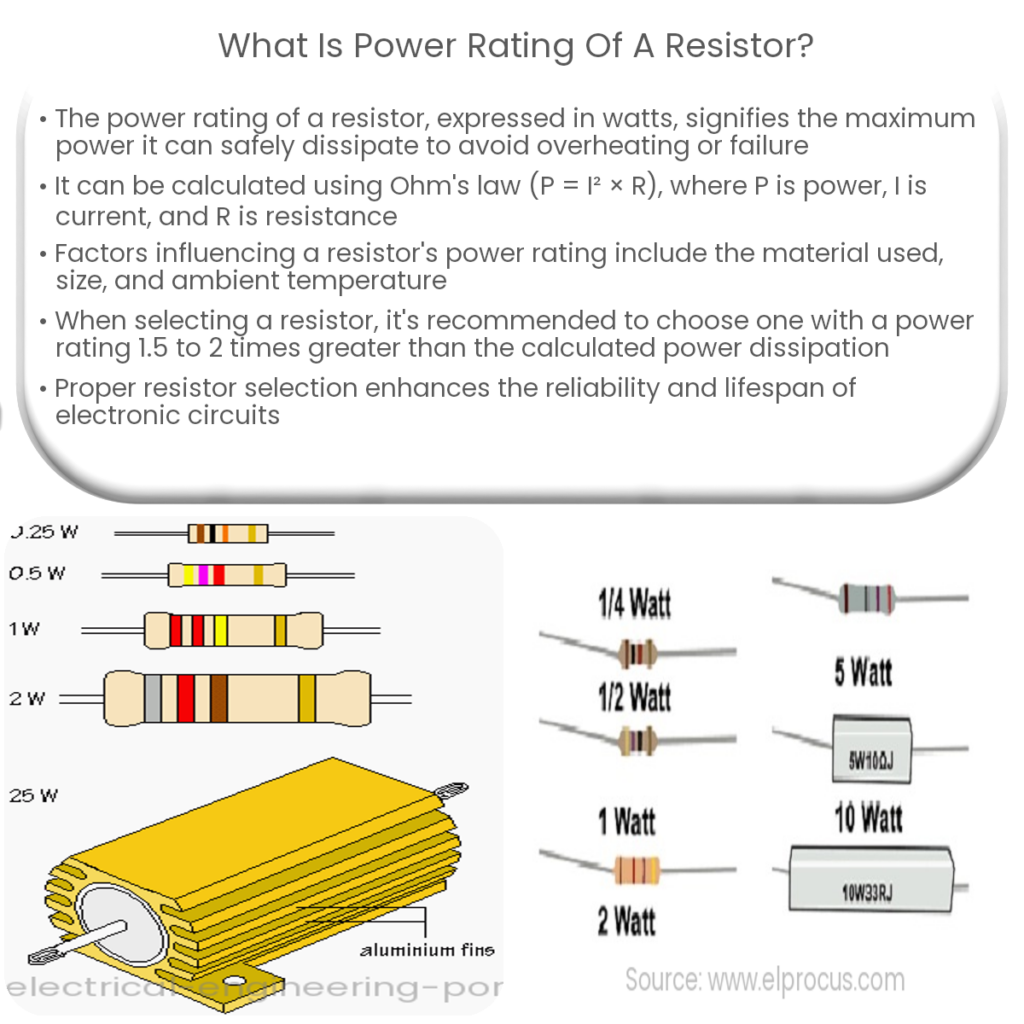
A resistor’s power rating is the maximum power it can safely dissipate without damage, determined by its material, size, and ambient temperature.
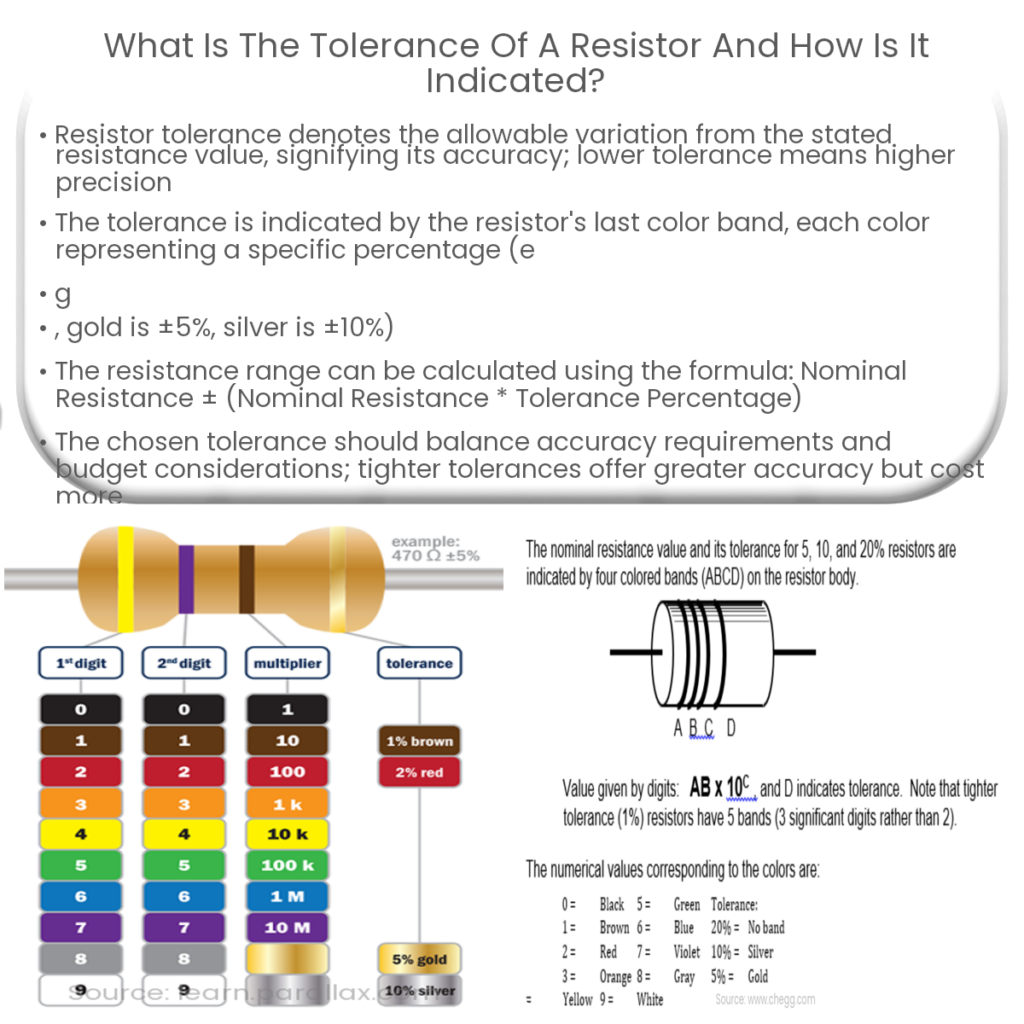
Resistor tolerance is the allowed deviation from the specified resistance value, indicated by the last color band on the resistor.

Surface mount resistors are small, lightweight resistors mounted directly onto PCBs, offering higher component density, improved performance, and reduced size.

Resistors control current flow, regulate voltage levels, stabilize active components, provide default states for digital circuits, and aid in timing, filtering, and power dissipation applications.

To read resistor color codes, identify color bands, decode colors to numbers, combine significant digits, apply the multiplier, and assess tolerance.
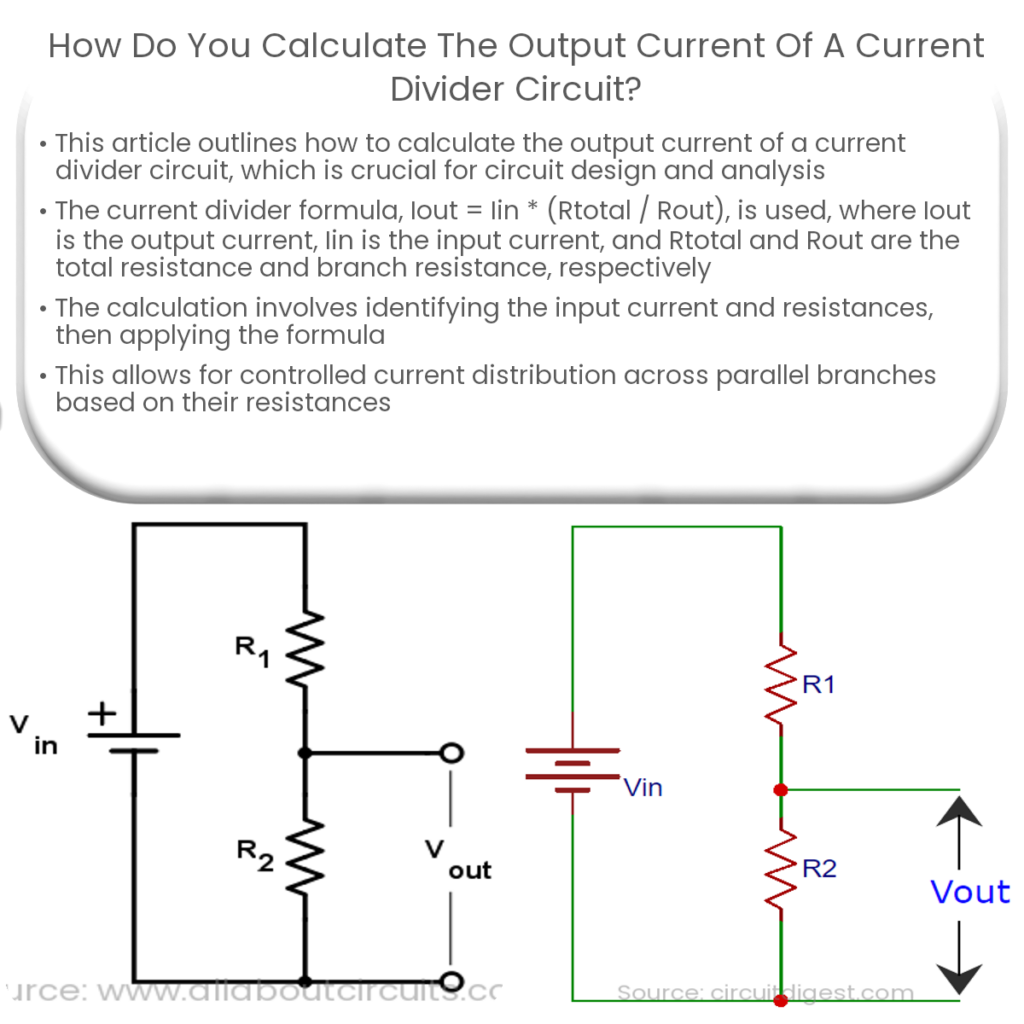
To calculate the output current of a current divider circuit, use the formula: I_out = I_in * (R_total / R_out), where I_in is the input current.

Resistors are used in electronic circuits for current limiting, voltage division, biasing, pull-up/pull-down, timing, filtering, and power dissipation.
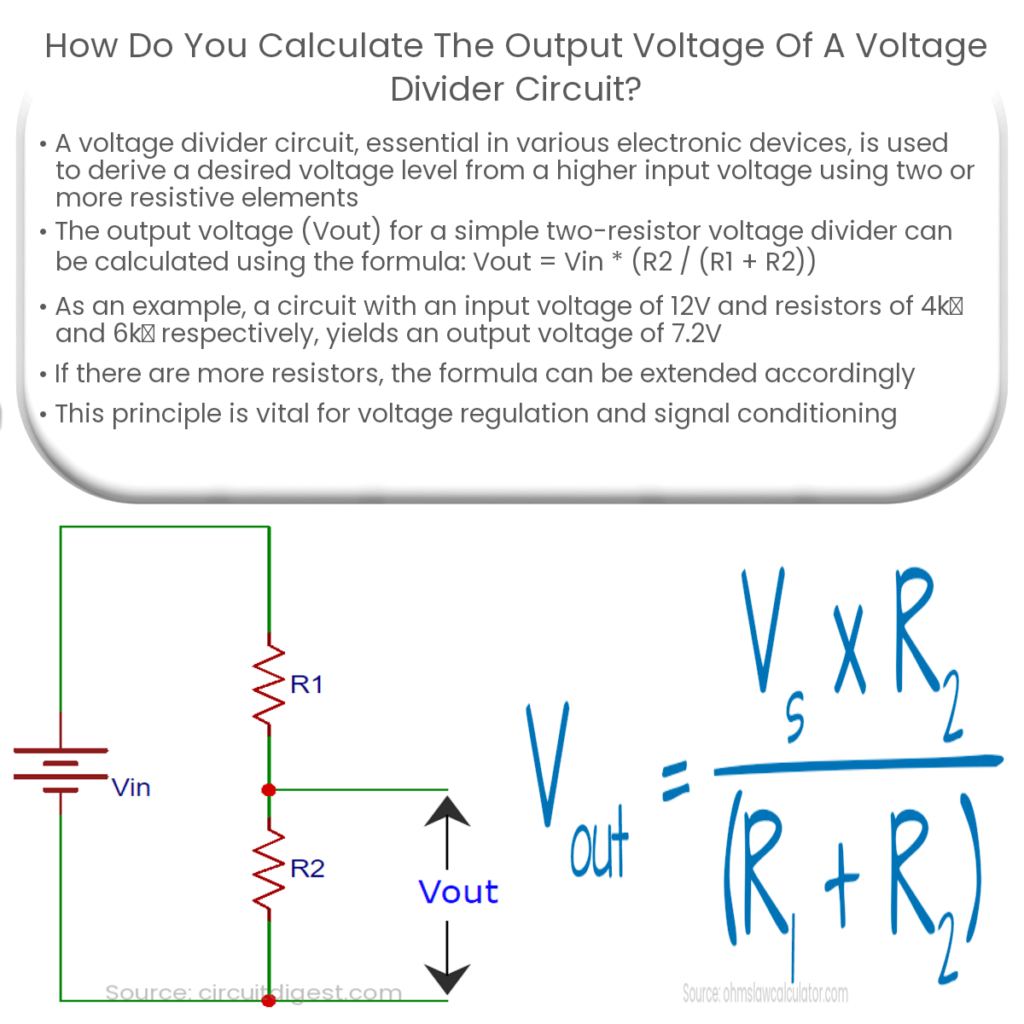
To calculate the output voltage of a voltage divider, use the formula: Vout = Vin * (R2 / (R1 + R2)), where Vin is input voltage, and R1 and R2 are resistances.

The primary purpose of this project is to help the public to learn some exciting and important information about electricity and magnetism.
Our Website follows all legal requirements to protect your privacy. Visit our Privacy Policy page.
The Cookies Statement is part of our Privacy Policy.
The information contained on this website is for general information purposes only. This website does not use any proprietary data. Visit our Editorial note.
It’s simple:
1) You may use almost everything for non-commercial and educational use.
2) You may not distribute or commercially exploit the content, especially on another website.
