
How is magnetic induction used in the design of energy harvesting devices?

Magnetic induction is used in energy harvesting devices to convert vibrations, motion, or wind into electrical power through changing magnetic fields.
Magnetic induction is used in energy harvesting devices to convert vibrations, motion, or wind into electrical power through changing magnetic fields.
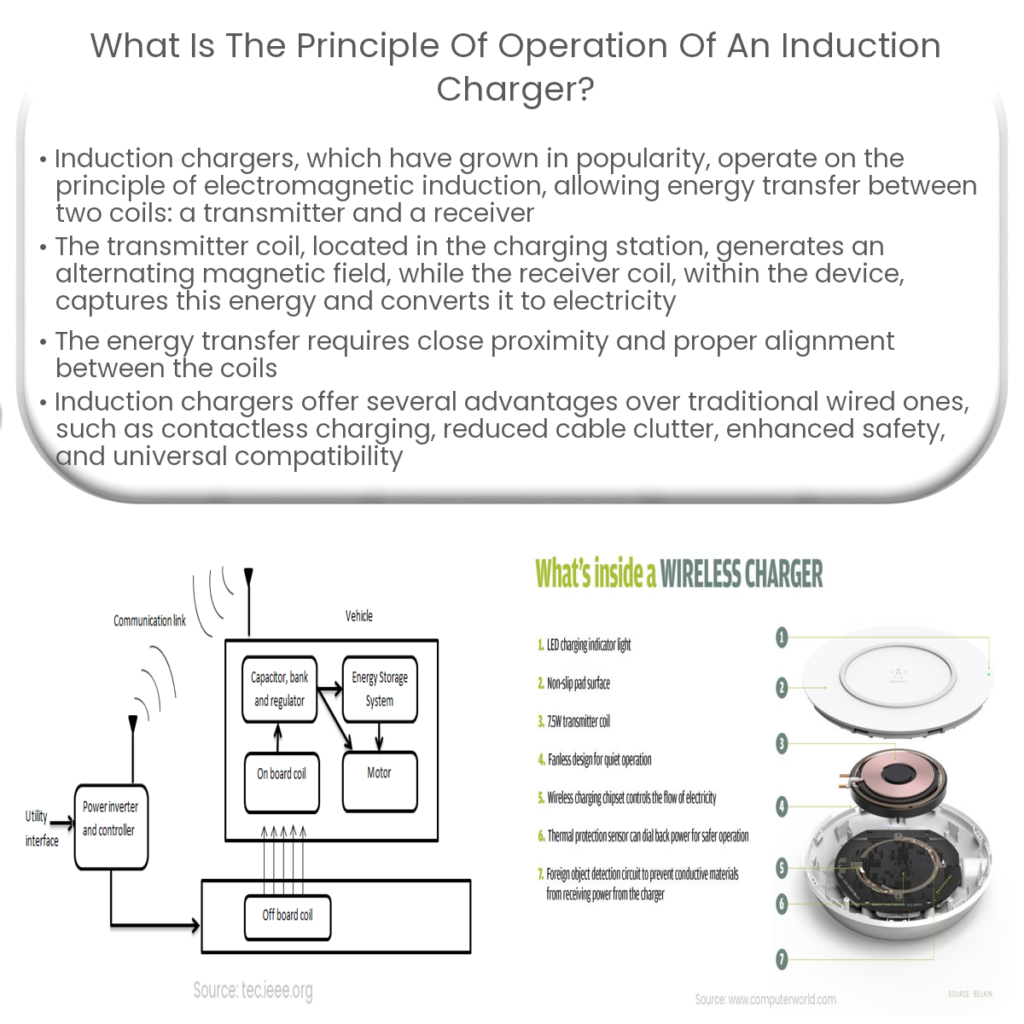
An induction charger uses electromagnetic induction to transfer energy between a transmitter coil and a receiver coil, enabling contactless charging.

Induction charging offers convenience, universal compatibility, and reduced wear, but has slower speeds, reduced efficiency, and positioning limitations.
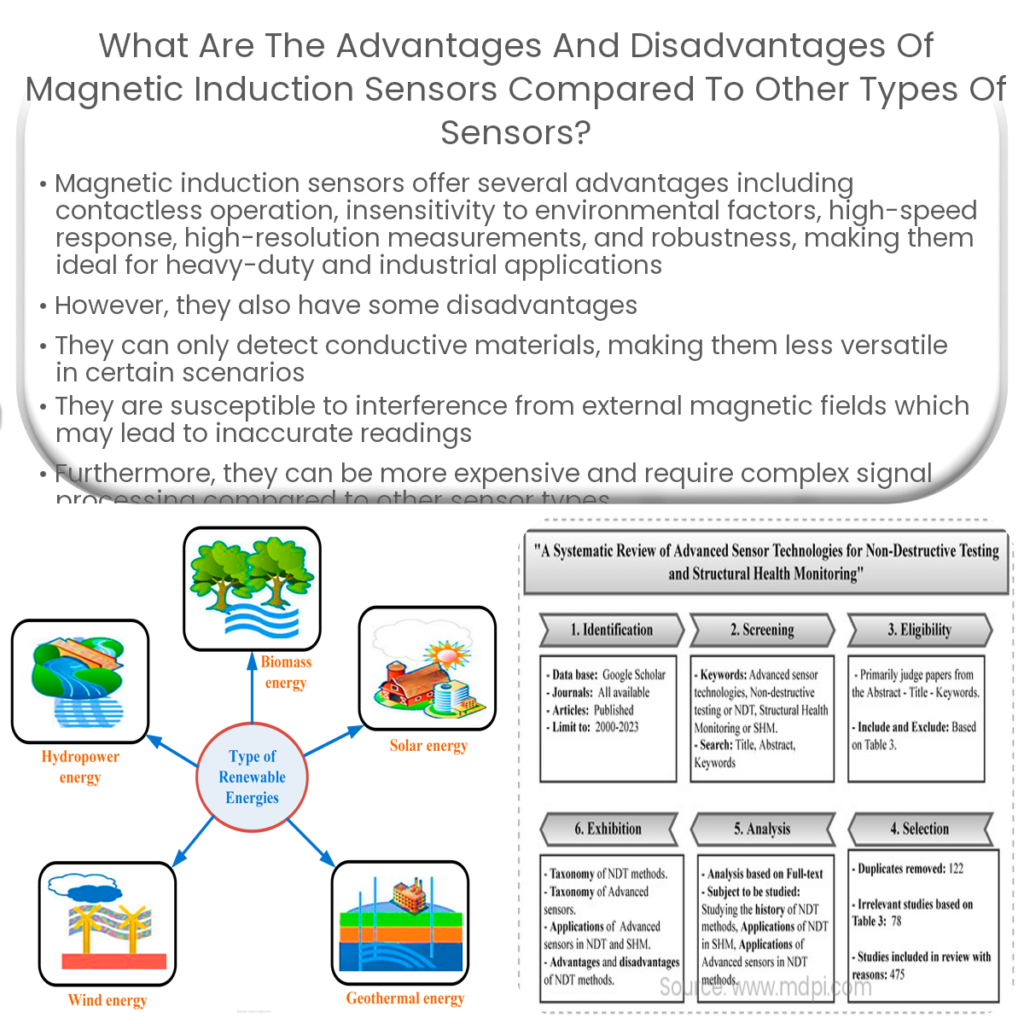
Magnetic induction sensors offer contactless operation, robustness, and high resolution but can be costly, limited to conductive materials, and sensitive to external magnetic fields.
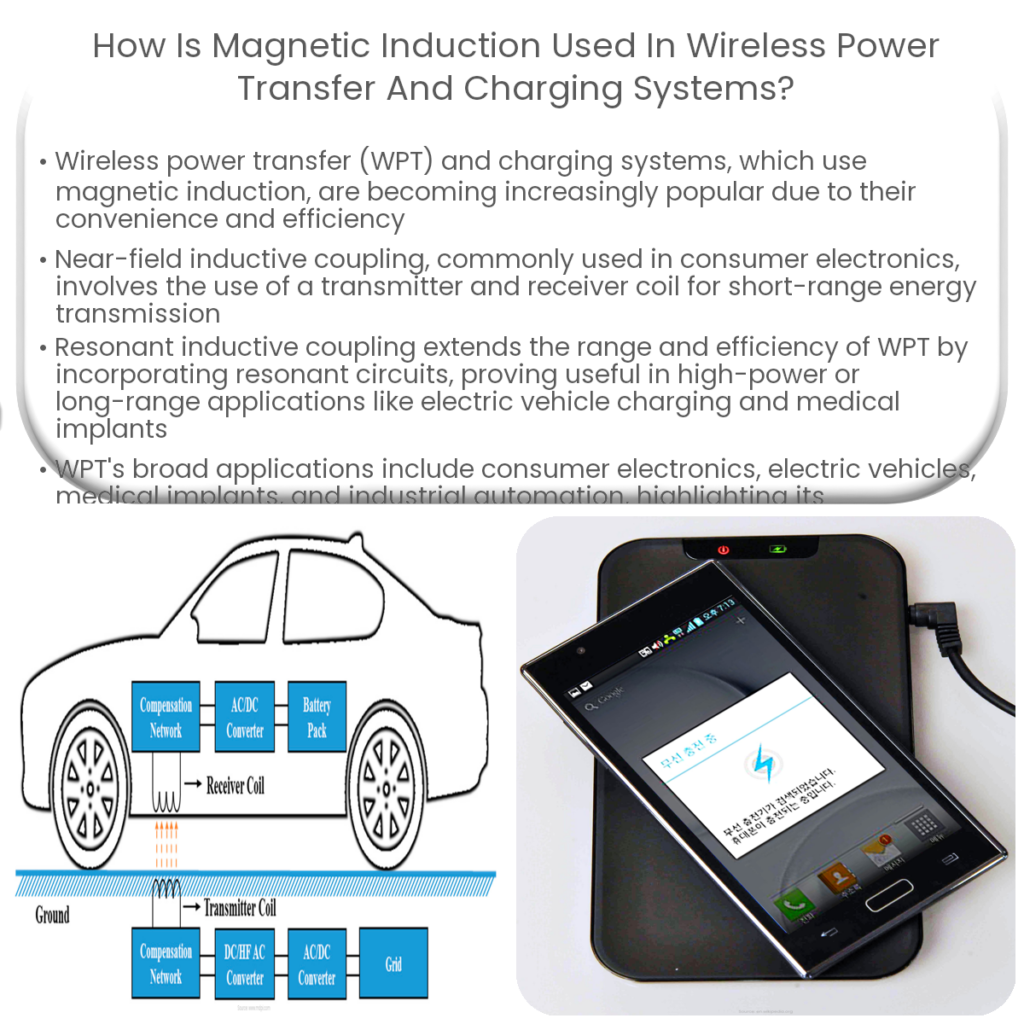
Magnetic induction is used in wireless power transfer by generating an alternating magnetic field to induce voltage in a receiver coil, enabling contactless charging.
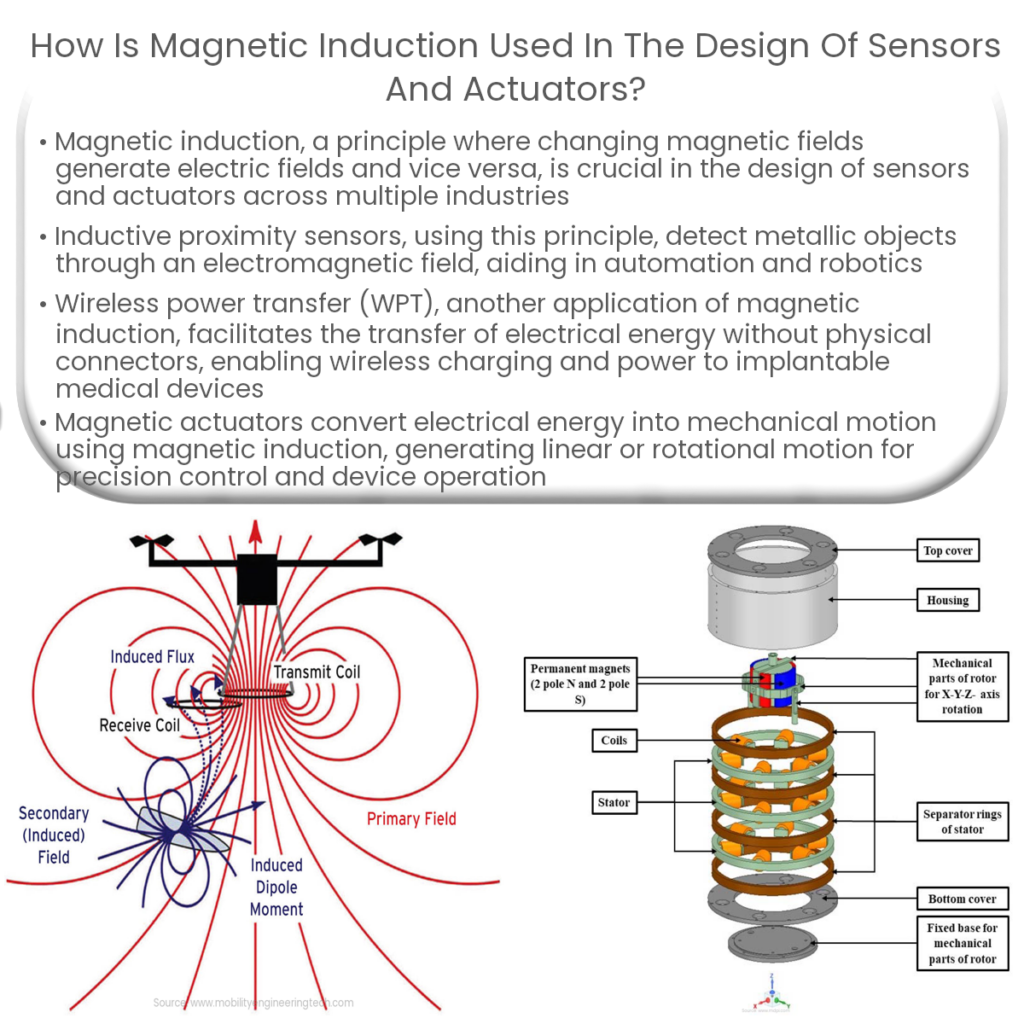
Magnetic induction is used in designing inductive proximity sensors, wireless power transfer systems, and magnetic linear and rotary actuators.

Magnetic induction sensors include inductive proximity sensors, eddy current sensors, and magnetostrictive sensors, used in various industries.

Electric motors are devices that convert electrical energy into mechanical energy using magnetic induction principles. This article examines how alternating current (AC) and direct current (DC) motors use magnetic induction to generate mechanical energy.
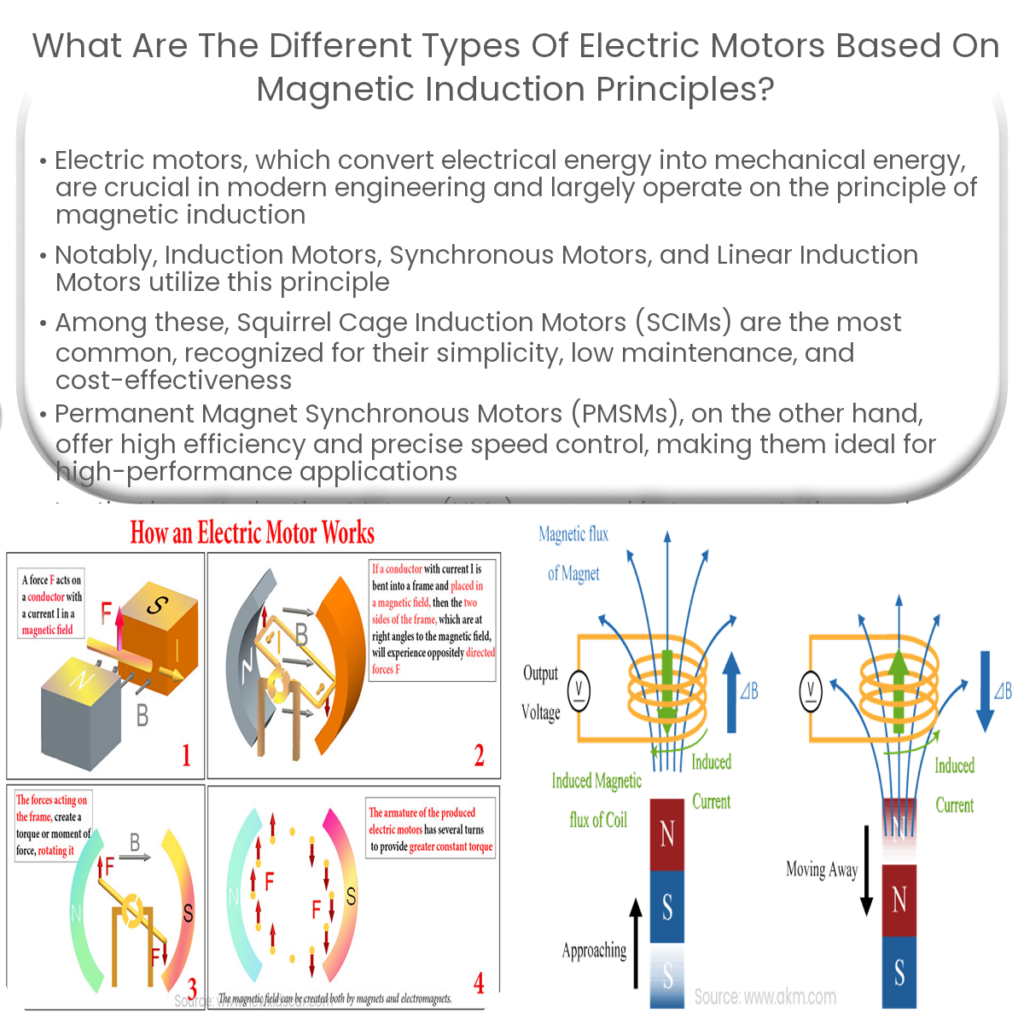
Induction Motors, Synchronous Motors, and Linear Induction Motors are the three types of electric motors based on magnetic induction principles.
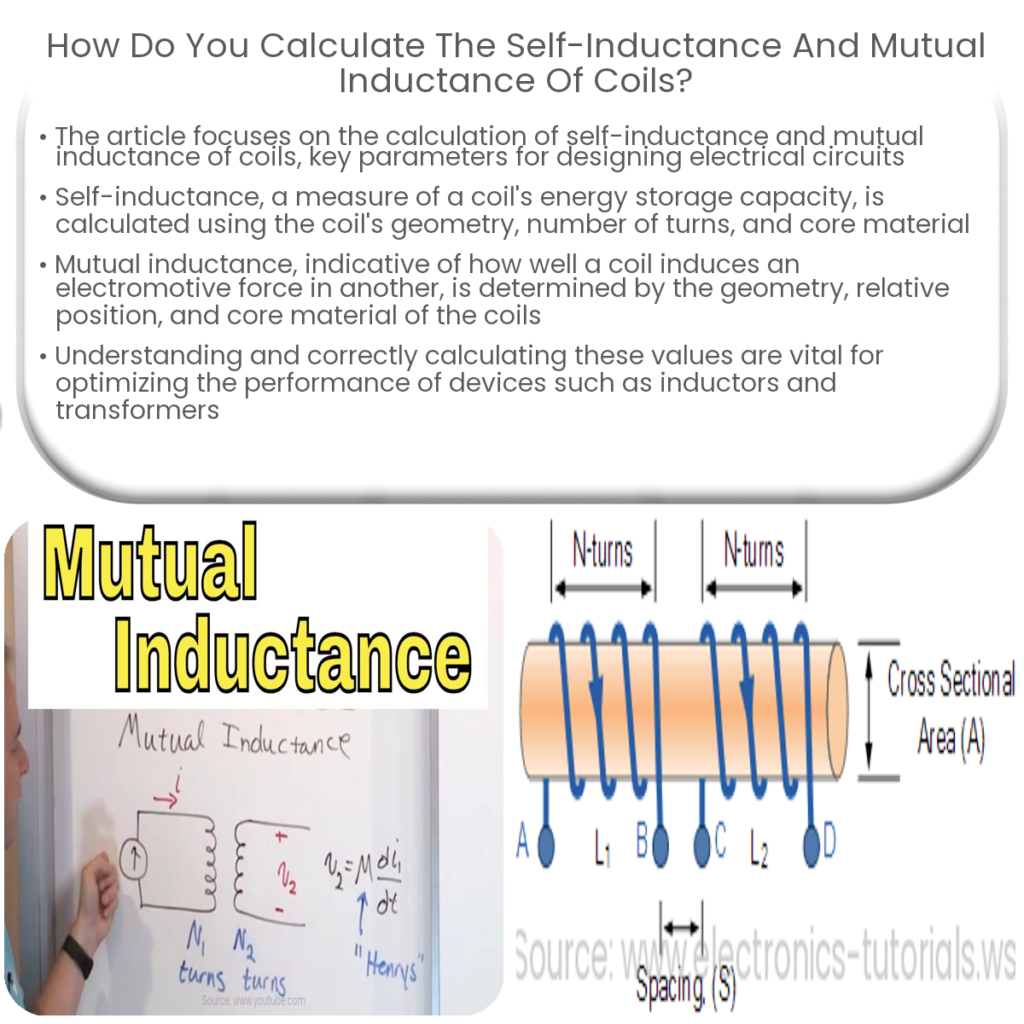
Calculate self-inductance using L = (μ₀ * N² * A * l) / l and mutual inductance using M = k * √(L₁ * L₂), considering coil geometry and materials.

The primary purpose of this project is to help the public to learn some exciting and important information about electricity and magnetism.
Our Website follows all legal requirements to protect your privacy. Visit our Privacy Policy page.
The Cookies Statement is part of our Privacy Policy.
The information contained on this website is for general information purposes only. This website does not use any proprietary data. Visit our Editorial note.
It’s simple:
1) You may use almost everything for non-commercial and educational use.
2) You may not distribute or commercially exploit the content, especially on another website.
