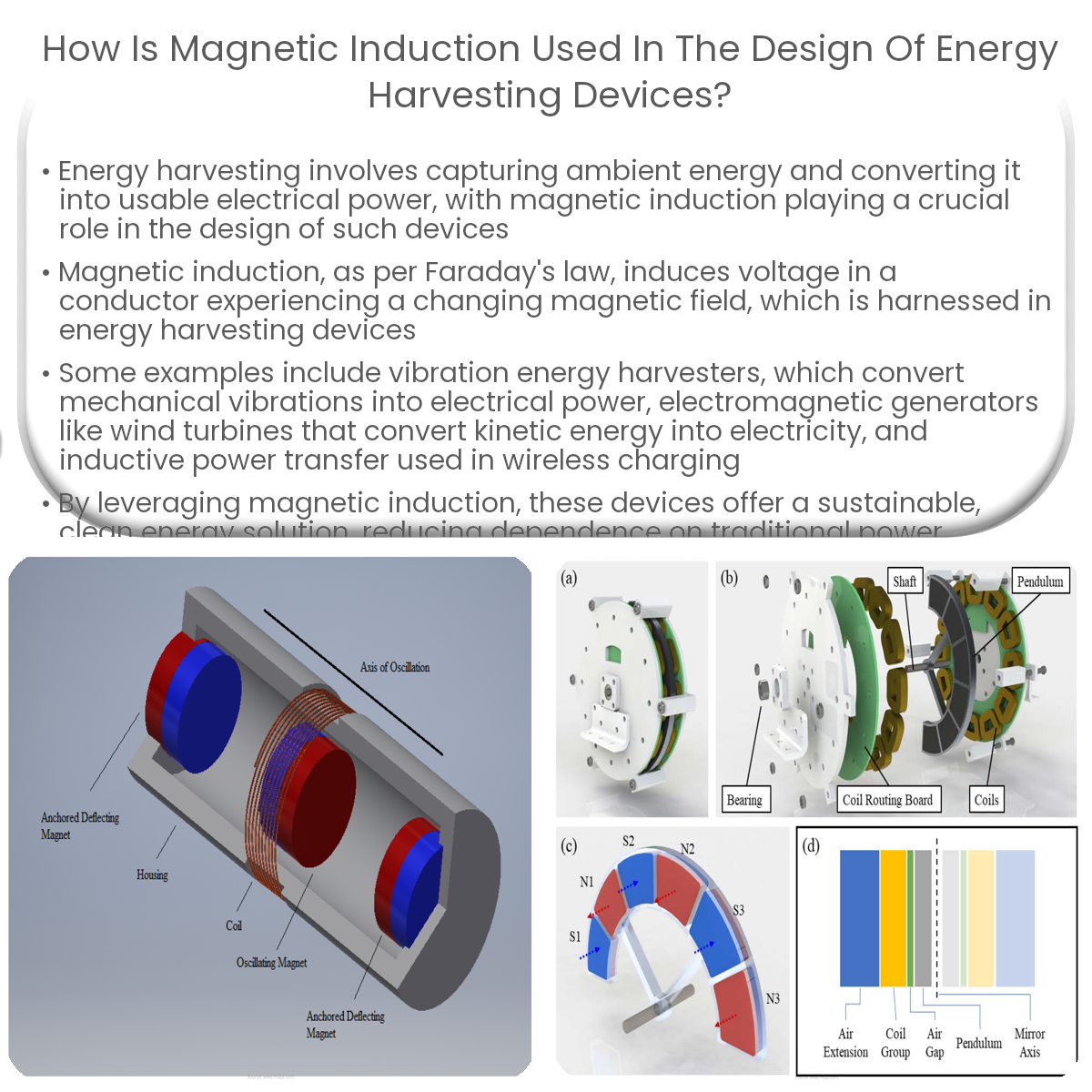
Magnetic induction is used in energy harvesting devices to convert vibrations, motion, or wind into electrical power through changing magnetic fields.
Magnetic Induction in Energy Harvesting Device Design
Energy harvesting is the process of capturing and converting ambient energy into usable electrical power. Magnetic induction, a phenomenon where an electromotive force is generated in a conductor due to a changing magnetic field, plays a crucial role in the design of some energy harvesting devices. This article will explore how magnetic induction is utilized in energy harvesting systems.
Principles of Magnetic Induction
Faraday’s law of electromagnetic induction states that a voltage is induced in a conductor when it experiences a changing magnetic field. This principle forms the basis for the design of various energy harvesting devices that capture ambient energy sources, such as vibrations, motion, or wind, and convert them into electrical energy.
Energy Harvesting Devices Based on Magnetic Induction
- Vibration Energy Harvesters: These devices capture mechanical vibrations from various sources, such as machinery, transportation systems, or human motion, and convert them into electrical power. The harvester typically consists of a magnetic material and a coil. When the magnetic material vibrates relative to the coil, a changing magnetic field is generated, inducing a voltage in the coil and producing electrical energy.
- Electromagnetic Generators: Electromagnetic generators, such as wind turbines or hydroelectric generators, utilize the principle of magnetic induction to convert kinetic energy into electrical energy. These generators consist of rotating magnets and stationary coils. As the magnets rotate, the magnetic field around the coils changes, inducing a voltage and generating electrical power.
- Inductive Power Transfer: This method involves wirelessly transferring electrical energy between two coils through magnetic induction. The primary coil is connected to a power source and generates a magnetic field when current flows through it. The secondary coil, placed within the magnetic field, experiences a changing magnetic field, inducing a voltage and transferring power wirelessly. This concept is used in wireless charging systems and some energy harvesting devices.
Each of these energy harvesting devices leverages the principles of magnetic induction to capture ambient energy and convert it into usable electrical power. By doing so, they offer a sustainable and clean energy solution, reducing dependence on traditional power sources and lowering the environmental impact.
In conclusion, magnetic induction plays a vital role in the design of energy harvesting devices, enabling the conversion of various ambient energy sources into electrical power. As the demand for sustainable energy solutions grows, magnetic induction-based energy harvesting technologies will continue to be an essential component of the global energy landscape.