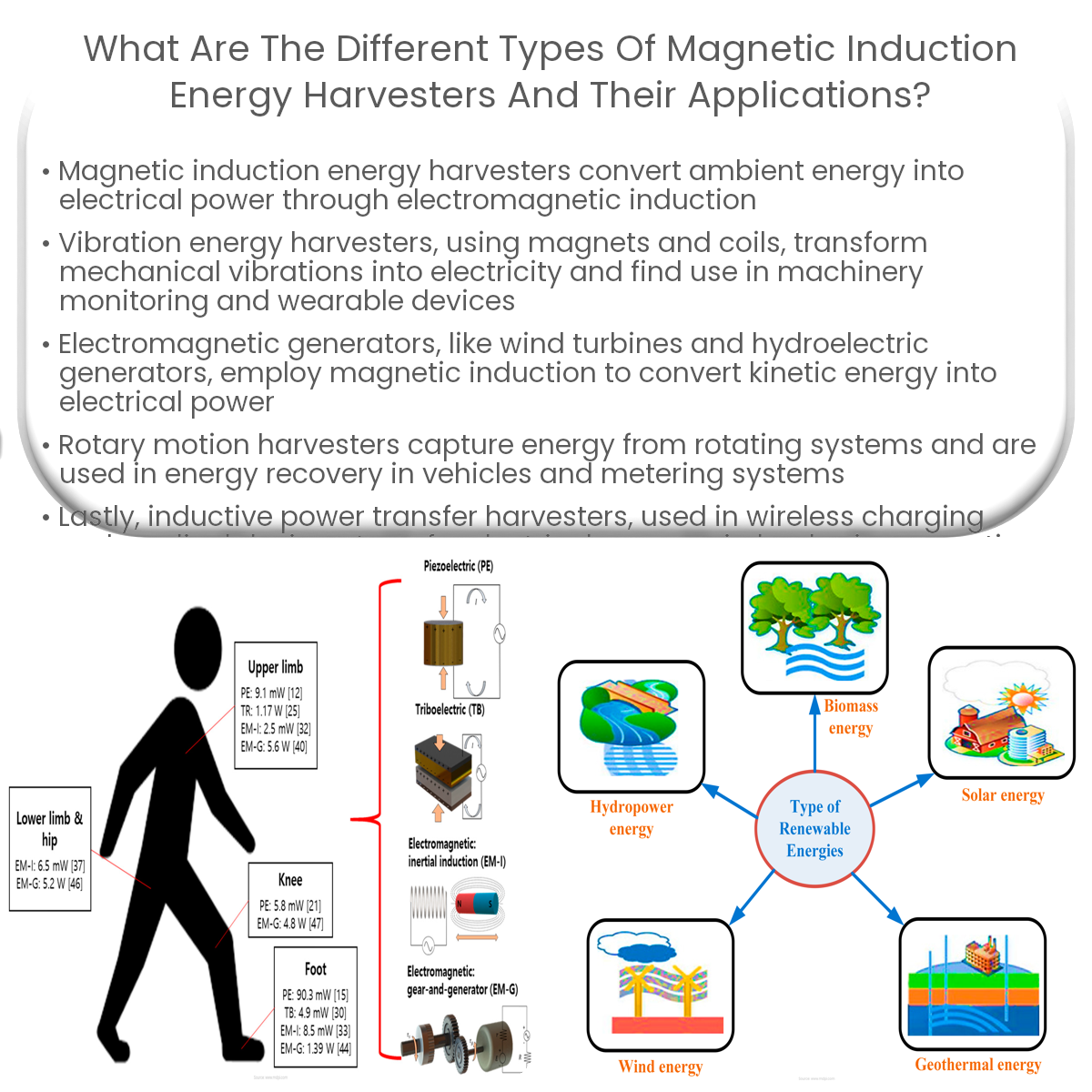
Types of magnetic induction harvesters include vibration, electromagnetic generators, rotary motion, and inductive power transfer, used in various applications.
Types of Magnetic Induction Energy Harvesters and Their Applications
Magnetic induction energy harvesters are devices that utilize the principles of electromagnetic induction to capture and convert ambient energy into electrical power. There are various types of magnetic induction energy harvesters, each designed for specific applications. This article will explore the different types of these harvesters and their real-world applications.
1. Vibration Energy Harvesters
Vibration energy harvesters capture mechanical vibrations from sources like machinery, transportation systems, or human motion and convert them into electrical power. They typically consist of a magnetic material and a coil. The relative motion between the magnet and coil generates a changing magnetic field, inducing a voltage and producing electrical energy.
- Applications:
- Industrial machinery monitoring
- Structural health monitoring
- Wearable devices
- Automotive and aerospace systems
2. Electromagnetic Generators
Electromagnetic generators, such as wind turbines and hydroelectric generators, use magnetic induction to convert kinetic energy into electrical energy. These generators typically have rotating magnets and stationary coils. As the magnets rotate, the magnetic field around the coils changes, inducing a voltage and generating electrical power.
- Applications:
- Wind energy generation
- Hydroelectric power plants
- Wave and tidal energy systems
3. Rotary Motion Harvesters
Rotary motion harvesters capture energy from rotating systems, such as gears, wheels, or turbines, and convert it into electrical power. These harvesters use a similar mechanism as electromagnetic generators, with rotating magnets and stationary coils. The rotation of the magnets generates a changing magnetic field, inducing a voltage in the coil and producing electrical energy.
- Applications:
- Energy recovery in vehicles
- Rotating machinery monitoring
- Water and gas metering systems
4. Inductive Power Transfer Harvesters
Inductive power transfer harvesters wirelessly transfer electrical energy between two coils through magnetic induction. The primary coil is connected to a power source, generating a magnetic field when current flows through it. The secondary coil, placed within the magnetic field, experiences a changing magnetic field, inducing a voltage and transferring power wirelessly. This concept is used in wireless charging systems and some energy harvesting devices.
- Applications:
- Wireless charging systems
- Energy harvesting for implantable medical devices
- Underwater communication systems
In conclusion, there are various types of magnetic induction energy harvesters, each with specific applications in industries such as renewable energy, automotive, aerospace, and healthcare. By understanding the different types of harvesters and their applications, we can better utilize this technology to create sustainable energy solutions and improve the efficiency of existing systems.