
What are the different types of diodes?

Different types of diodes include rectifier, Zener, LED, Schottky, photodiode, varactor, and PIN diodes, each with unique characteristics and uses.
Different types of diodes include rectifier, Zener, LED, Schottky, photodiode, varactor, and PIN diodes, each with unique characteristics and uses.

Diodes work in a circuit by allowing current to flow in one direction (anode to cathode) while blocking it in the reverse direction.

A diode is a two-terminal semiconductor device that allows current to flow in one direction, with applications in rectification, regulation, and more.

Calculate inductive reactance using X_L = 2πfL and capacitive reactance using X_C = 1 / (2πfC). Total reactance is the difference: X = X_L – X_C.
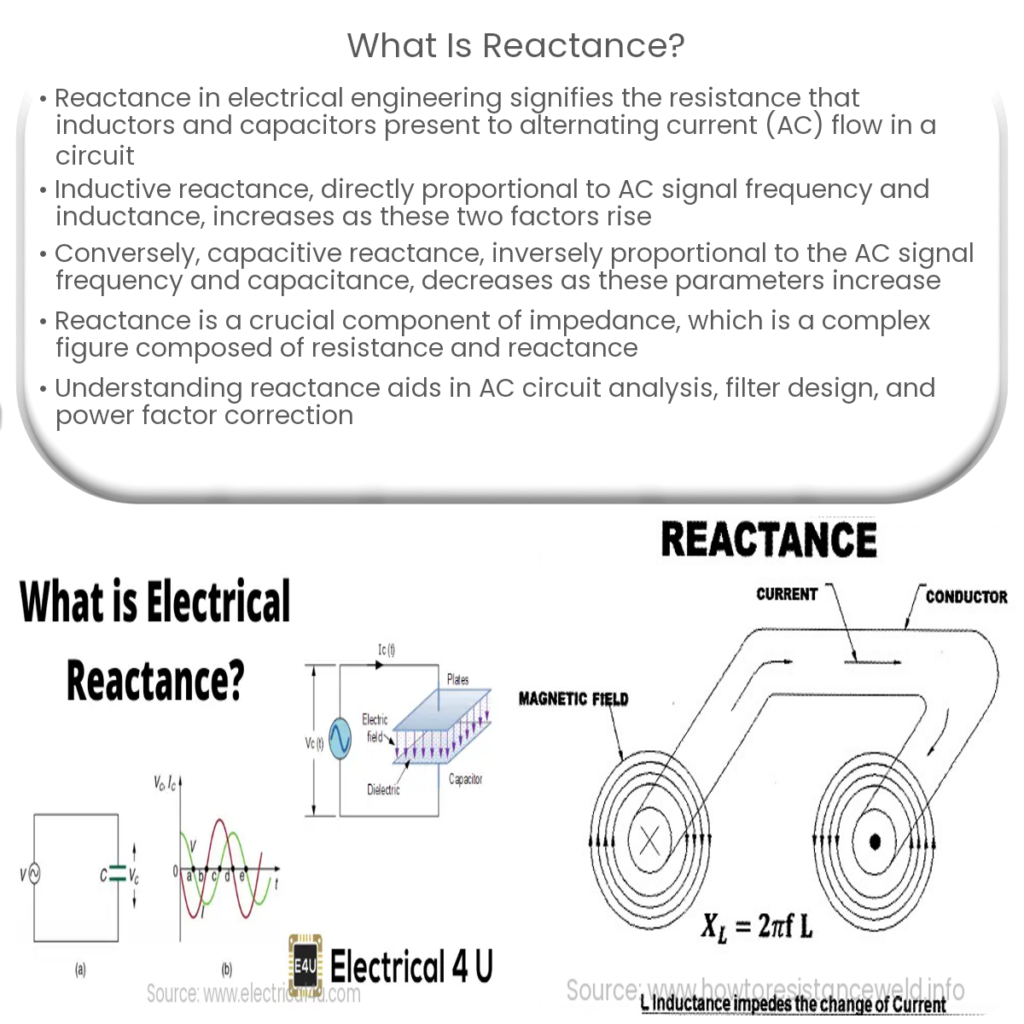
Reactance is the opposition to AC current flow presented by inductors and capacitors, and it’s a component of impedance in electrical circuits.

To calculate impedance in a circuit, add individual impedances in series, use the reciprocal formula for parallel, and apply complex arithmetic.
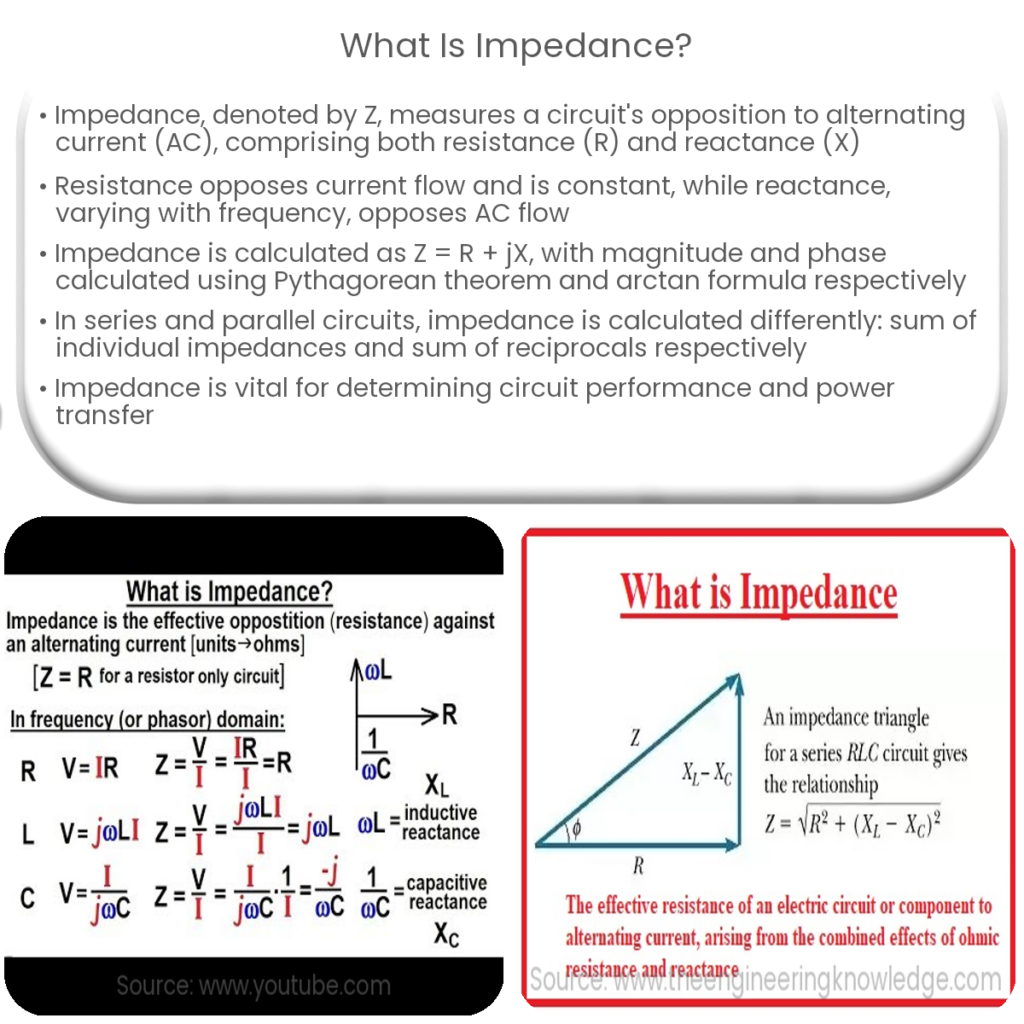
Impedance is a complex value representing the opposition a circuit element presents to the flow of AC or complex voltage, including resistance and reactance.

To choose the right capacitor, consider capacitance value, voltage rating, tolerance, dielectric material, ESR, dissipation factor, and temperature range.
The relationship between capacitance, voltage, and current is defined by the formula I = C × (dV/dt), linking energy storage, voltage changes, and current flow.

In a circuit, capacitors store electrical energy in an electric field, oppose voltage changes, and serve various roles like filtering and decoupling.

The primary purpose of this project is to help the public to learn some exciting and important information about electricity and magnetism.
Our Website follows all legal requirements to protect your privacy. Visit our Privacy Policy page.
The Cookies Statement is part of our Privacy Policy.
The information contained on this website is for general information purposes only. This website does not use any proprietary data. Visit our Editorial note.
It’s simple:
1) You may use almost everything for non-commercial and educational use.
2) You may not distribute or commercially exploit the content, especially on another website.


