
What are the different types of relays?
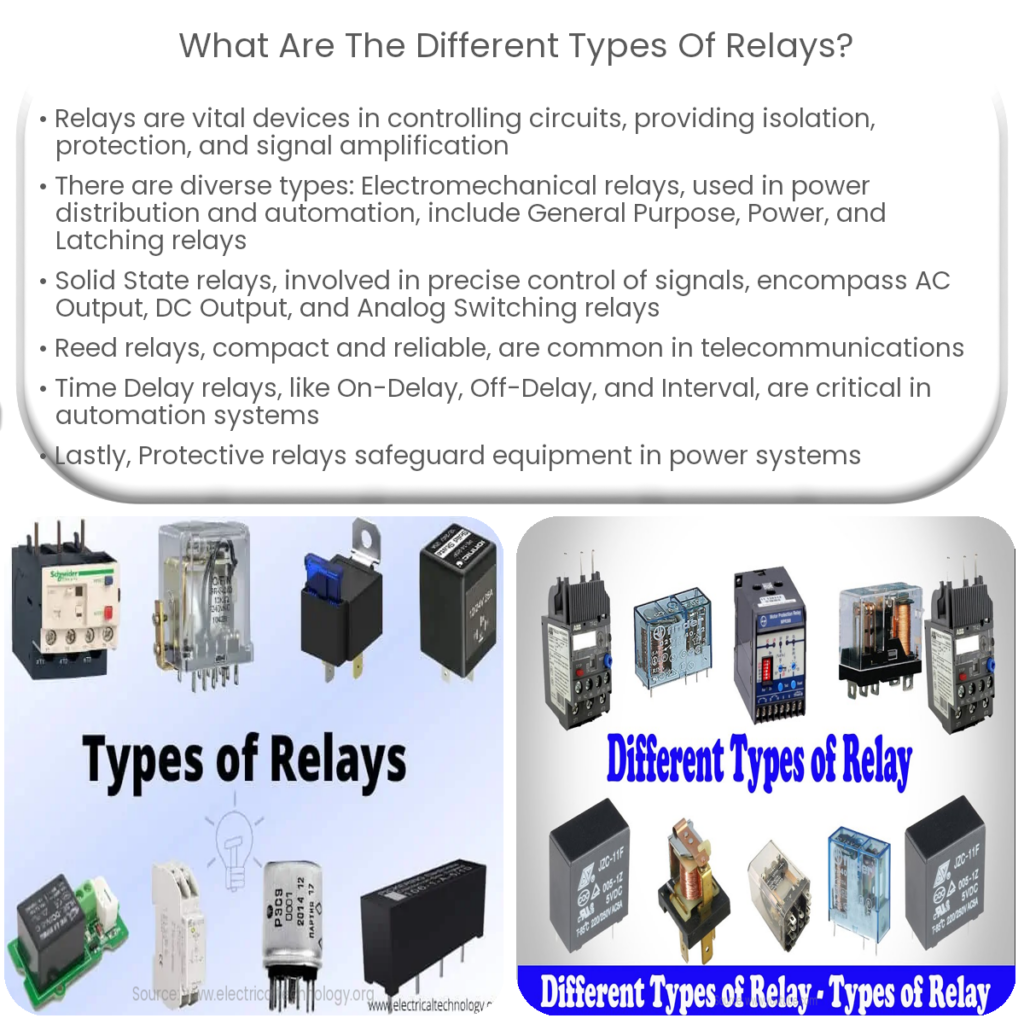
Different types of relays include electromechanical, solid-state, reed, time delay, and protective relays, each suited for specific applications.
Different types of relays include electromechanical, solid-state, reed, time delay, and protective relays, each suited for specific applications.

Relays are electromechanical switches that control high-power circuits using low-power signals, utilizing an electromagnet, contacts, and a spring.

A relay is an electrical component that functions as a switch, controlling high-power circuits using low-power signals in various systems.

To use an op-amp as a comparator, apply two input voltages to the inverting and non-inverting inputs, and observe the output based on their difference.

A comparator is an electronic circuit that compares two voltage levels and outputs a digital signal based on the comparison, used in various applications.

A non-inverting amplifier amplifies input voltage without inverting polarity, has high input impedance, and is used for signal conditioning, buffering, and audio amplification.
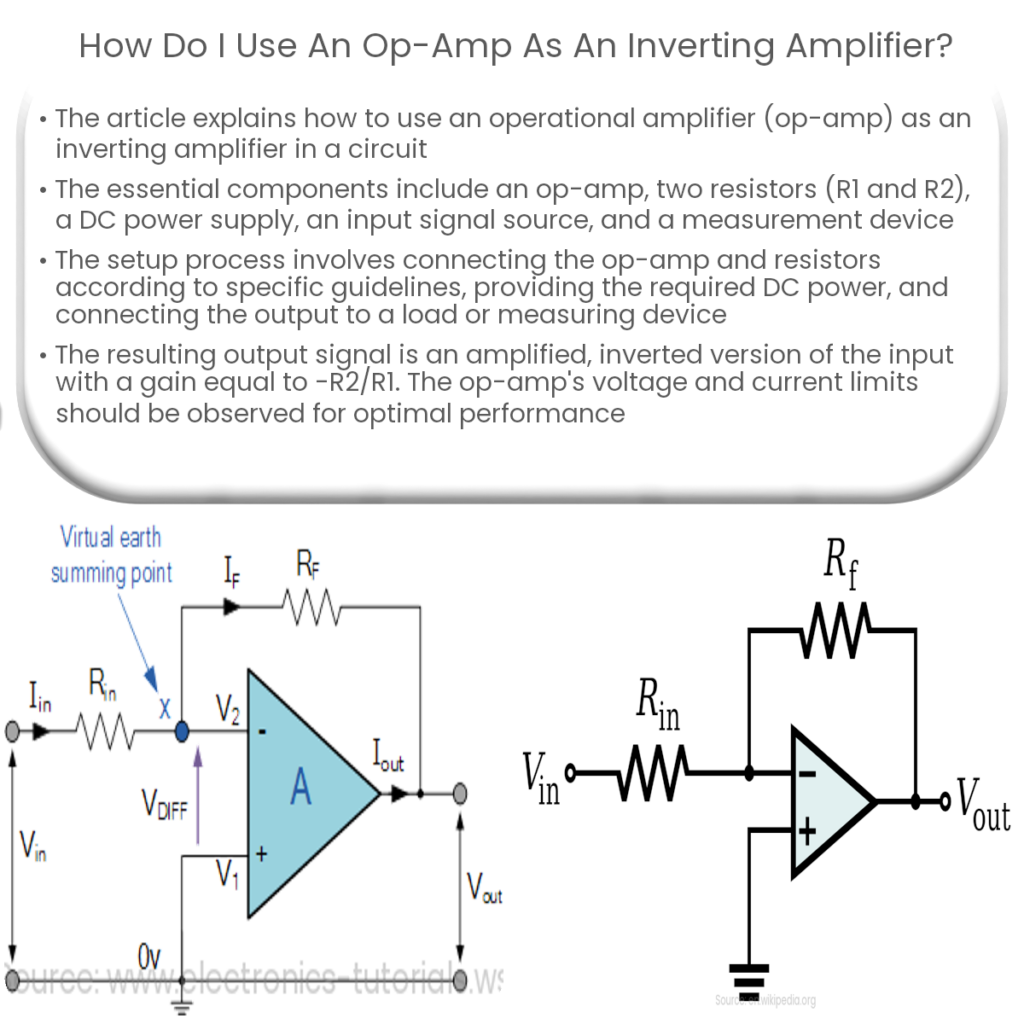
To use an op-amp as an inverting amplifier, connect input through R1 to inverting input, non-inverting input to ground, and R2 from output to inverting input.

Common op-amp configurations include inverting, non-inverting, voltage follower, summing, difference, integrator, differentiator, and comparator.

Op-amps amplify the difference between their inputs and produce an output based on this difference, often used in feedback configurations.
An operational amplifier (op-amp) is a high-gain electronic voltage amplifier used for signal amplification, filtering, and mathematical operations.

The primary purpose of this project is to help the public to learn some exciting and important information about electricity and magnetism.
Our Website follows all legal requirements to protect your privacy. Visit our Privacy Policy page.
The Cookies Statement is part of our Privacy Policy.
The information contained on this website is for general information purposes only. This website does not use any proprietary data. Visit our Editorial note.
It’s simple:
1) You may use almost everything for non-commercial and educational use.
2) You may not distribute or commercially exploit the content, especially on another website.


