
What are the differences between a BJT and a MOSFET?
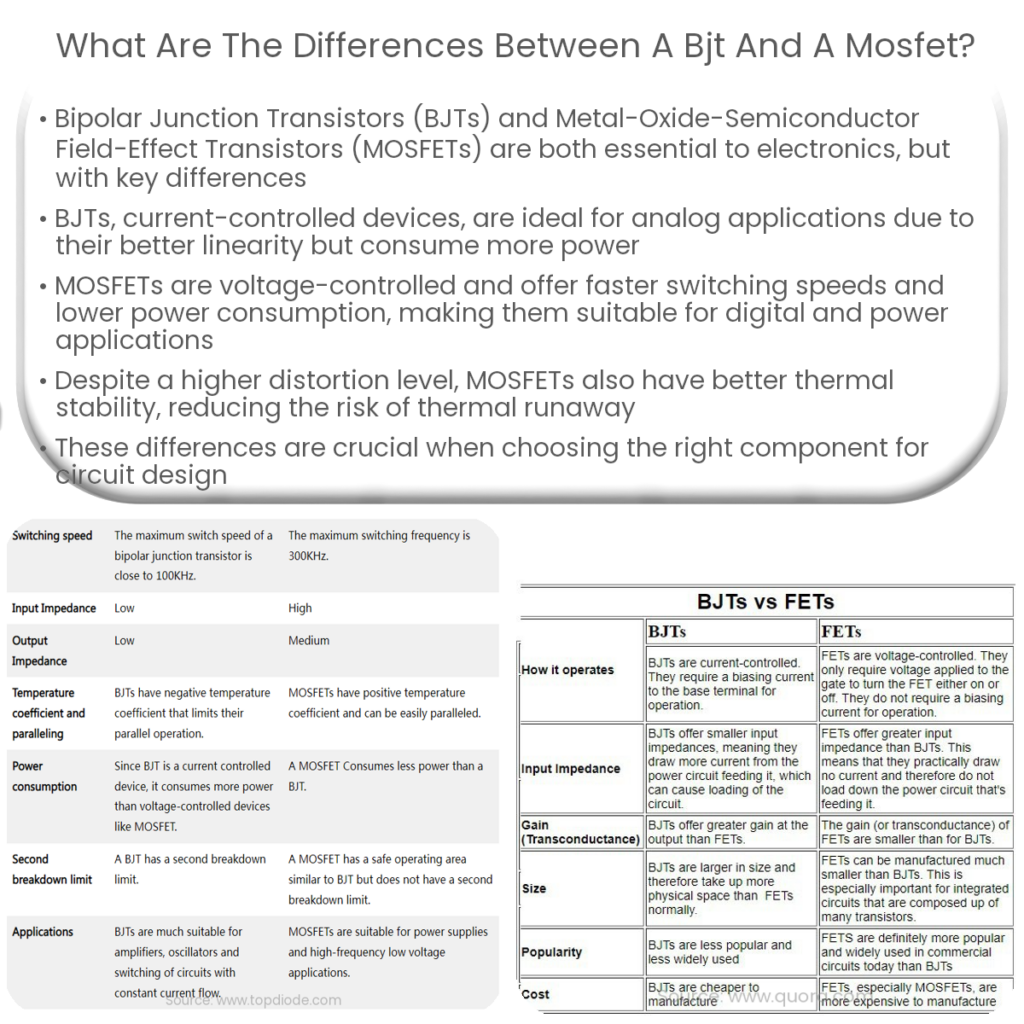
BJTs are current-controlled, better for analog applications, and can suffer thermal runaway. MOSFETs are voltage-controlled, faster, and more energy-efficient.
BJTs are current-controlled, better for analog applications, and can suffer thermal runaway. MOSFETs are voltage-controlled, faster, and more energy-efficient.

A MOSFET (Metal-Oxide-Semiconductor Field-Effect Transistor) is a transistor used for amplifying or switching electronic signals in various circuits.

A FET works in a circuit by using the voltage applied to its gate terminal to control the current flow between the source and drain terminals.
A field-effect transistor (FET) is a type of transistor that uses an electric field to control the flow of current, with high input impedance and low noise.
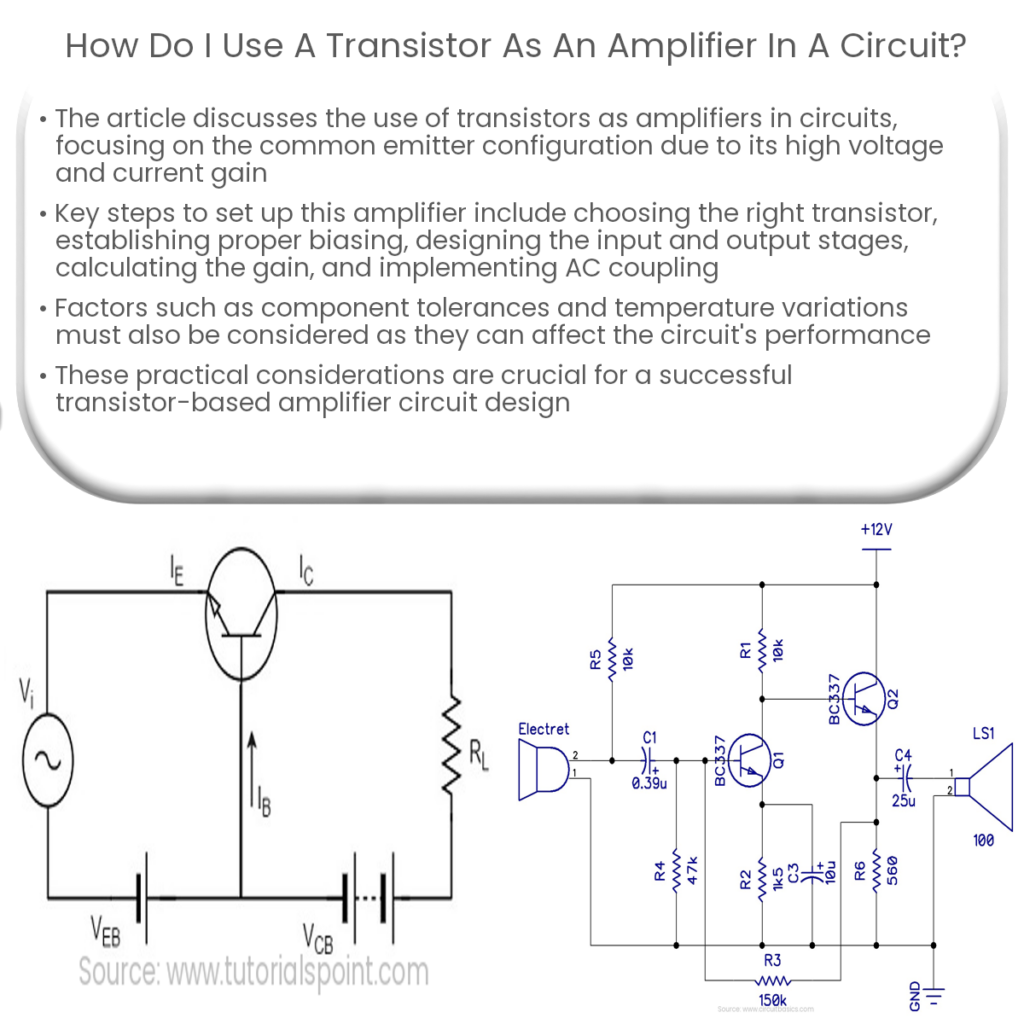
To use a transistor as an amplifier, choose the right transistor, set up biasing, design input and output stages, and calculate the gain in your circuit.
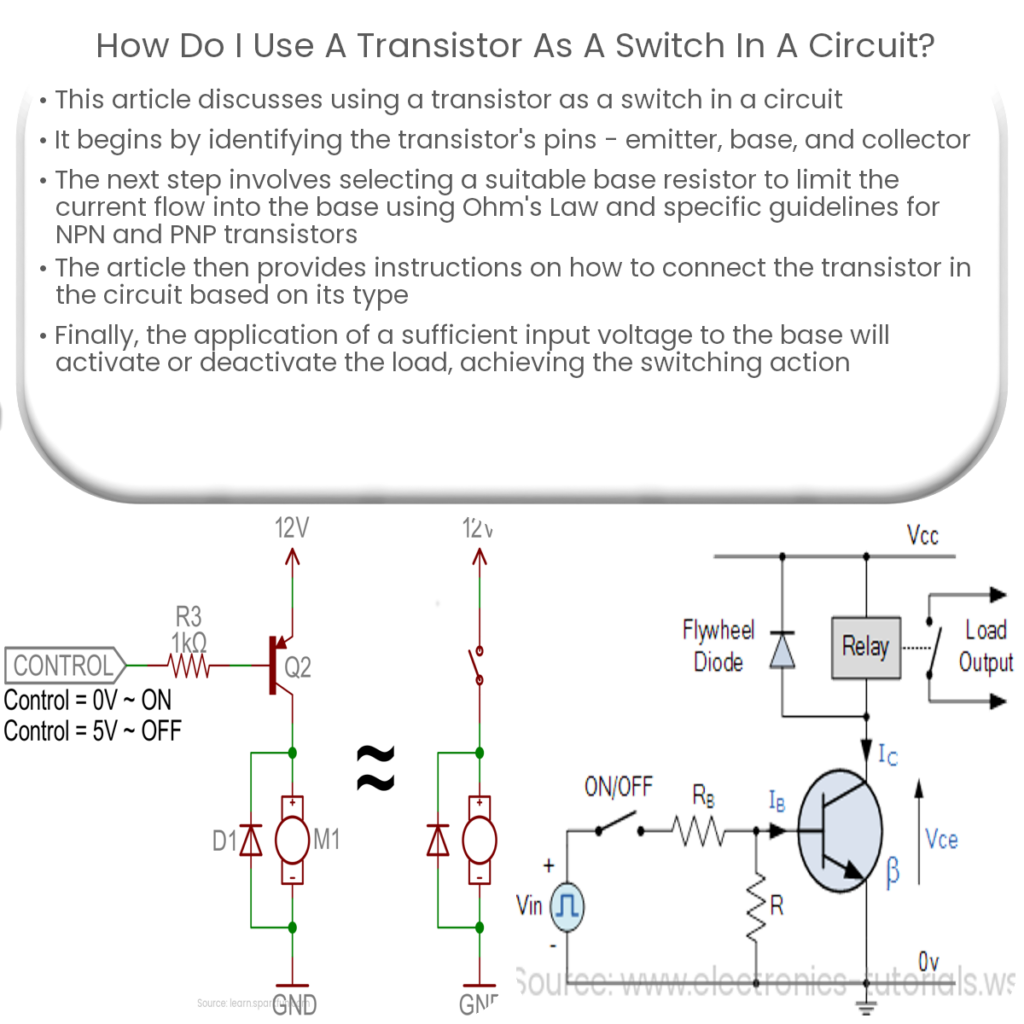
To use a transistor as a switch, connect the emitter, base, and collector properly, select a suitable base resistor, and apply the input signal.

A PNP transistor is a type of bipolar junction transistor with two P-type layers surrounding an N-type layer, used for amplification and switching.

An NPN transistor is a bipolar junction transistor with two N-type semiconductor layers surrounding a P-type layer, used for amplification and switching.

Transistors are classified into various types, such as BJTs, FETs, IGBTs, Thyristors, and UJTs, each designed for specific applications and functions.

Transistors work in a circuit as amplifiers and switches, controlling current flow by using a small input voltage or current to control a larger output.

The primary purpose of this project is to help the public to learn some exciting and important information about electricity and magnetism.
Our Website follows all legal requirements to protect your privacy. Visit our Privacy Policy page.
The Cookies Statement is part of our Privacy Policy.
The information contained on this website is for general information purposes only. This website does not use any proprietary data. Visit our Editorial note.
It’s simple:
1) You may use almost everything for non-commercial and educational use.
2) You may not distribute or commercially exploit the content, especially on another website.


