
What is the difference between a fuse and a circuit breaker?
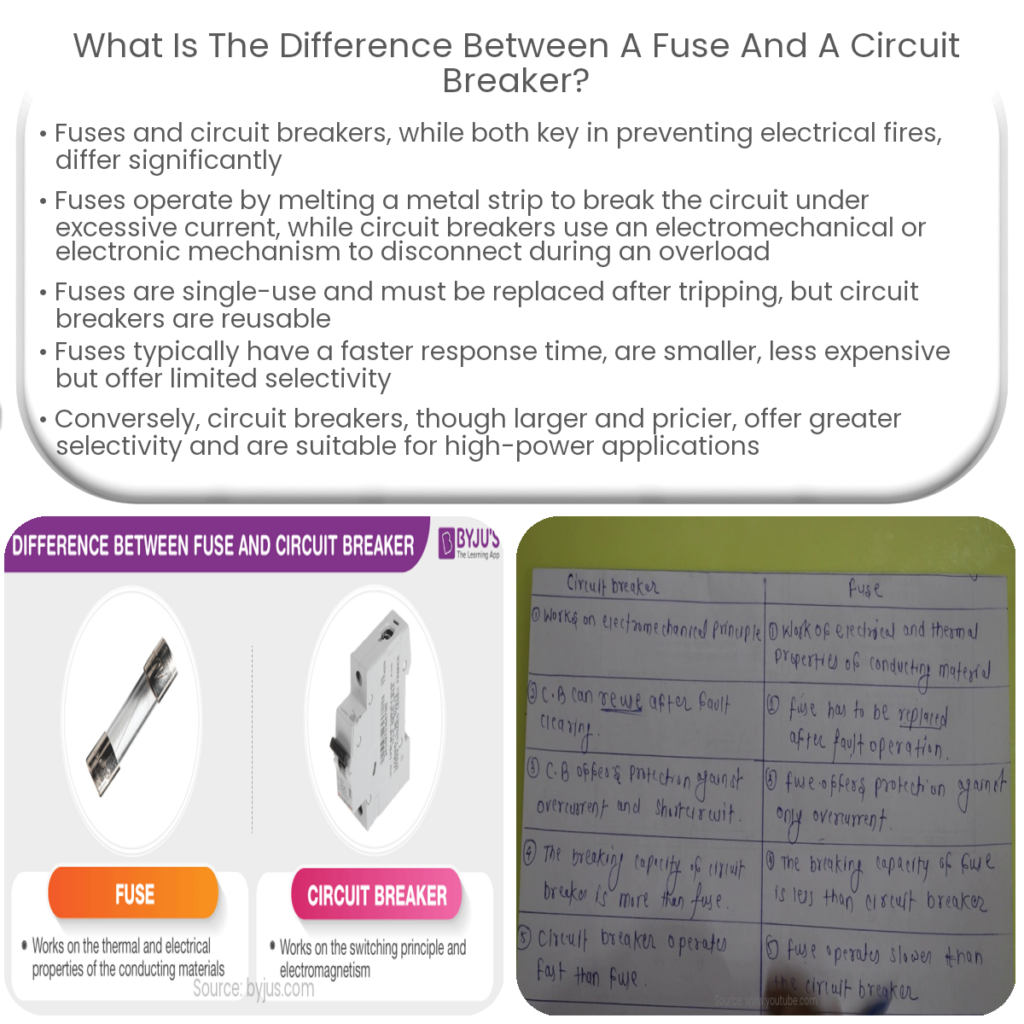
Fuses and circuit breakers differ in operating principle, reusability, response time, size, cost, and selectivity, each suited for specific applications.
Fuses and circuit breakers differ in operating principle, reusability, response time, size, cost, and selectivity, each suited for specific applications.

Fuses and circuit breakers protect electrical systems by interrupting current flow in case of overloads or short circuits, ensuring safety and preventing damage.

Fuses and circuit breakers protect electrical systems by interrupting the flow of current during overloads, short circuits, and other hazards.
Real power performs useful work, reactive power maintains voltage levels, and apparent power represents the total power supplied to a circuit.

To calculate power factor in an AC circuit, divide the real power (P) by the apparent power (S): PF = P / S. Alternatively, divide resistance (R) by impedance (Z).
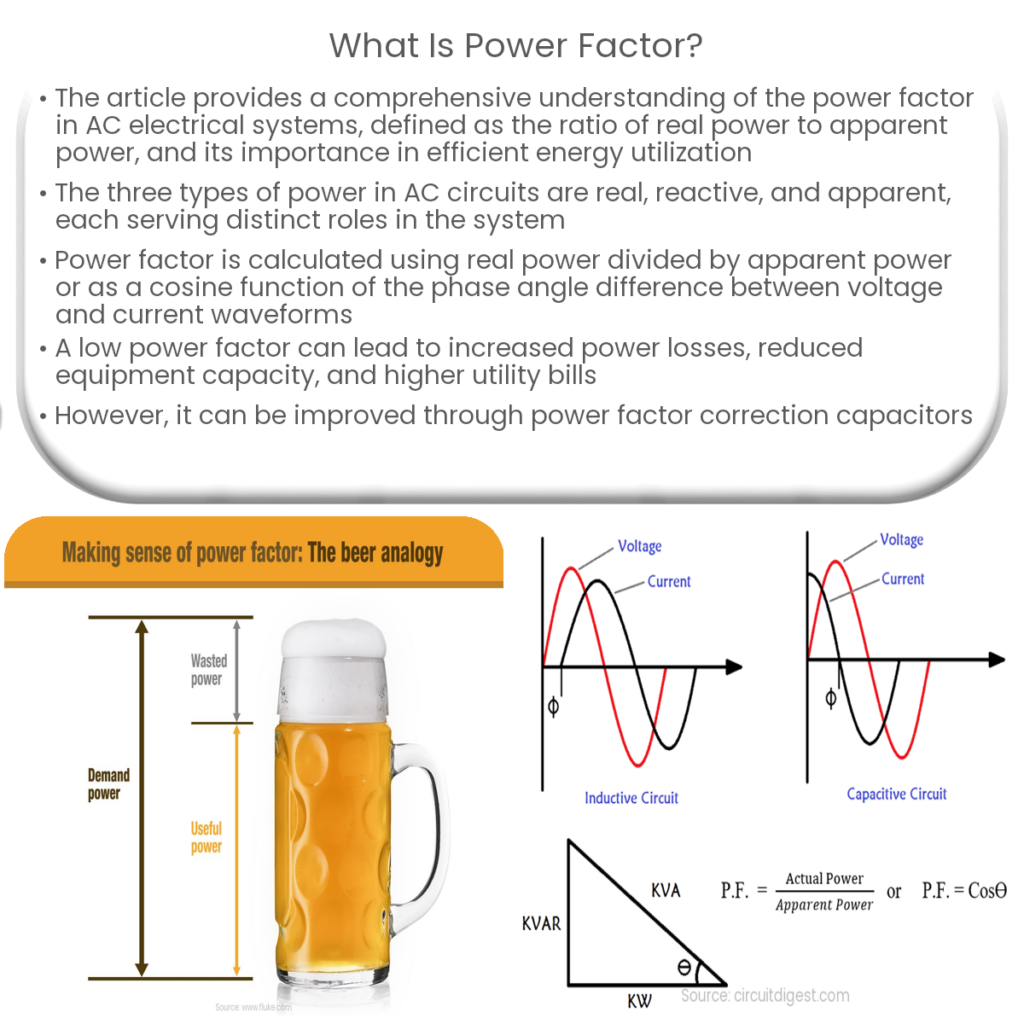
Power factor is the ratio of real power to apparent power in an AC circuit, indicating the efficiency of power usage in the electrical system.
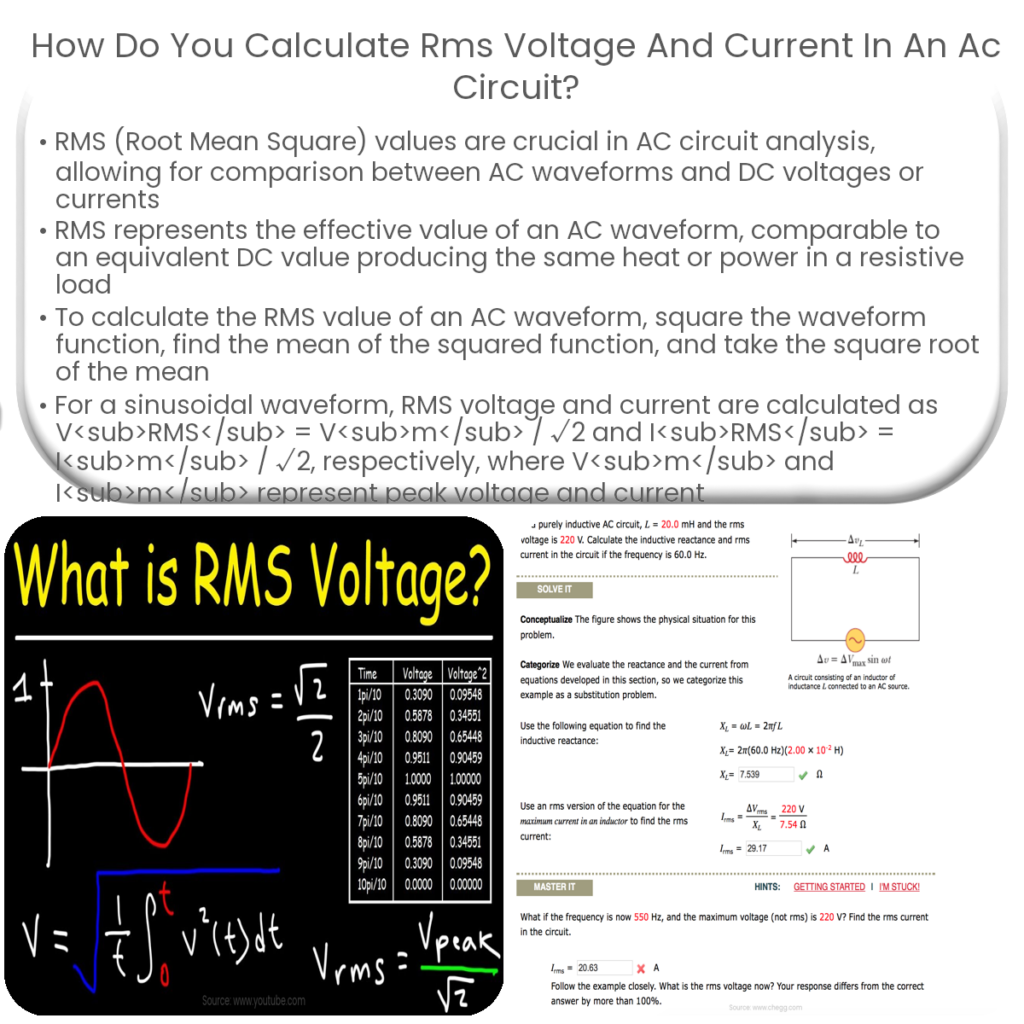
To calculate RMS voltage and current in an AC circuit, divide the peak voltage and peak current by the square root of 2 (√2) respectively.

RMS voltage and current are effective values of AC waveforms, allowing comparison with DC and determining power consumption and heat generation.

To calculate phase difference in an AC circuit, use the arctangent function with the net reactance and resistance: φ = arctan(Xnet/R).

Phase difference in an AC circuit refers to the angle between voltage and current waveforms, impacting power consumption and circuit performance.

The primary purpose of this project is to help the public to learn some exciting and important information about electricity and magnetism.
Our Website follows all legal requirements to protect your privacy. Visit our Privacy Policy page.
The Cookies Statement is part of our Privacy Policy.
The information contained on this website is for general information purposes only. This website does not use any proprietary data. Visit our Editorial note.
It’s simple:
1) You may use almost everything for non-commercial and educational use.
2) You may not distribute or commercially exploit the content, especially on another website.


