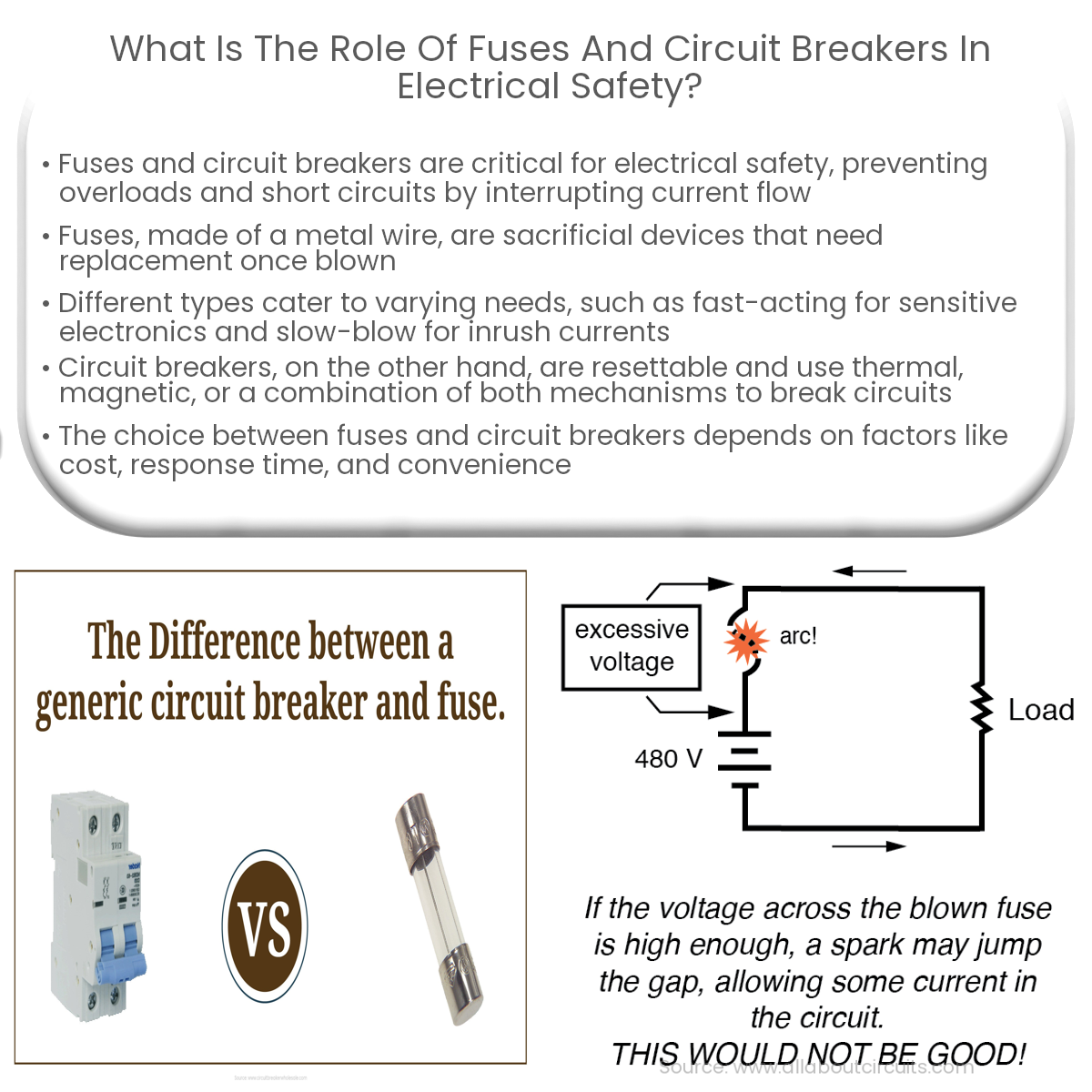
Fuses and circuit breakers protect electrical systems by interrupting the flow of current during overloads, short circuits, and other hazards.
Fuses and Circuit Breakers: Ensuring Electrical Safety
Fuses and circuit breakers play a vital role in maintaining electrical safety in various residential, commercial, and industrial settings. They serve as protective devices designed to prevent electrical overloads, short circuits, and other dangerous events by interrupting the flow of current when necessary.
How Fuses Work
Fuses are typically composed of a metal wire or filament enclosed within a non-conductive housing. When the current flowing through the wire exceeds its rated capacity, the wire melts, breaking the circuit and preventing the flow of electricity. Fuses are considered sacrificial devices, meaning they need to be replaced after they have blown.
- Fast-acting fuses: These fuses react quickly to overloads and are suitable for sensitive electronic devices.
- Slow-blow fuses: These fuses can withstand temporary current surges without blowing, making them ideal for applications with inrush currents, such as motors.
How Circuit Breakers Work
Circuit breakers are electromechanical devices that automatically switch off the flow of current in a circuit when it exceeds a predetermined level. Unlike fuses, circuit breakers can be reset after they have been tripped, making them reusable.
- Thermal circuit breakers: These breakers use a bimetallic strip that bends and triggers a mechanical switch when heated by an excessive current.
- Magnetic circuit breakers: These breakers employ an electromagnet that pulls a switch open when the current exceeds a certain threshold.
- Thermal-magnetic circuit breakers: Combining both thermal and magnetic elements, these breakers offer a balance between sensitivity and the ability to handle inrush currents.
Choosing Between Fuses and Circuit Breakers
While both fuses and circuit breakers serve a similar purpose, there are key differences between the two that can influence the choice of protective device. Fuses tend to be less expensive and offer faster response times, while circuit breakers are more convenient due to their resettable nature and often include additional safety features, such as ground fault or arc fault protection.
Conclusion
Fuses and circuit breakers are essential components in electrical safety, protecting both people and equipment from the hazards of overloads and short circuits. Understanding their functions and differences can help in selecting the appropriate protective device for specific applications, ensuring the safety and reliability of electrical systems.