
What is the role of an inductor in a filter circuit?
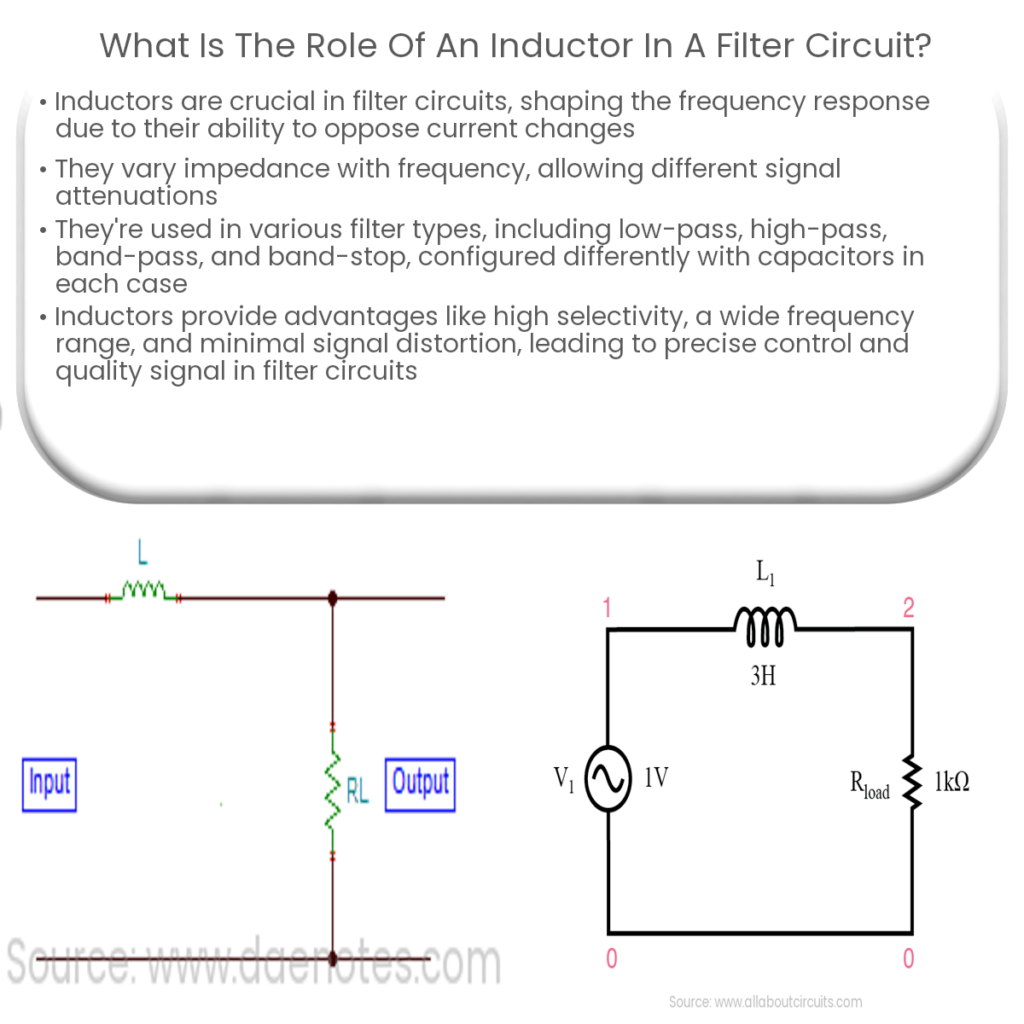
Inductors in filter circuits shape the frequency response by allowing or attenuating signals based on their frequency-dependent impedance.
Inductors in filter circuits shape the frequency response by allowing or attenuating signals based on their frequency-dependent impedance.
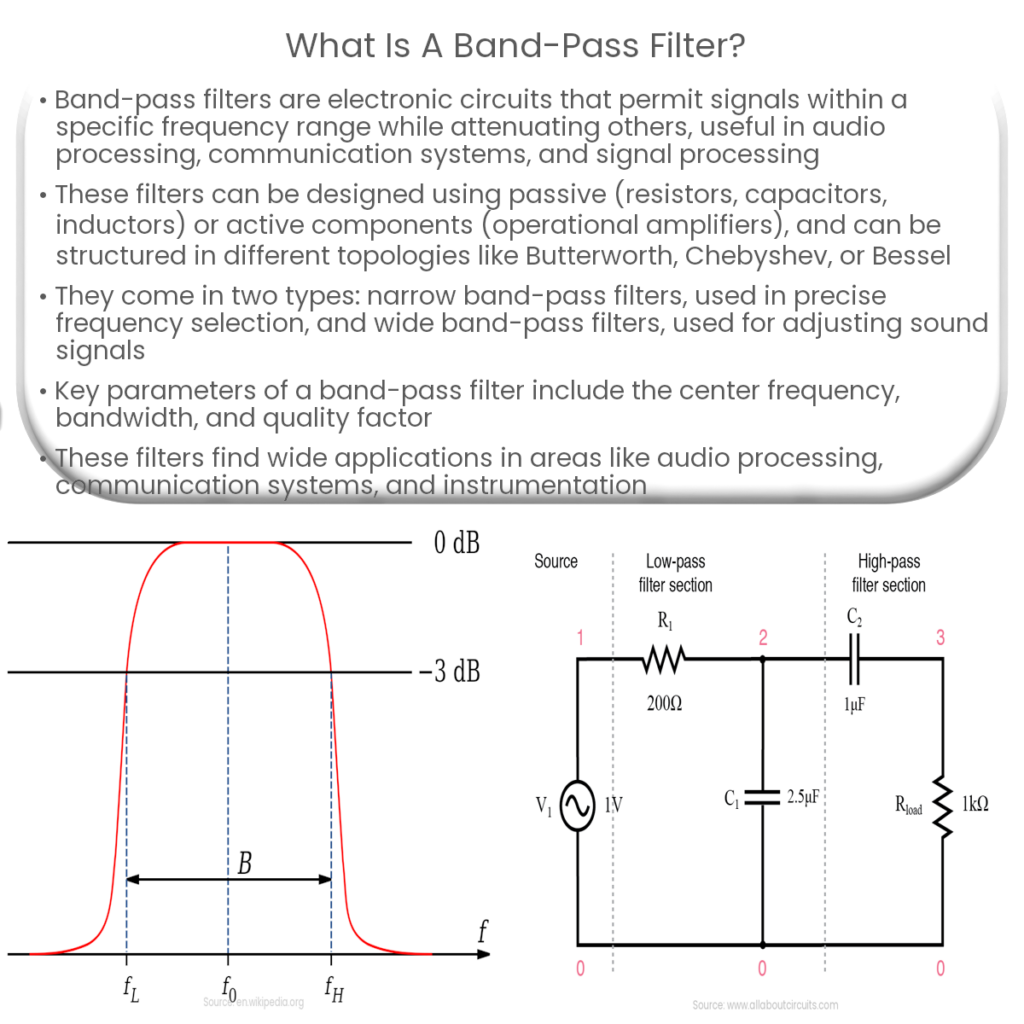
A band-pass filter is an electronic circuit that allows signals within a specific frequency range to pass while attenuating signals outside that range.
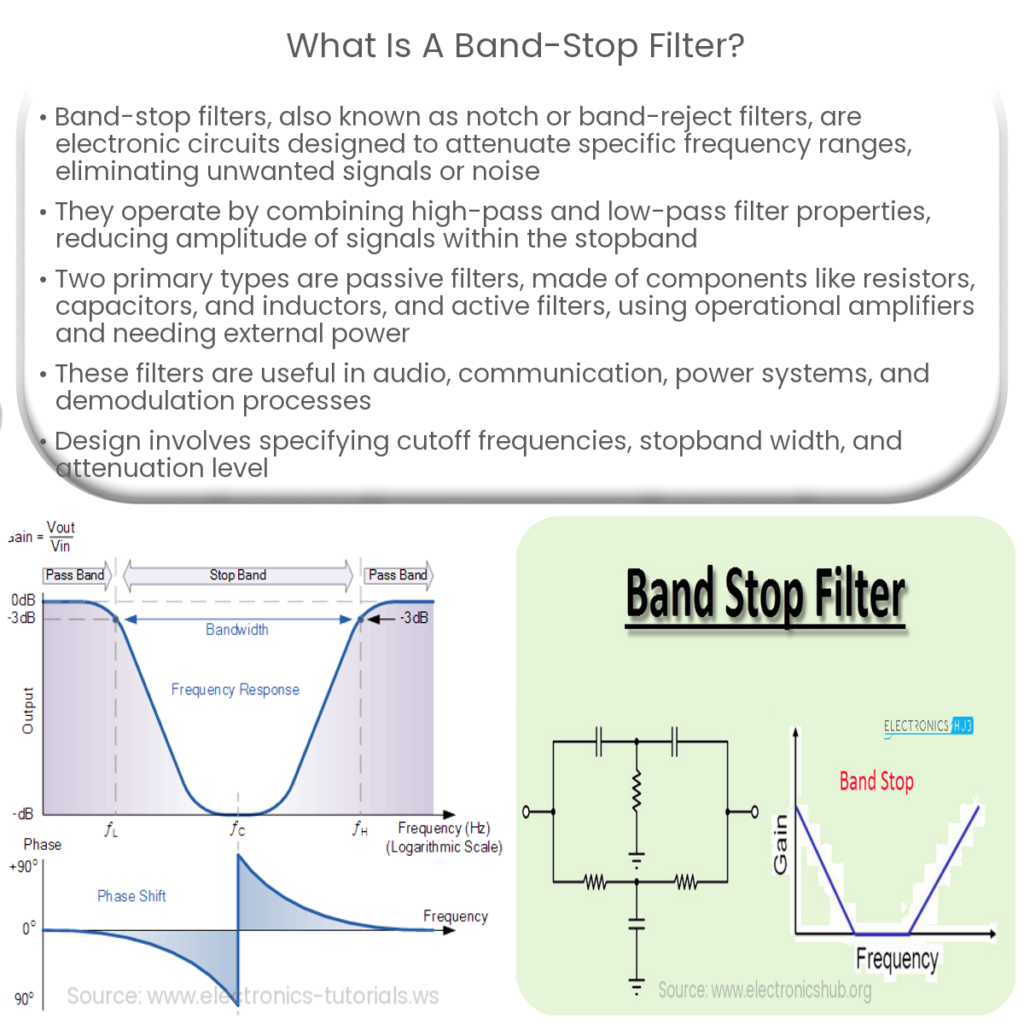
A band-stop filter attenuates a specific range of frequencies while allowing other frequencies to pass, effectively removing unwanted signals or noise.

A low-pass filter is an electronic circuit that allows signals with frequencies below a cutoff frequency to pass, while attenuating higher frequencies.
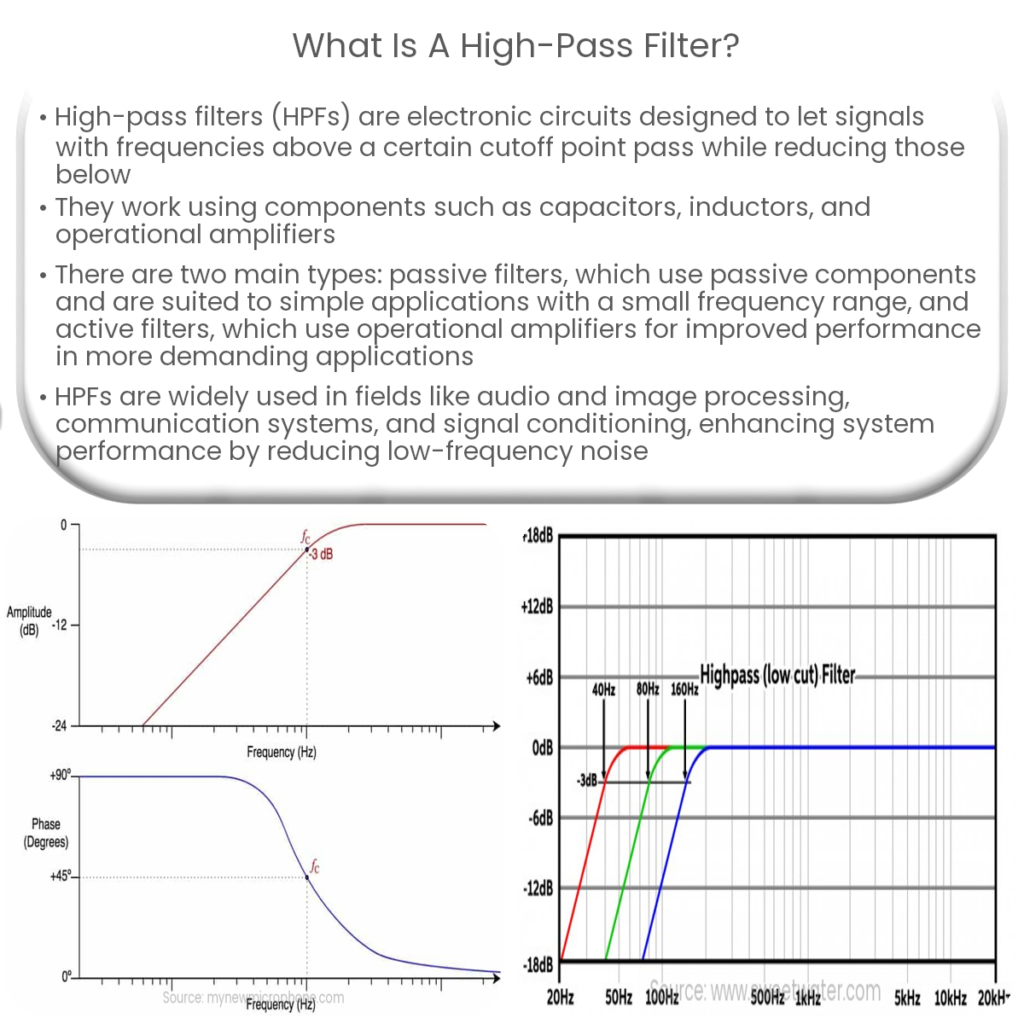
A high-pass filter is an electronic circuit that allows signals above a certain frequency to pass while attenuating lower frequency signals.
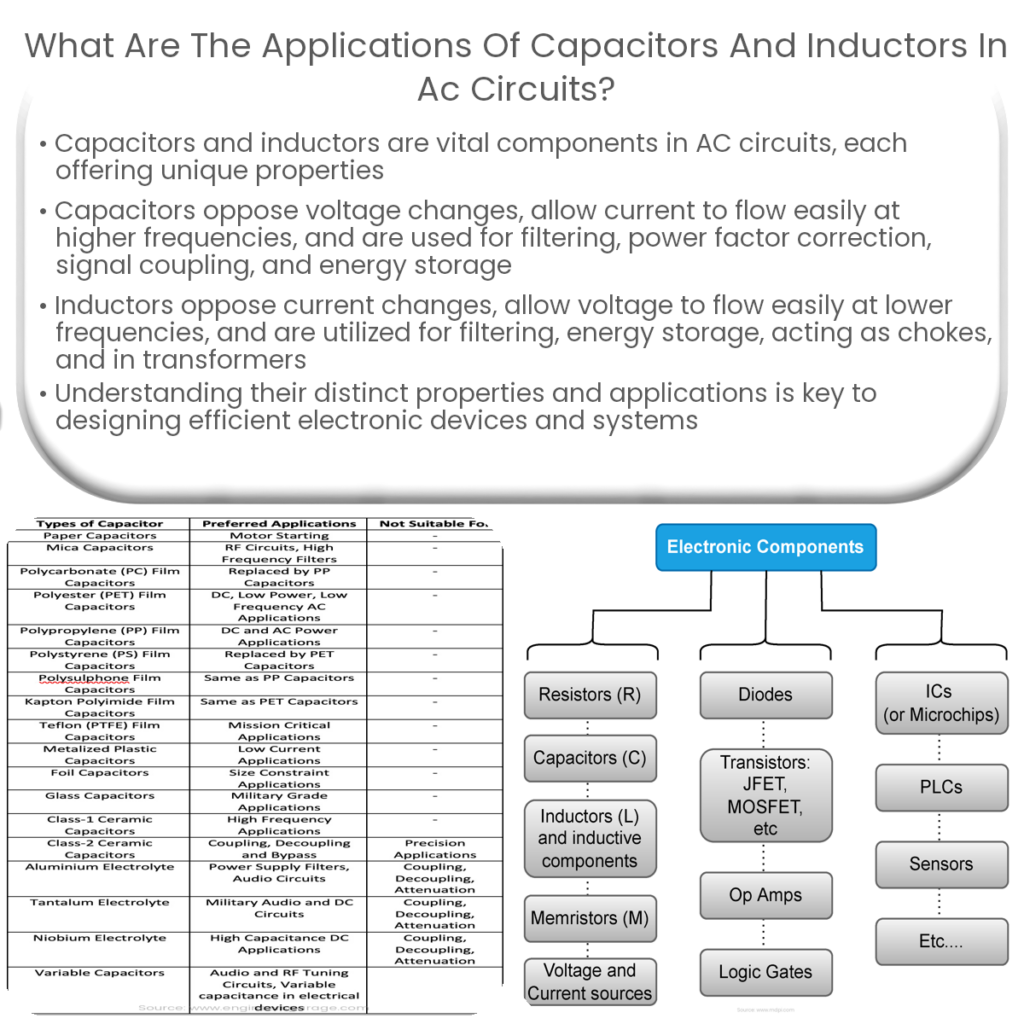
Capacitors and inductors are used in AC circuits for filtering, energy storage, signal coupling, power factor correction, chokes, and transformers.
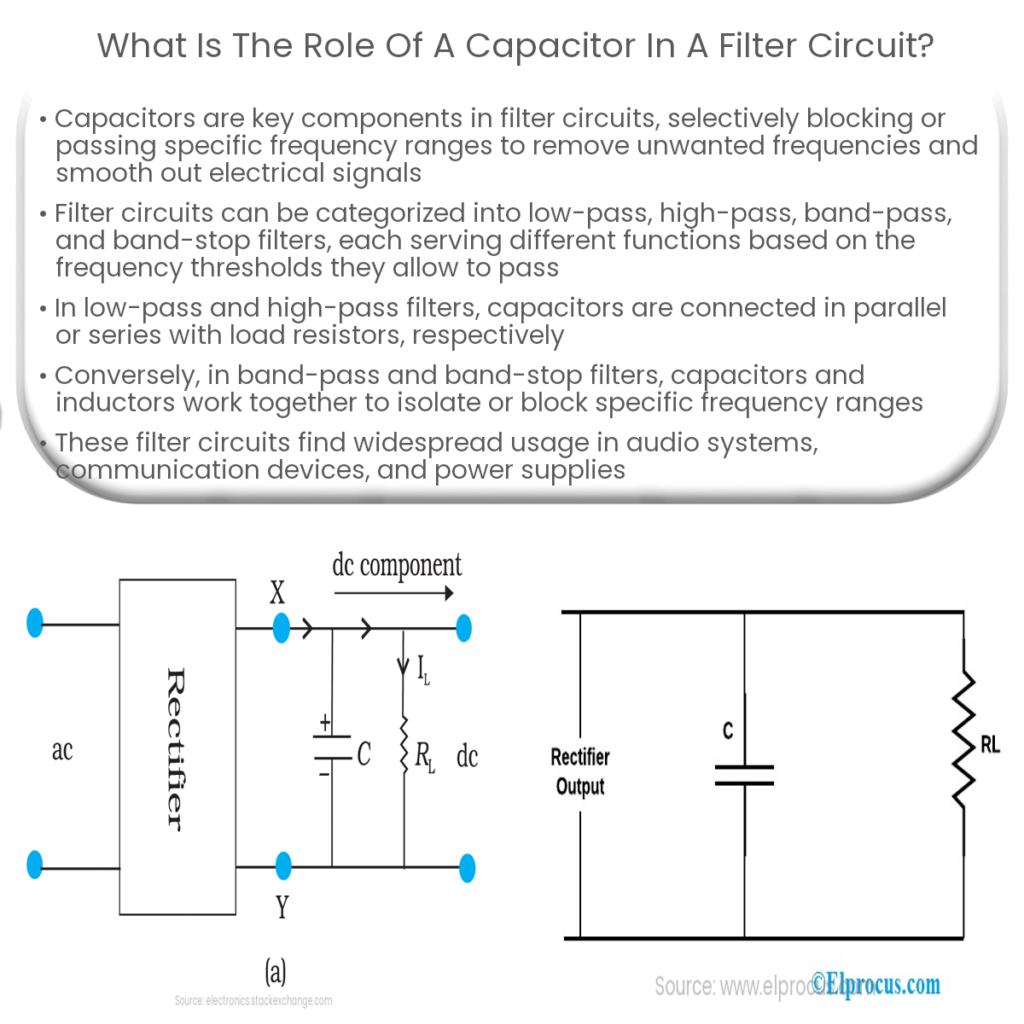
In filter circuits, capacitors selectively block or allow specific frequency ranges, enabling noise removal and signal smoothing in various applications.
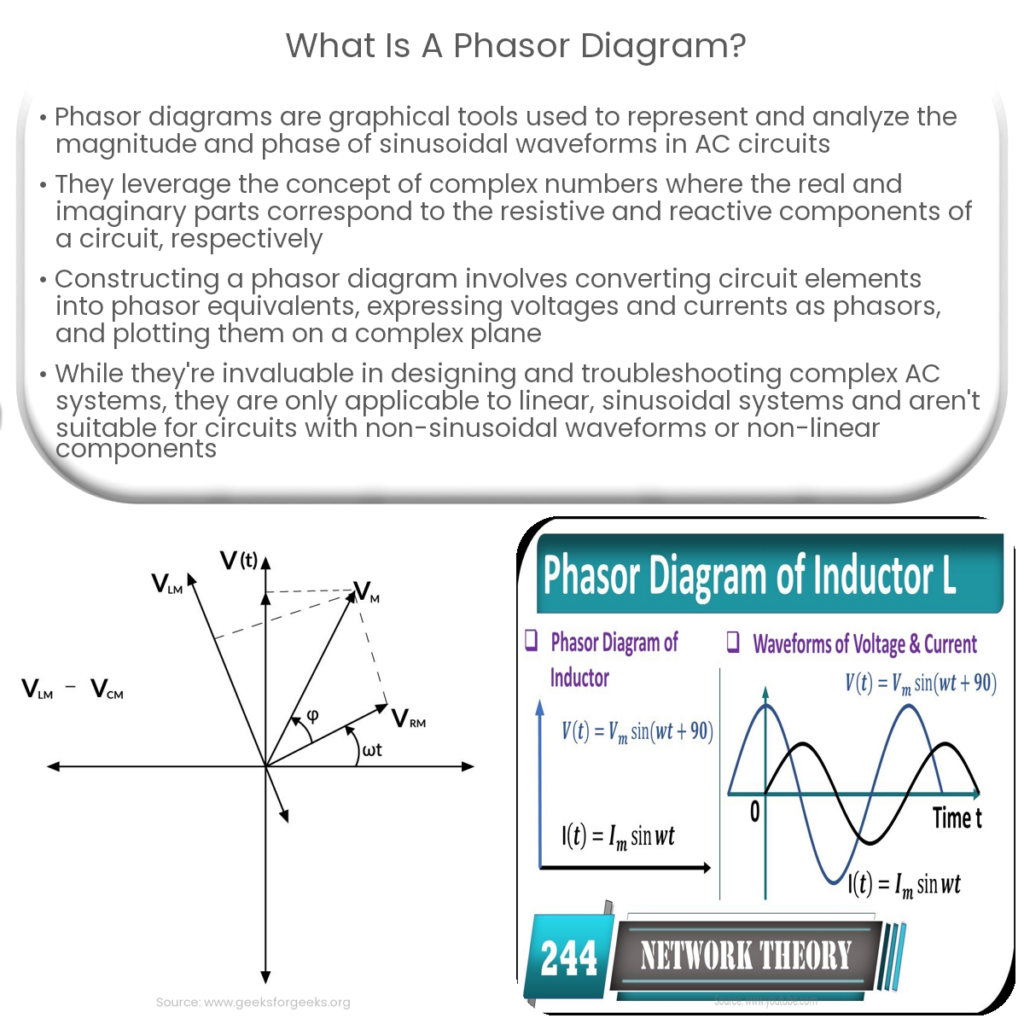
A phasor diagram is a graphical representation of the magnitude and phase of sinusoidal waveforms in an AC circuit, used for analyzing circuit behavior.
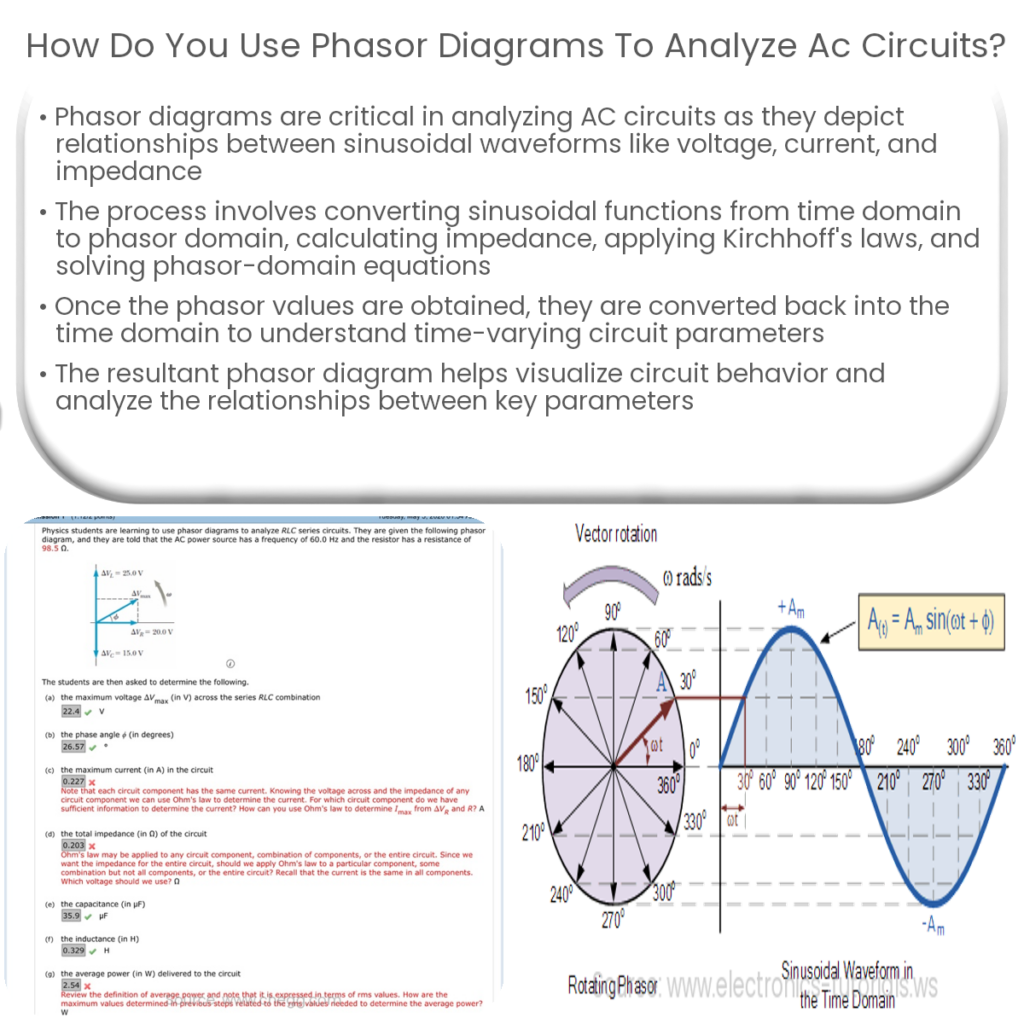
Phasor diagrams help analyze AC circuits by visualizing the relationships between sinusoidal waveforms, like voltage, current, and impedance.
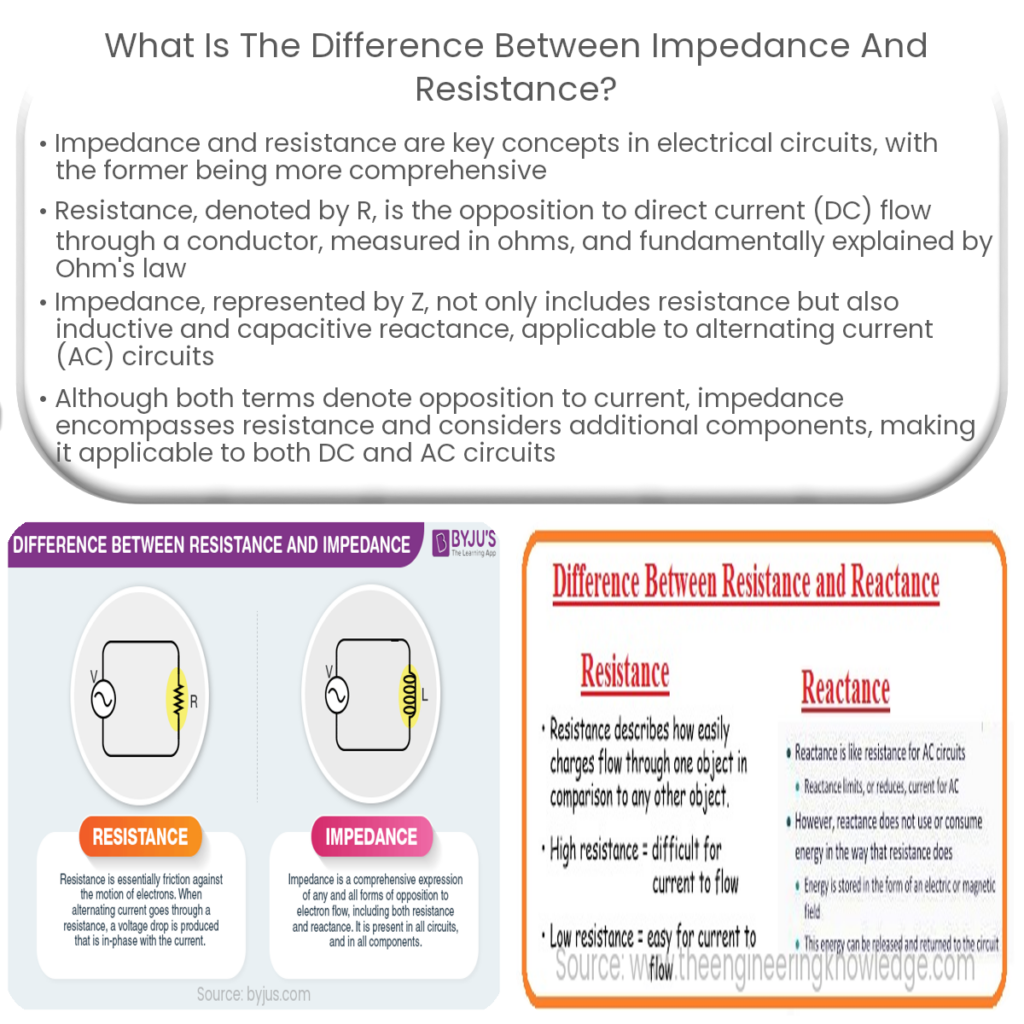
Impedance is a complex quantity in AC circuits, considering resistance, inductive reactance, and capacitive reactance. Resistance is a simpler concept for DC circuits.

The primary purpose of this project is to help the public to learn some exciting and important information about electricity and magnetism.
Our Website follows all legal requirements to protect your privacy. Visit our Privacy Policy page.
The Cookies Statement is part of our Privacy Policy.
The information contained on this website is for general information purposes only. This website does not use any proprietary data. Visit our Editorial note.
It’s simple:
1) You may use almost everything for non-commercial and educational use.
2) You may not distribute or commercially exploit the content, especially on another website.
