
How are resistors classified based on their construction?
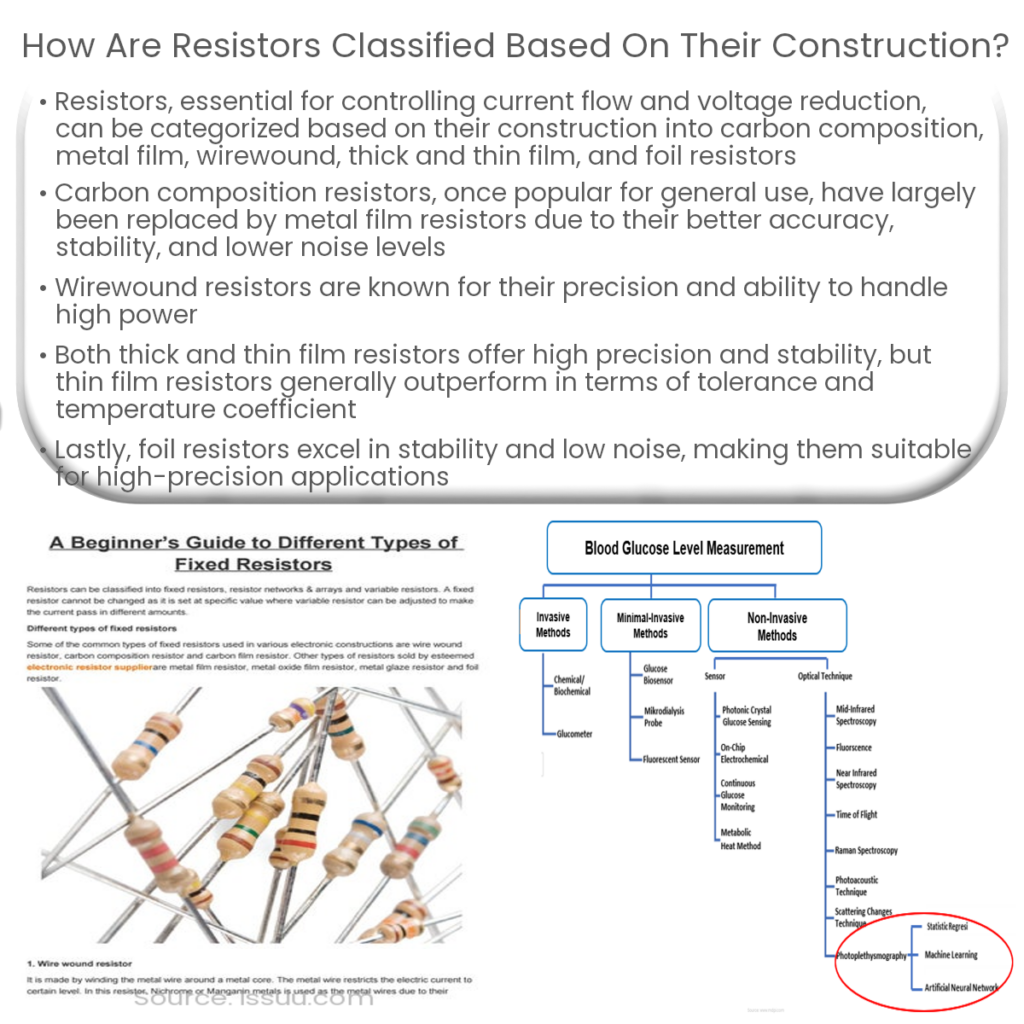
Resistors are classified based on construction as carbon composition, metal film, wirewound, thick and thin film, and foil resistors, each with unique properties.
Resistors are classified based on construction as carbon composition, metal film, wirewound, thick and thin film, and foil resistors, each with unique properties.
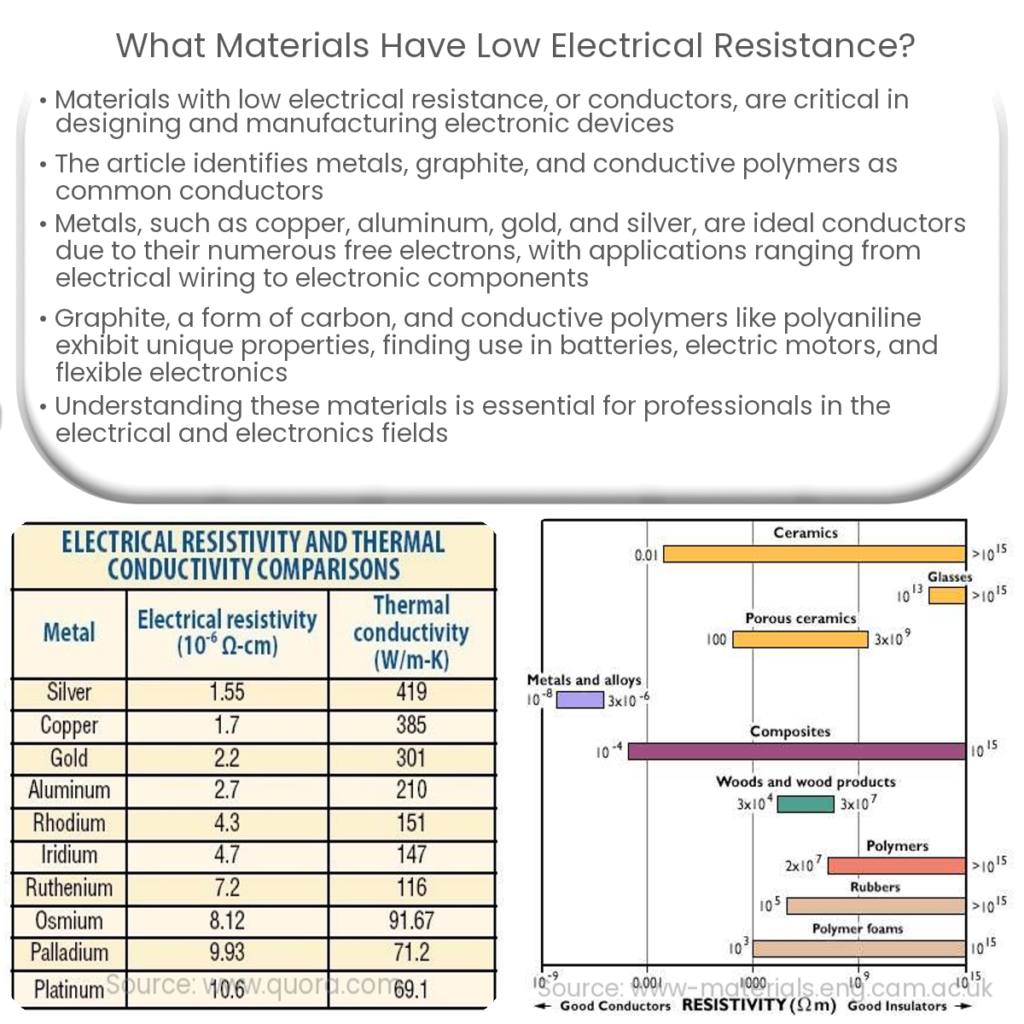
Low electrical resistance materials include metals (copper, aluminum, gold, silver), graphite, and conductive polymers, used in various electrical applications.

A resistor is a passive electrical component that creates specified resistance in a circuit, controlling current flow, reducing voltage, and protecting components.
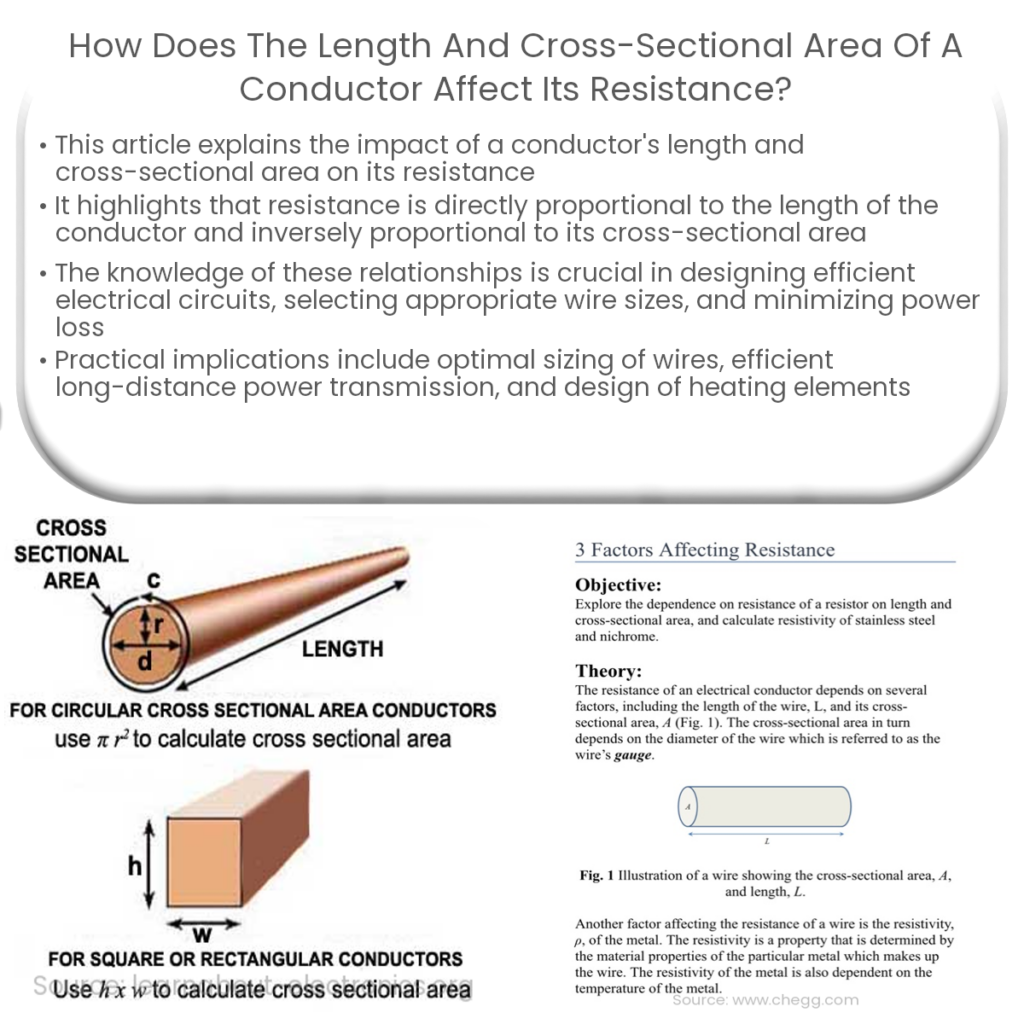
Resistance is directly proportional to conductor length and inversely proportional to its cross-sectional area, affecting circuit performance and efficiency.
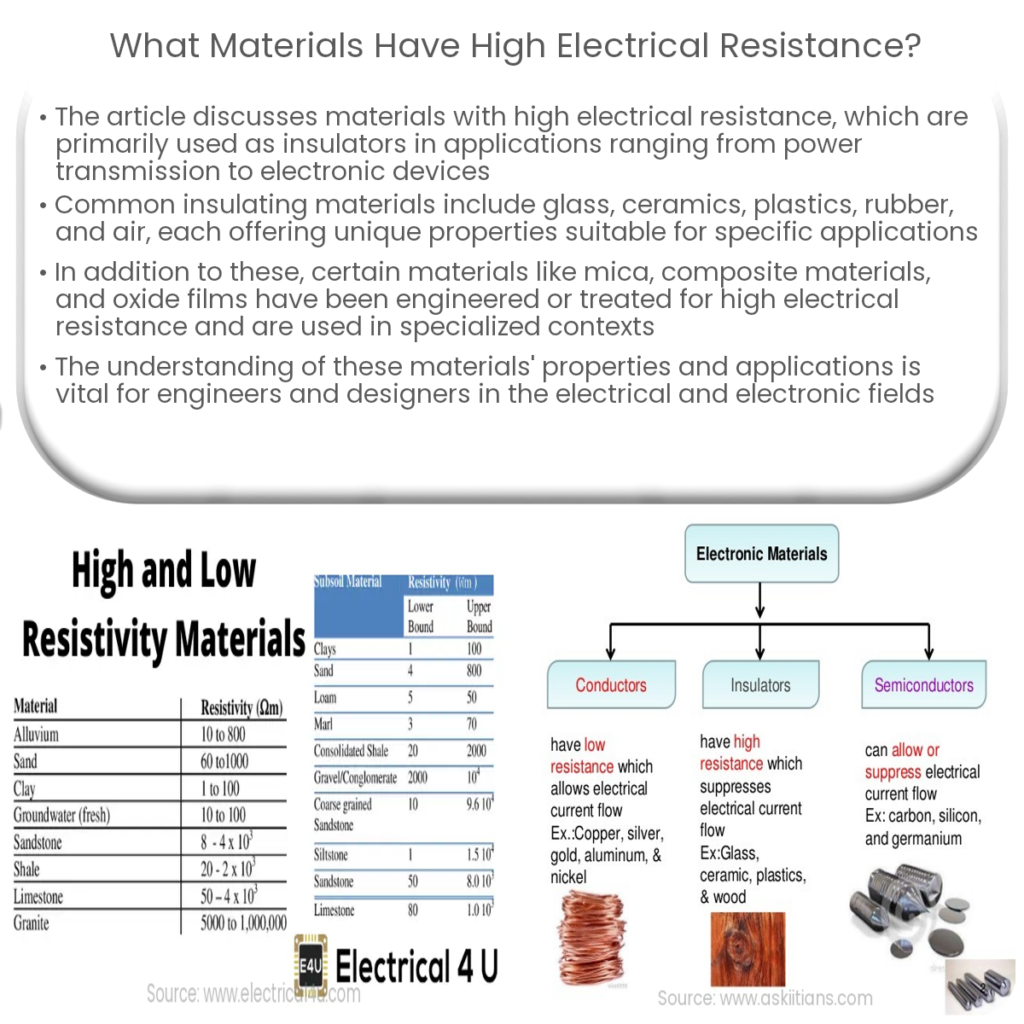
Materials with high electrical resistance include glass, ceramics, plastics, rubber, air, mica, composite materials, and oxide films used for insulation.
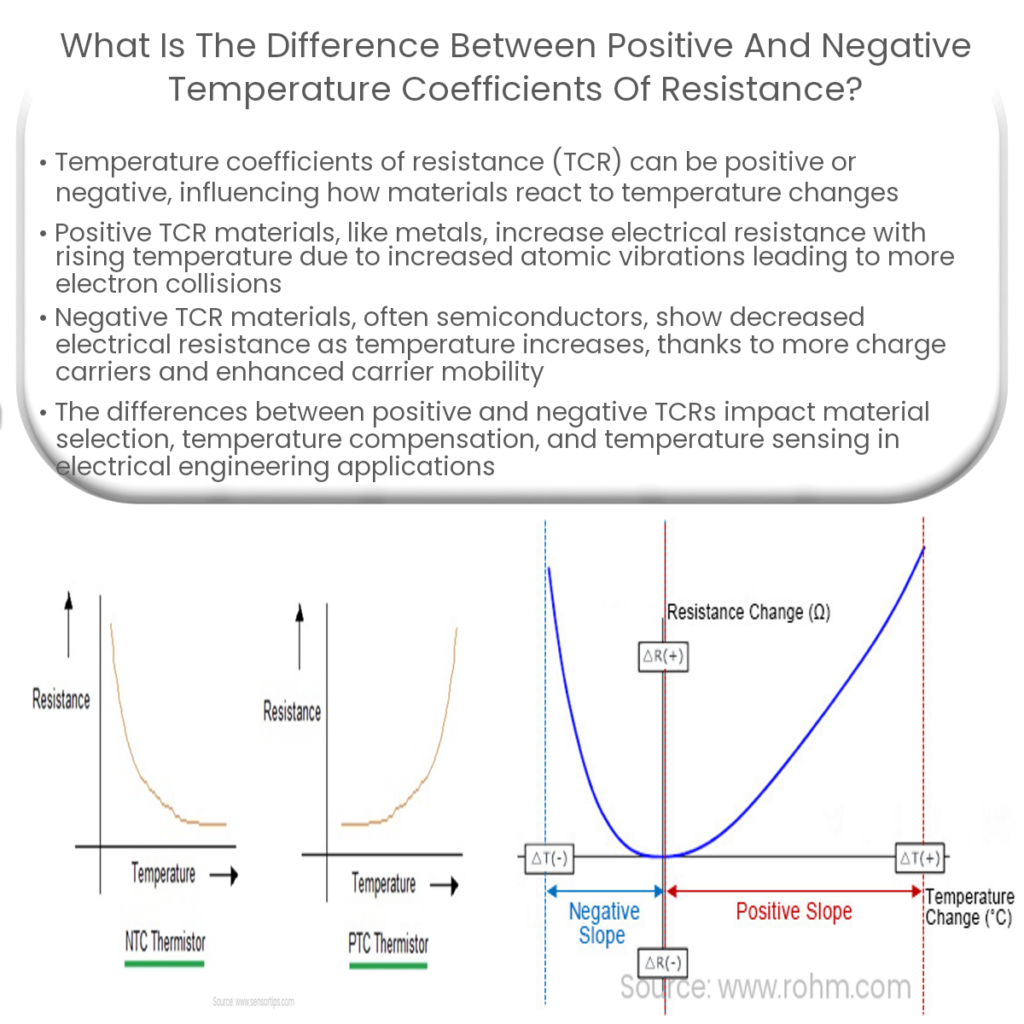
Positive temperature coefficients show increased resistance with rising temperature, while negative coefficients exhibit a decrease in resistance.
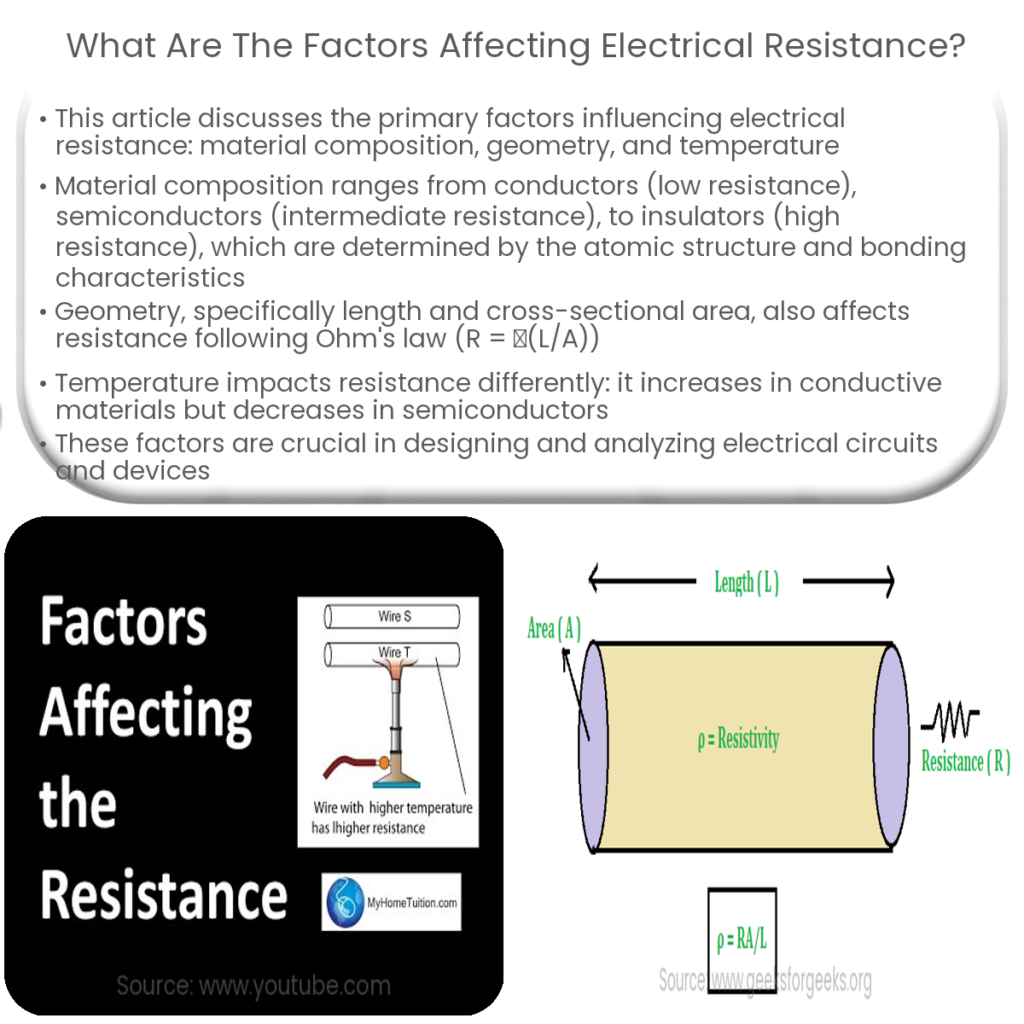
Electrical resistance is affected by material composition, geometry (length and cross-sectional area), and temperature, impacting circuit and device performance.
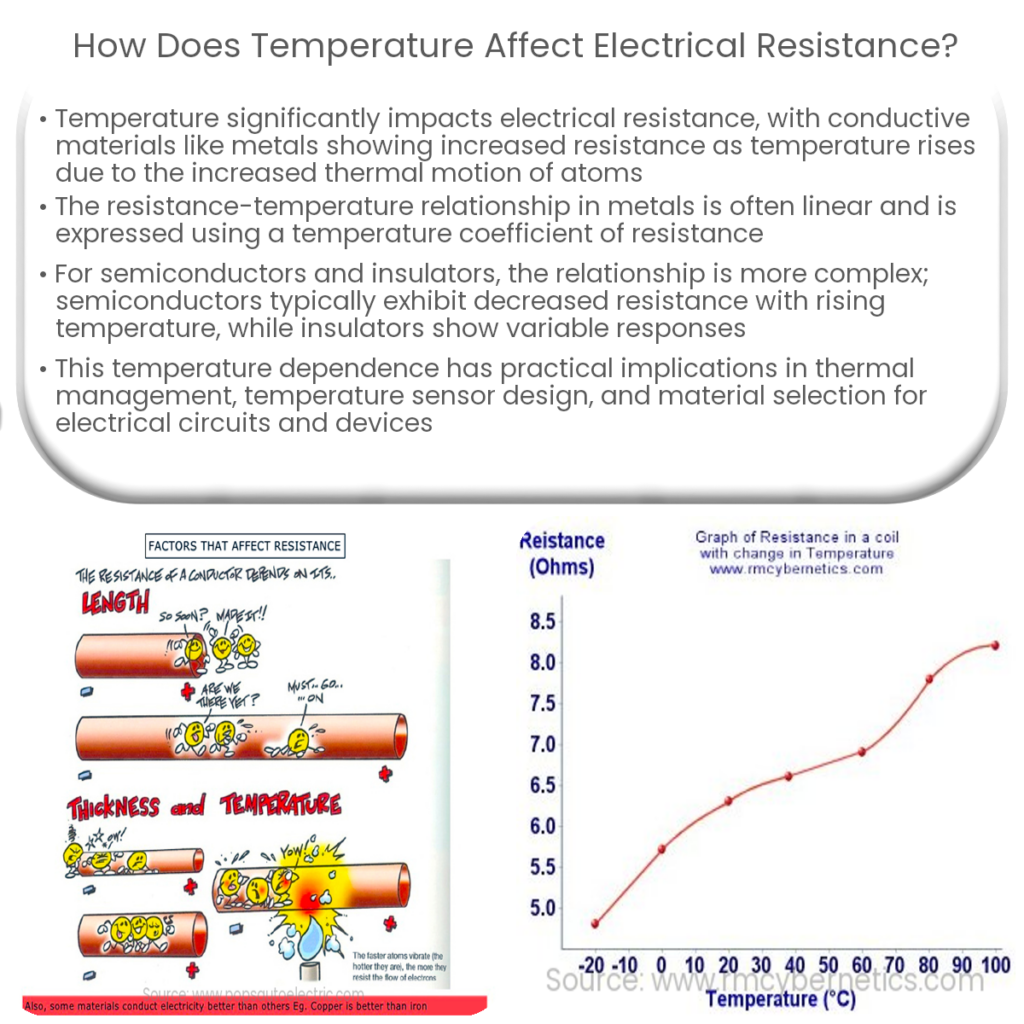
Temperature affects electrical resistance by increasing it in metals and generally decreasing it in semiconductors, with insulators showing varied responses.
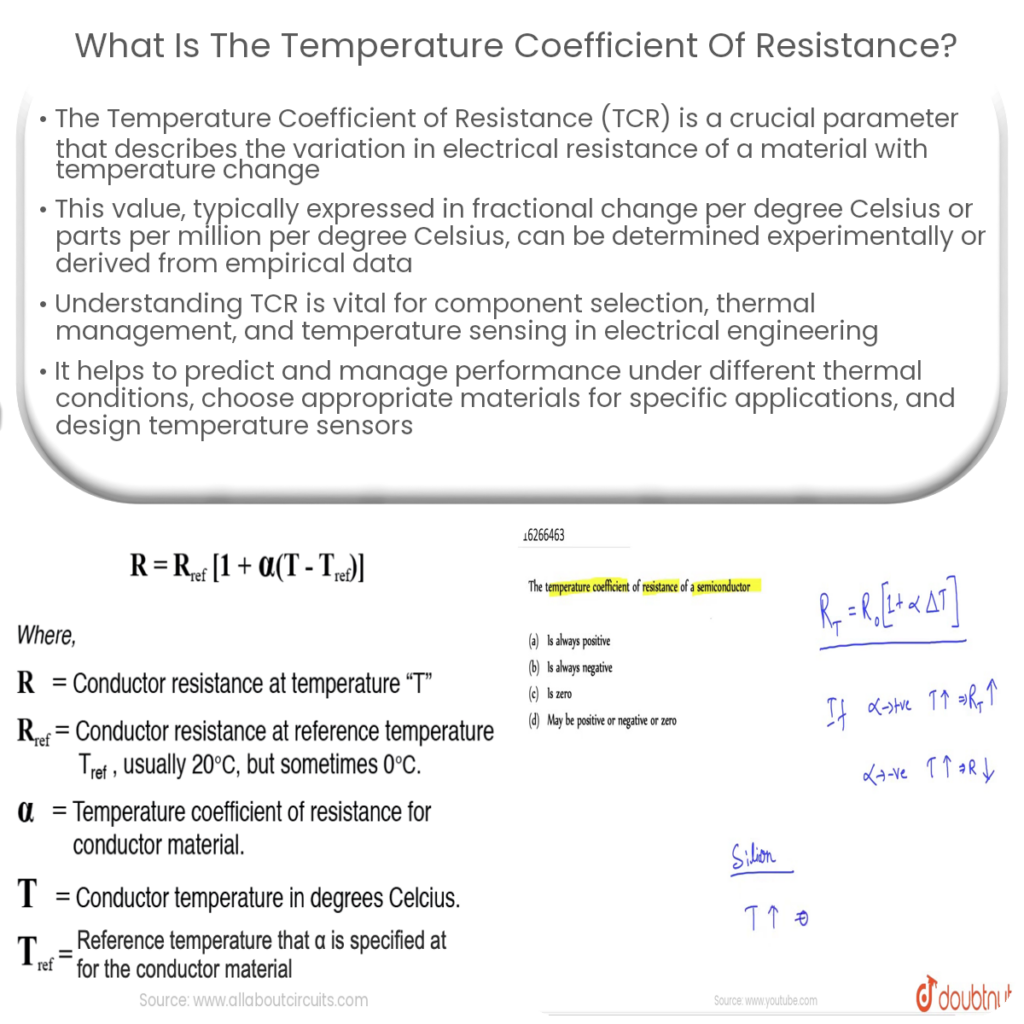
The temperature coefficient of resistance (TCR) quantifies the change in a material’s electrical resistance per degree Celsius, crucial for component selection and thermal management.
Ohm’s Law relates voltage, current, and resistance in a circuit, expressed as V=IR, and is essential for circuit analysis, component selection, and power calculations.

The primary purpose of this project is to help the public to learn some exciting and important information about electricity and magnetism.
Our Website follows all legal requirements to protect your privacy. Visit our Privacy Policy page.
The Cookies Statement is part of our Privacy Policy.
The information contained on this website is for general information purposes only. This website does not use any proprietary data. Visit our Editorial note.
It’s simple:
1) You may use almost everything for non-commercial and educational use.
2) You may not distribute or commercially exploit the content, especially on another website.
