
How do you calculate the resistance of a material using its resistivity?
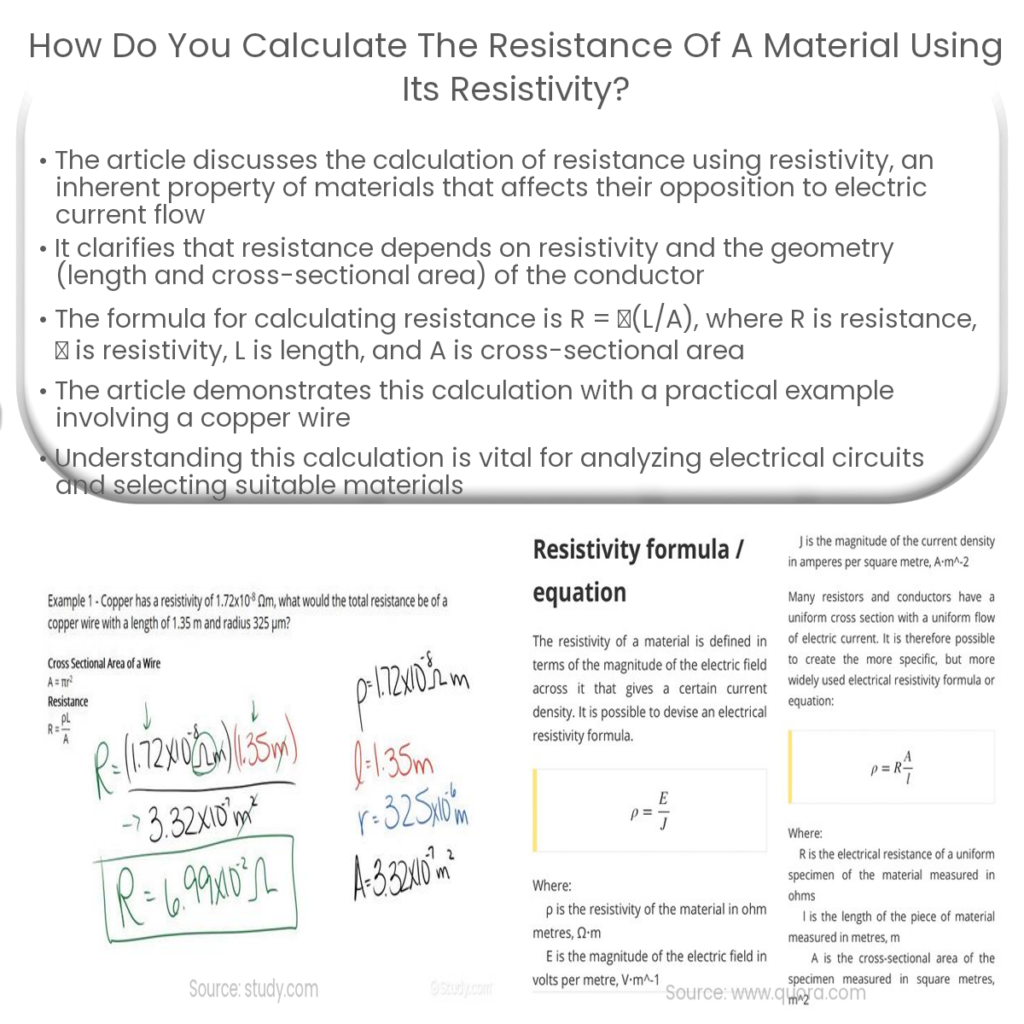
To calculate resistance using resistivity, apply the formula R = ρ(L/A), where R is resistance, ρ is resistivity, L is length, and A is cross-sectional area.
To calculate resistance using resistivity, apply the formula R = ρ(L/A), where R is resistance, ρ is resistivity, L is length, and A is cross-sectional area.

The unit of electrical resistance is the ohm (Ω), essential for circuit analysis, component selection, and understanding electrical system behavior.

Electrical resistance is measured using methods like ohmmeters, Wheatstone Bridges, four-point probe techniques, and ammeter-voltmeter methods.

Electrical conductivity influences material selection, device performance, and addresses challenges in microelectronic devices and integrated circuits.
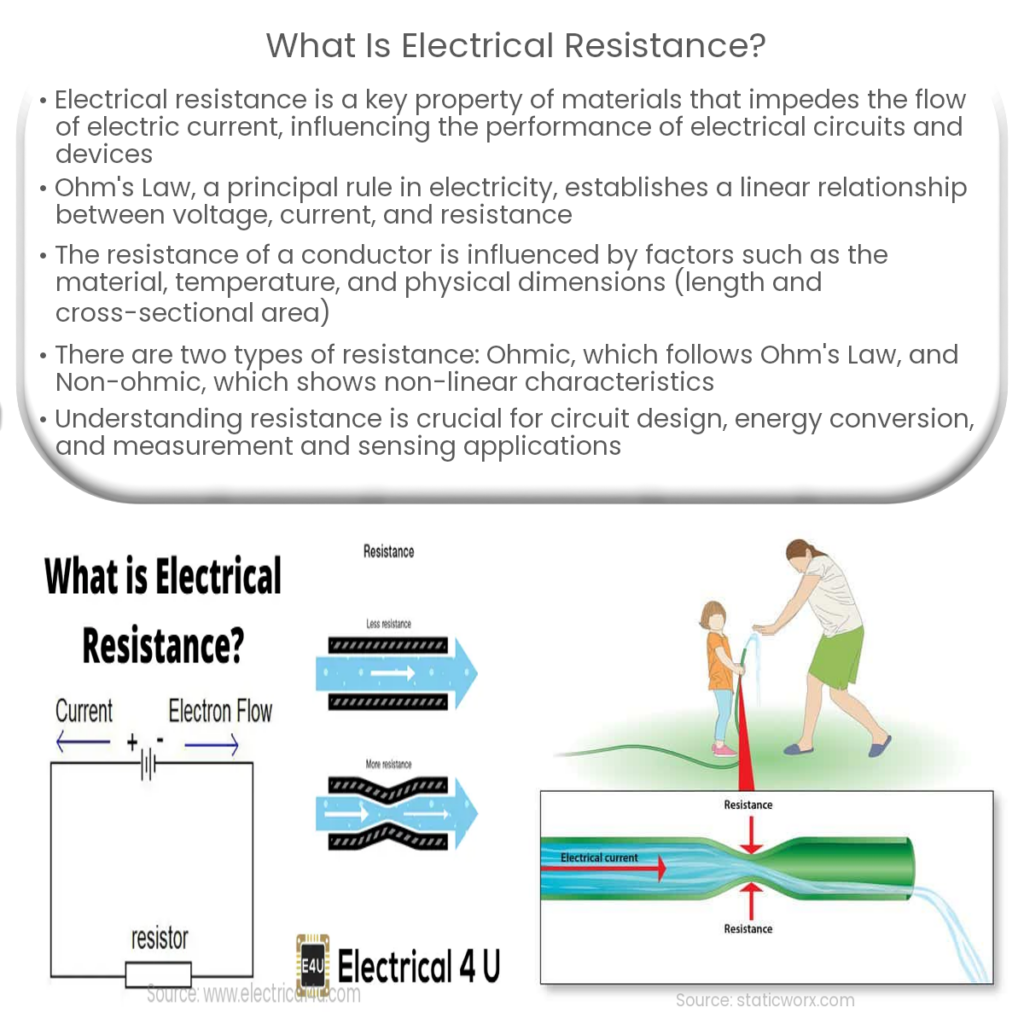
Electrical resistance is a material property that opposes electric current flow, affecting circuit behavior, energy conversion, and sensing applications.
Electrical conductivity influences efficiency and performance in electrochemical processes, impacting devices like batteries, fuel cells, and sensors.

Electrical conductivity affects LED performance by influencing light output, efficiency, heat generation, and device lifespan through material choice and doping.

High electrical conductivity materials can cause resource depletion, pollution, and toxicity, but also improve energy efficiency, requiring balance.

Electrical conductivity is crucial in environmental monitoring for assessing water, air, and soil quality, detecting pollutants, and optimizing wastewater treatment.

To optimize electrical conductivity, identify requirements, choose appropriate materials, modify properties, adjust design, test, and maintain.

The primary purpose of this project is to help the public to learn some exciting and important information about electricity and magnetism.
Our Website follows all legal requirements to protect your privacy. Visit our Privacy Policy page.
The Cookies Statement is part of our Privacy Policy.
The information contained on this website is for general information purposes only. This website does not use any proprietary data. Visit our Editorial note.
It’s simple:
1) You may use almost everything for non-commercial and educational use.
2) You may not distribute or commercially exploit the content, especially on another website.
