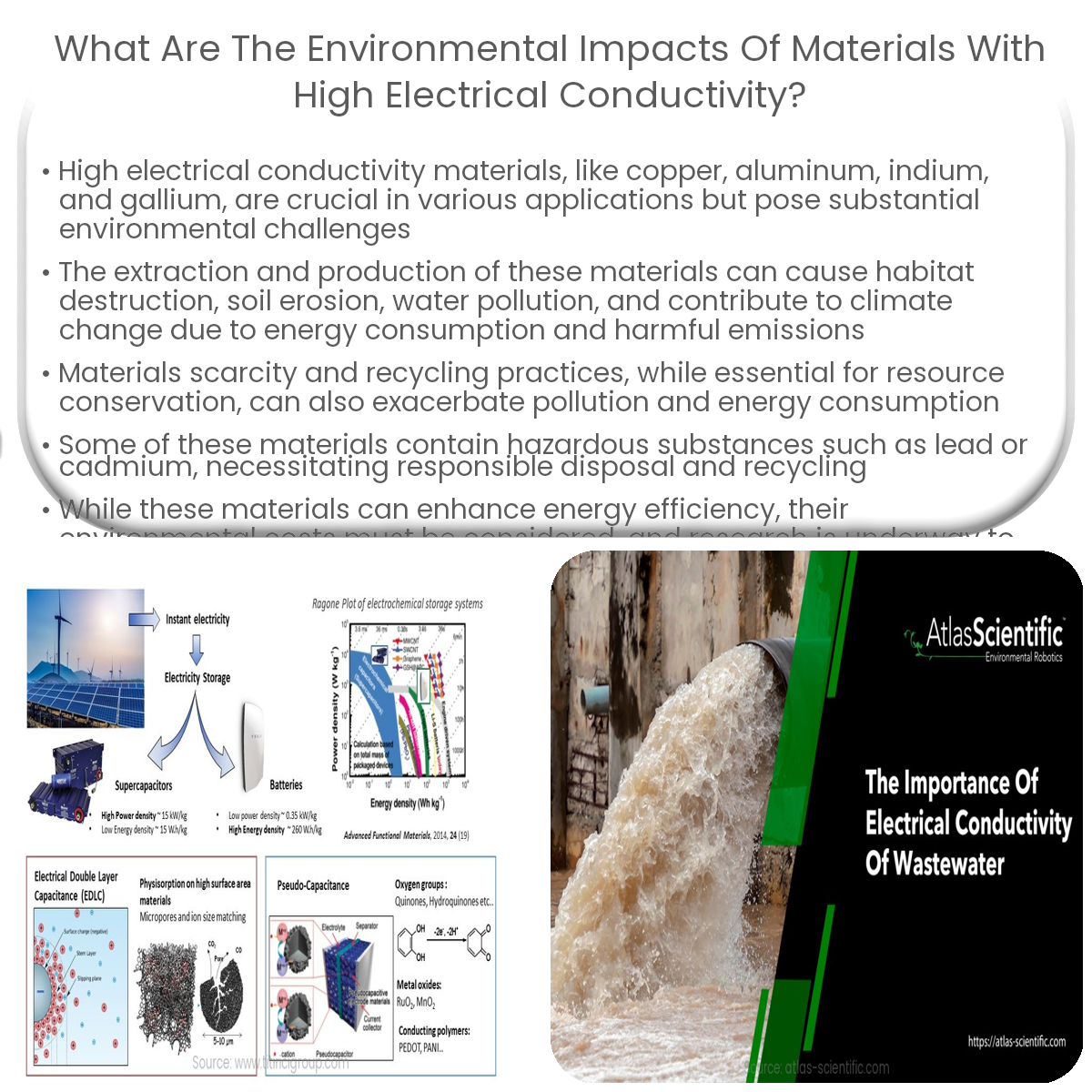
High electrical conductivity materials can cause resource depletion, pollution, and toxicity, but also improve energy efficiency, requiring balance.
Environmental Impacts of High Electrical Conductivity Materials
High electrical conductivity materials are essential in many applications, from power transmission to electronic devices. However, their use also comes with environmental consequences, which need to be taken into account. This article explores the potential environmental impacts of these materials.
Resource Extraction and Production
The extraction of materials, such as copper and aluminum, for high electrical conductivity applications can have significant environmental impacts. Mining operations often cause habitat destruction, soil erosion, and water pollution. Moreover, the refining and production processes for these materials consume vast amounts of energy and generate harmful emissions, contributing to climate change.
Material Scarcity and Recycling
Some high conductivity materials, such as indium and gallium, are relatively scarce. The increasing demand for these materials, driven by the growth of the electronics industry, can exacerbate the depletion of these finite resources. Recycling is an essential strategy to mitigate this issue. However, recycling processes can also generate pollution and consume energy, adding to the overall environmental burden.
Toxicity and Waste Disposal
Some high conductivity materials, including certain semiconductors, contain hazardous substances such as lead or cadmium. These toxic elements can cause harm to humans and ecosystems if released into the environment. Responsible disposal and recycling practices are critical in managing the risks associated with these materials.
Energy Efficiency and Greenhouse Gas Emissions
Materials with high electrical conductivity can help reduce energy loss and improve the efficiency of electrical systems, leading to lower greenhouse gas emissions. However, the benefits of these materials must be weighed against the environmental costs of their production, use, and disposal.
Alternative Materials and Sustainable Practices
Research is ongoing to develop alternative materials with high electrical conductivity and lower environmental impacts. For example, carbon nanotubes and graphene show promise in various applications due to their excellent conductivity and low environmental footprint. Additionally, adopting sustainable practices in material extraction, production, and disposal can help minimize the negative consequences of using high conductivity materials.
In conclusion, high electrical conductivity materials play a vital role in modern society, but their use also comes with environmental concerns. It is essential to consider these impacts when selecting materials for specific applications and strive to develop more sustainable alternatives and practices.