
How do transformers affect the efficiency of power transmission systems?
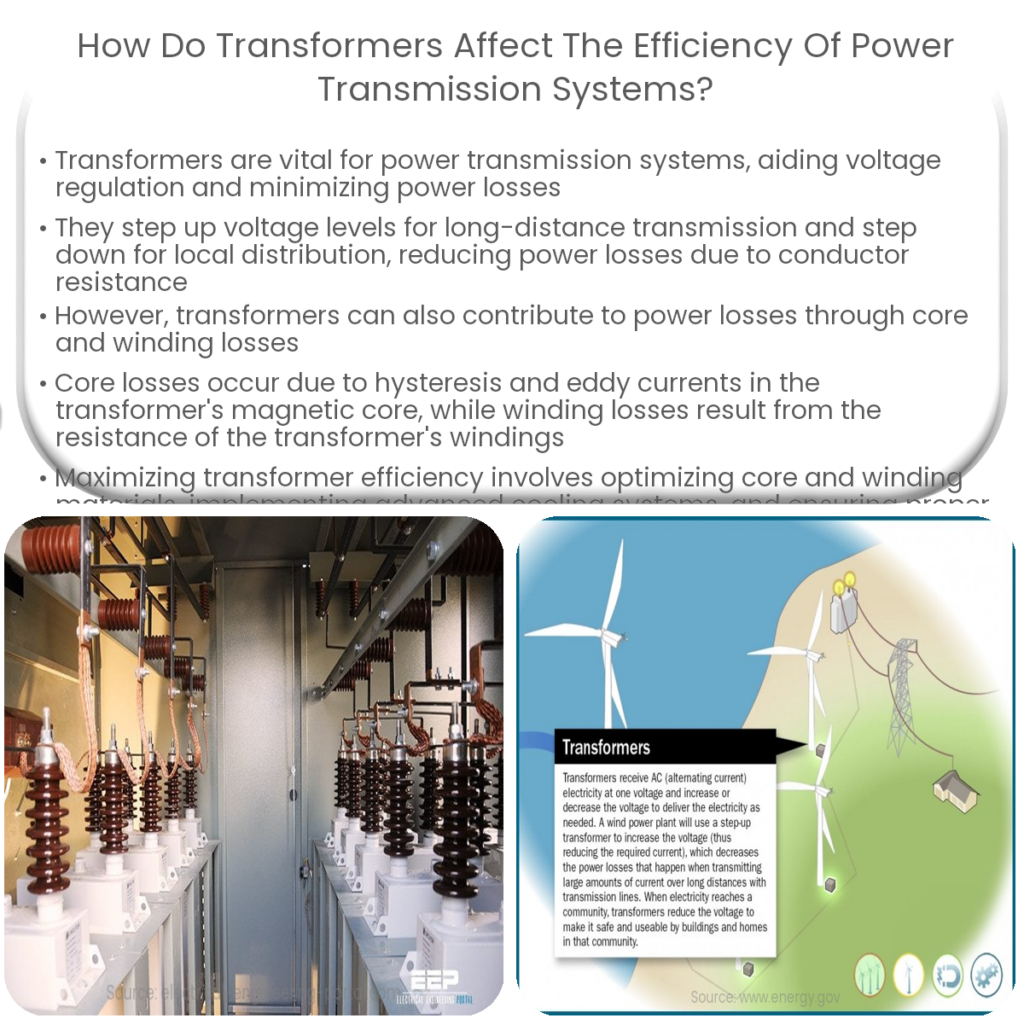
Transformers improve power transmission efficiency by regulating voltage levels, minimizing power losses, and optimizing core and winding designs.
Transformers improve power transmission efficiency by regulating voltage levels, minimizing power losses, and optimizing core and winding designs.
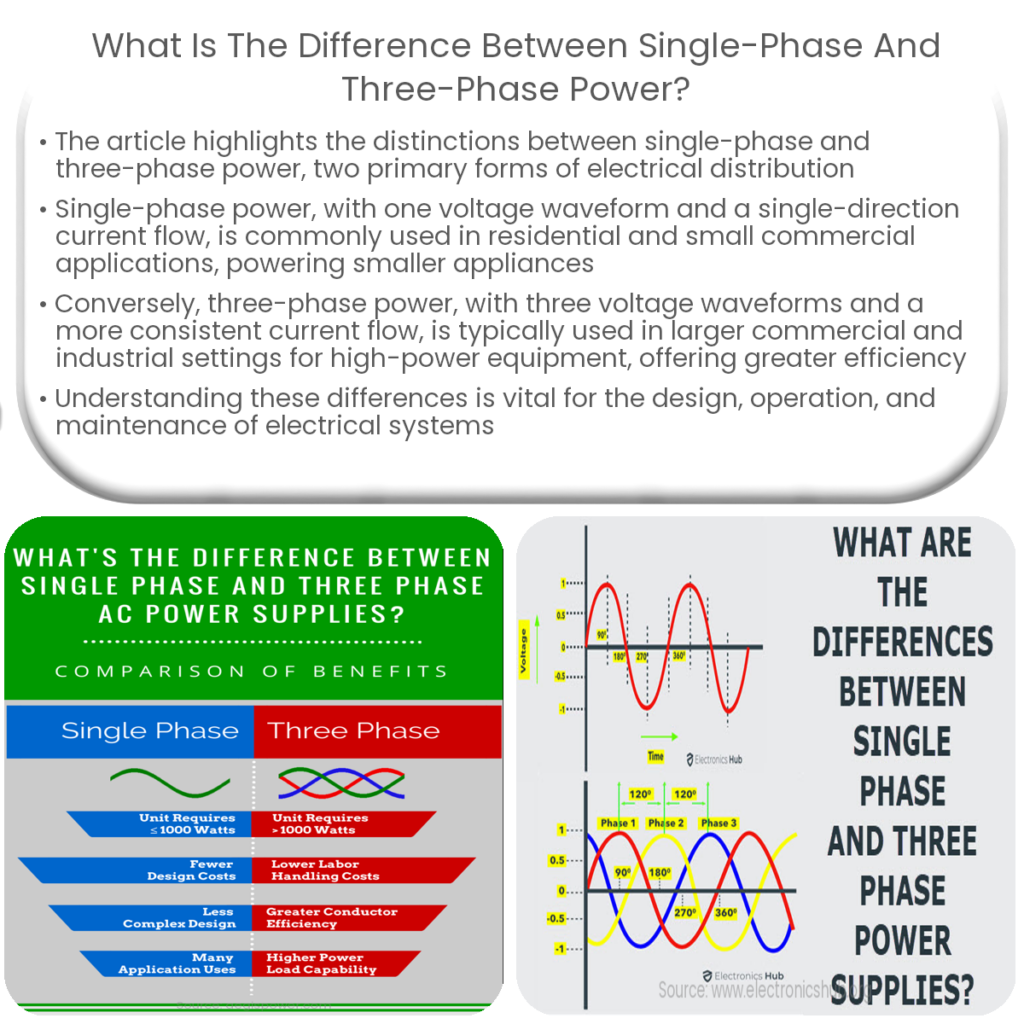
Single-phase power has one voltage waveform, while three-phase power has three, making the latter more efficient and suitable for larger applications.
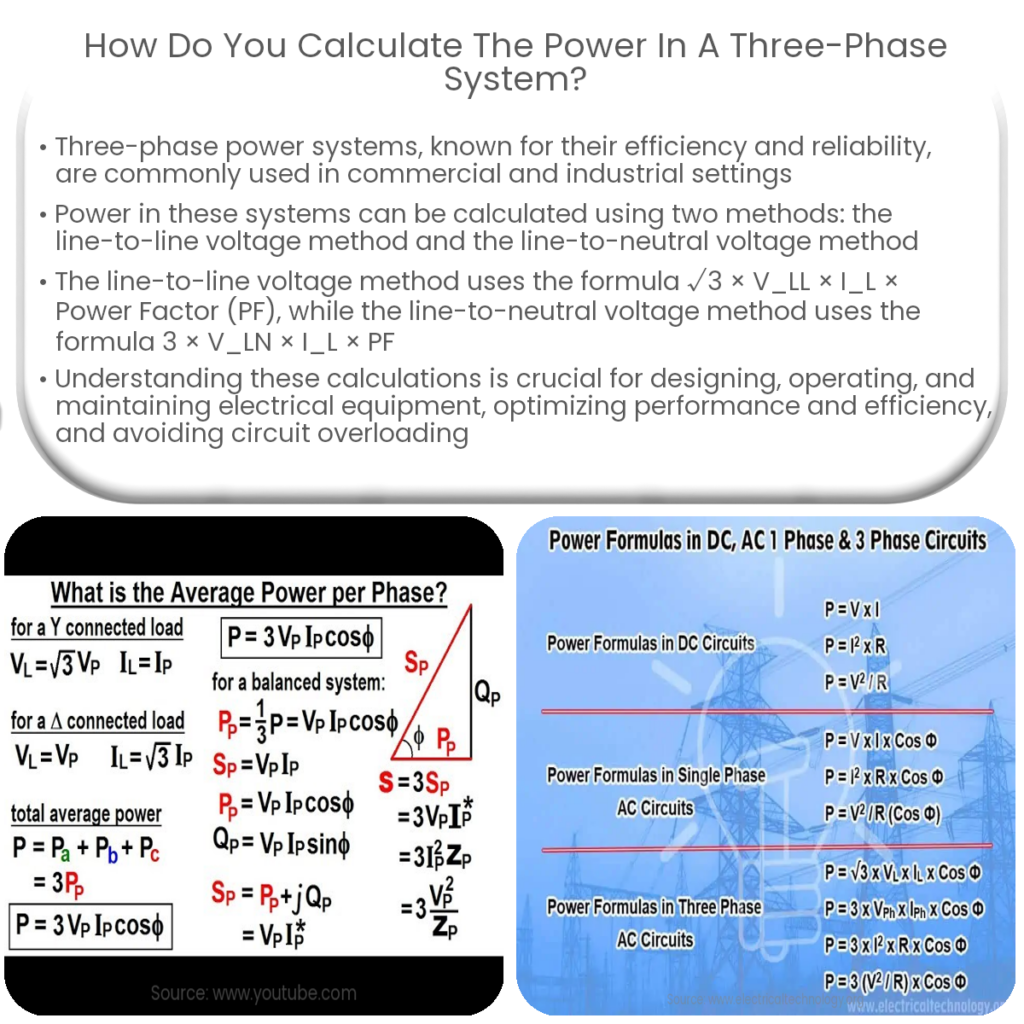
Calculate three-phase power using Pₜ = √3 × Vₗₗ × Iₗ × PF or Pₜ = 3 × Vₗₙ × Iₗ × PF, depending on the available voltage and current values.
DC flows in one direction with constant voltage, while AC periodically changes direction and amplitude, making it suitable for power distribution.
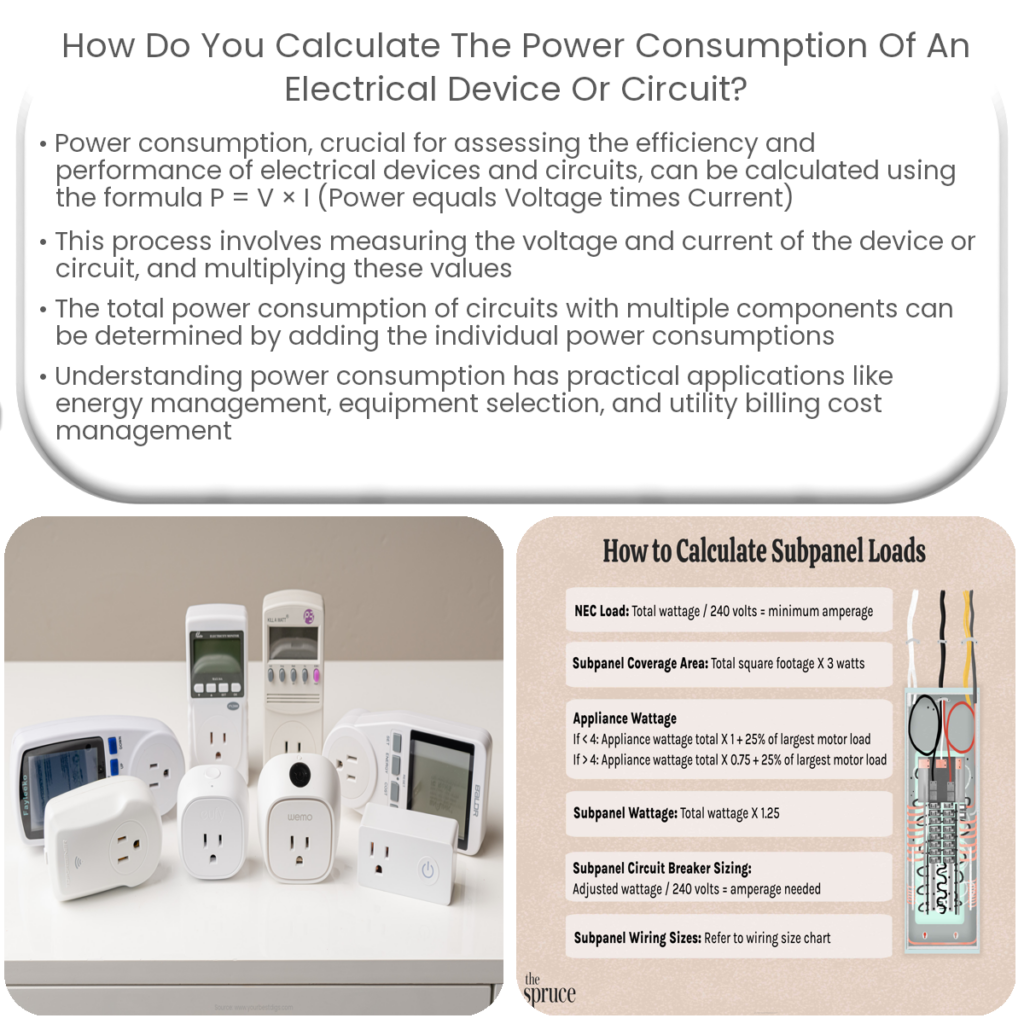
To calculate power consumption, measure voltage (V) and current (I), then use the formula P = V × I to find power in watts (W).

Electrical energy is calculated using the formula E = P × t, where E is energy, P is power, and t is time. E = V × I × t can also be used.
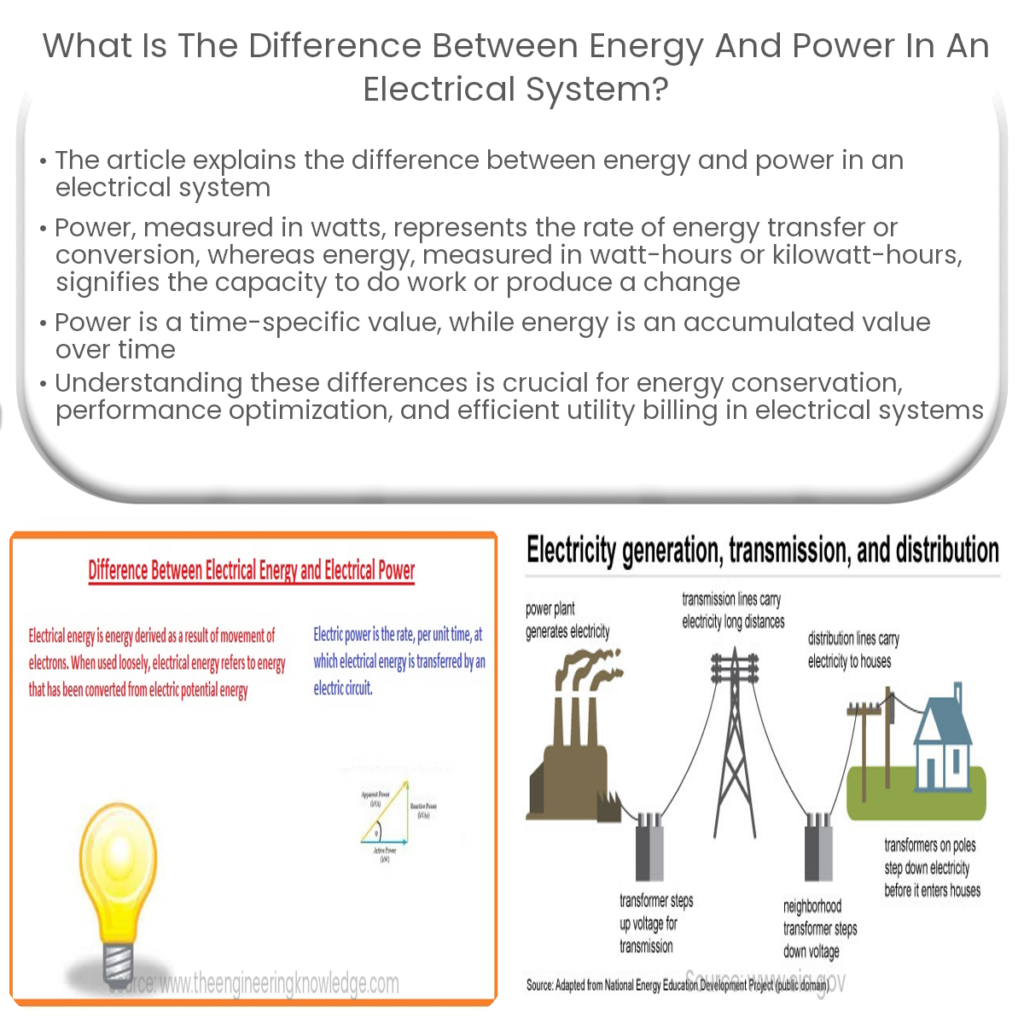
Power is the rate of energy transfer, measured in watts, while energy is the capacity to do work, measured in watt-hours or kilowatt-hours.
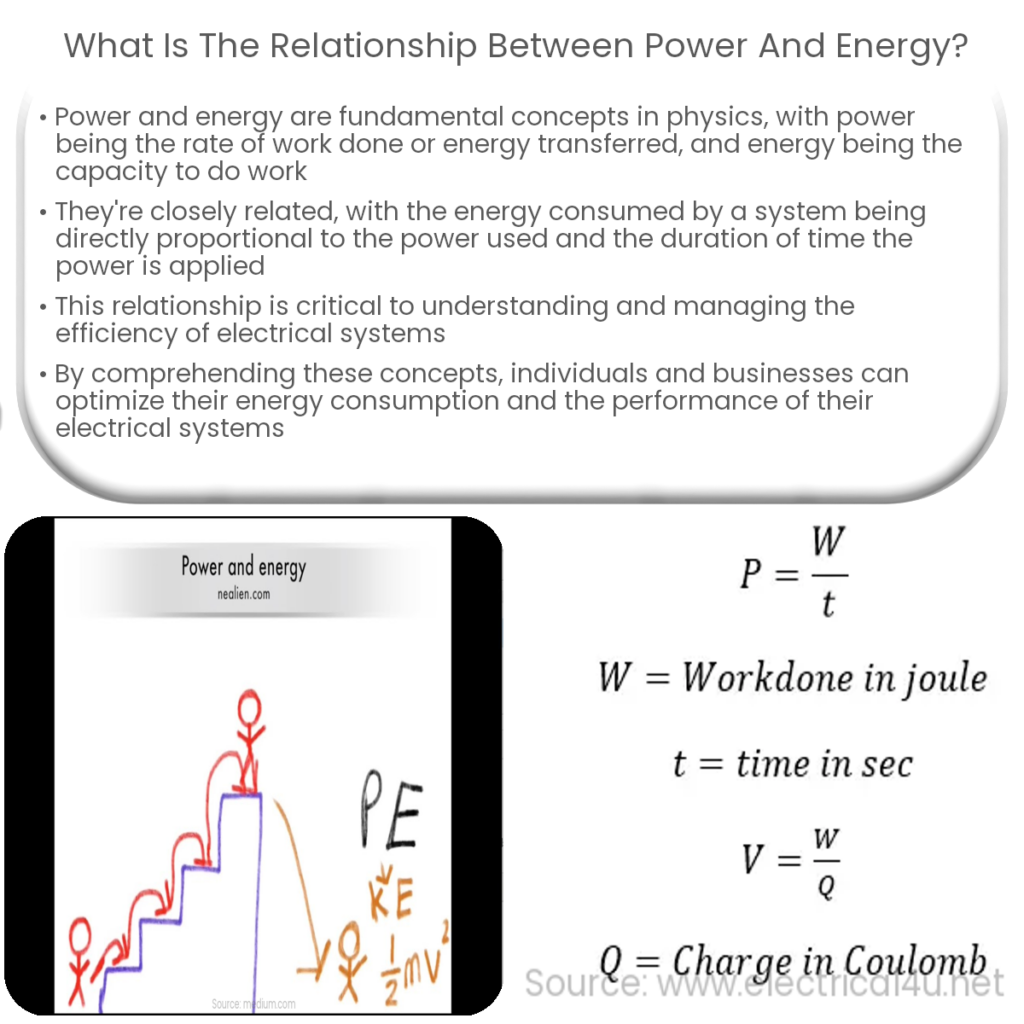
Power is the rate of energy transfer, while energy is the capacity to do work. They are related by the formula E = P × t, where E is energy.

The unit of electrical energy is the watt-hour (Wh), with larger units like kilowatt-hour (kWh) and megawatt-hour (MWh) used for convenience.

Improve power factor by installing capacitor banks, using synchronous condensers, replacing induction motors, proper equipment sizing, and load management.

The primary purpose of this project is to help the public to learn some exciting and important information about electricity and magnetism.
Our Website follows all legal requirements to protect your privacy. Visit our Privacy Policy page.
The Cookies Statement is part of our Privacy Policy.
The information contained on this website is for general information purposes only. This website does not use any proprietary data. Visit our Editorial note.
It’s simple:
1) You may use almost everything for non-commercial and educational use.
2) You may not distribute or commercially exploit the content, especially on another website.
