
What is electric flux?

Electric flux is a measure of the electric field passing through a surface, considering the field’s orientation with respect to the surface normal.
Electric flux is a measure of the electric field passing through a surface, considering the field’s orientation with respect to the surface normal.
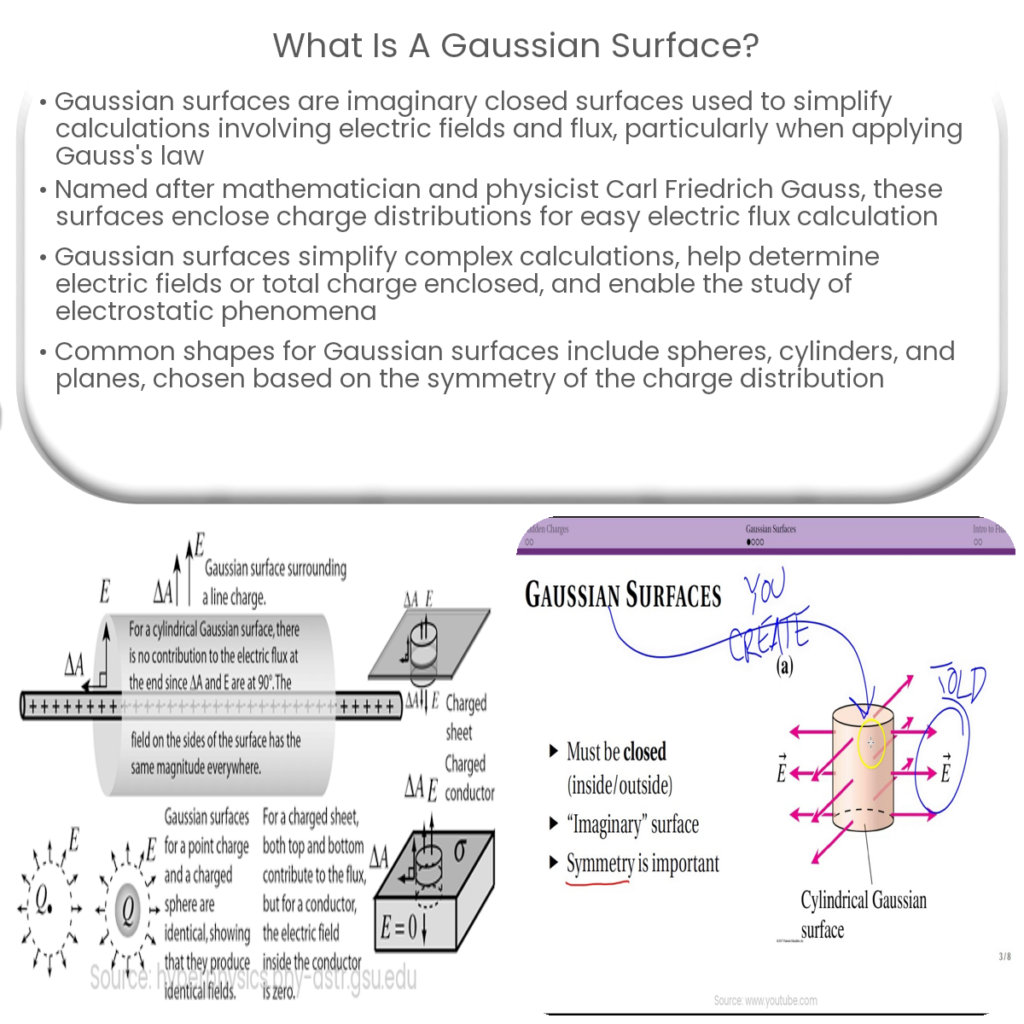
A Gaussian surface is an imaginary closed surface used to simplify electric field and flux calculations, particularly in applying Gauss’s law.
Gauss’s law states that the electric flux through a closed surface is proportional to the net charge enclosed by that surface.
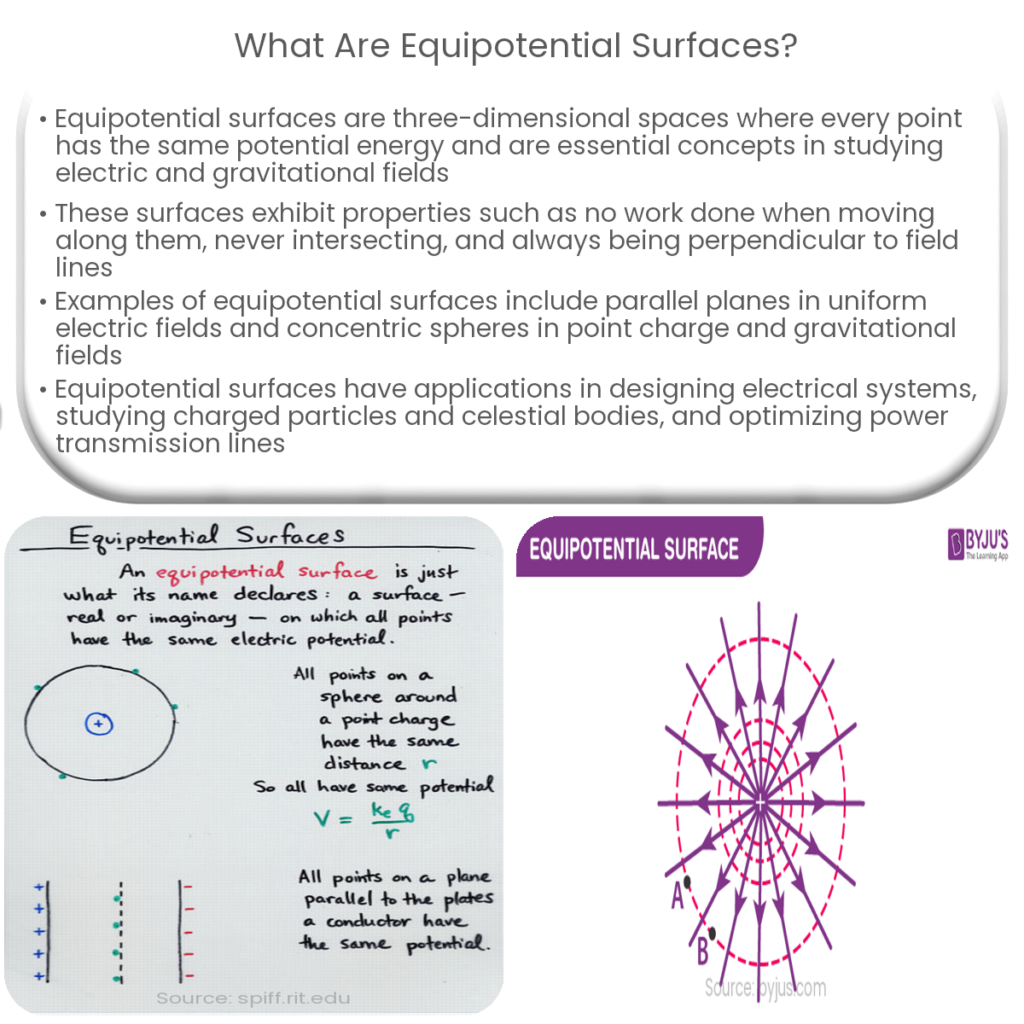
Equipotential surfaces are 3D spaces where every point has the same potential energy, either electric or gravitational, and are always perpendicular to field lines.
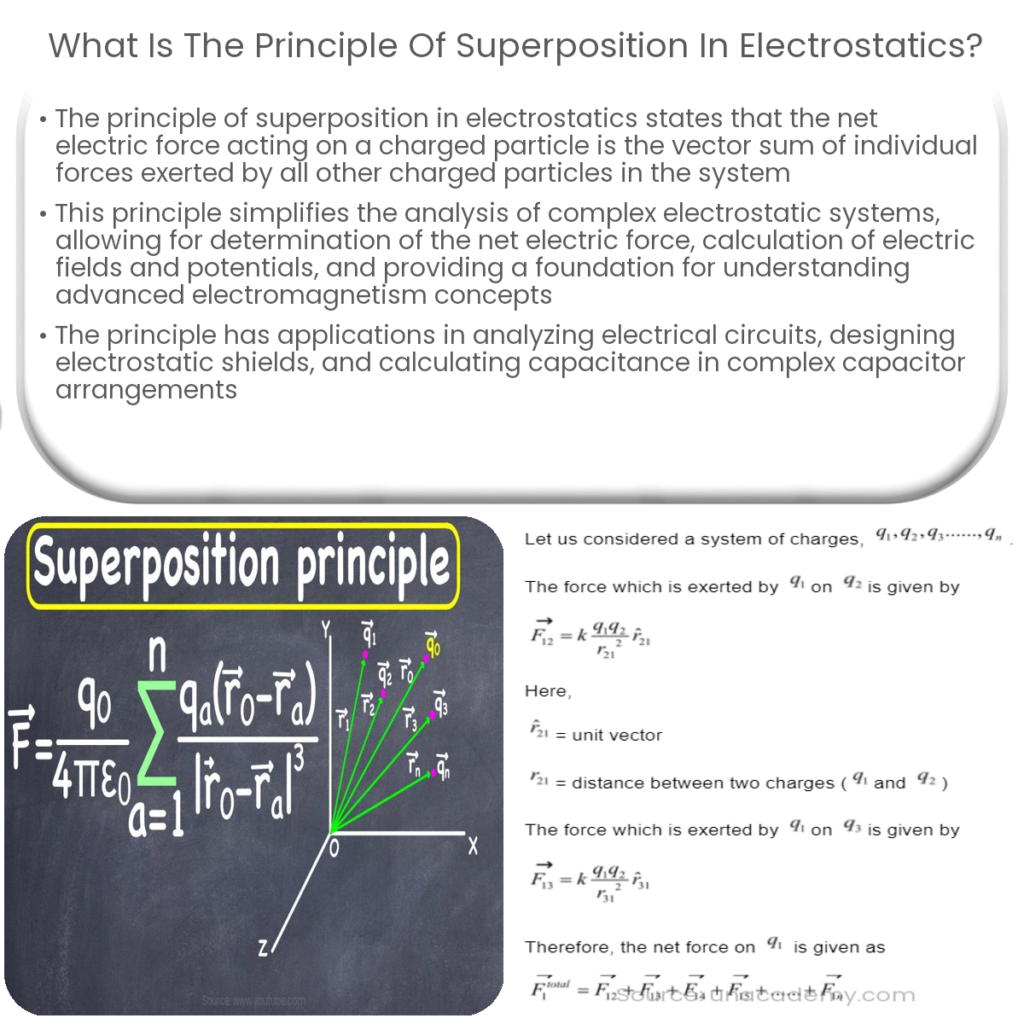
The principle of superposition in electrostatics states that the net electric force on a charge is the vector sum of forces from all other charges.
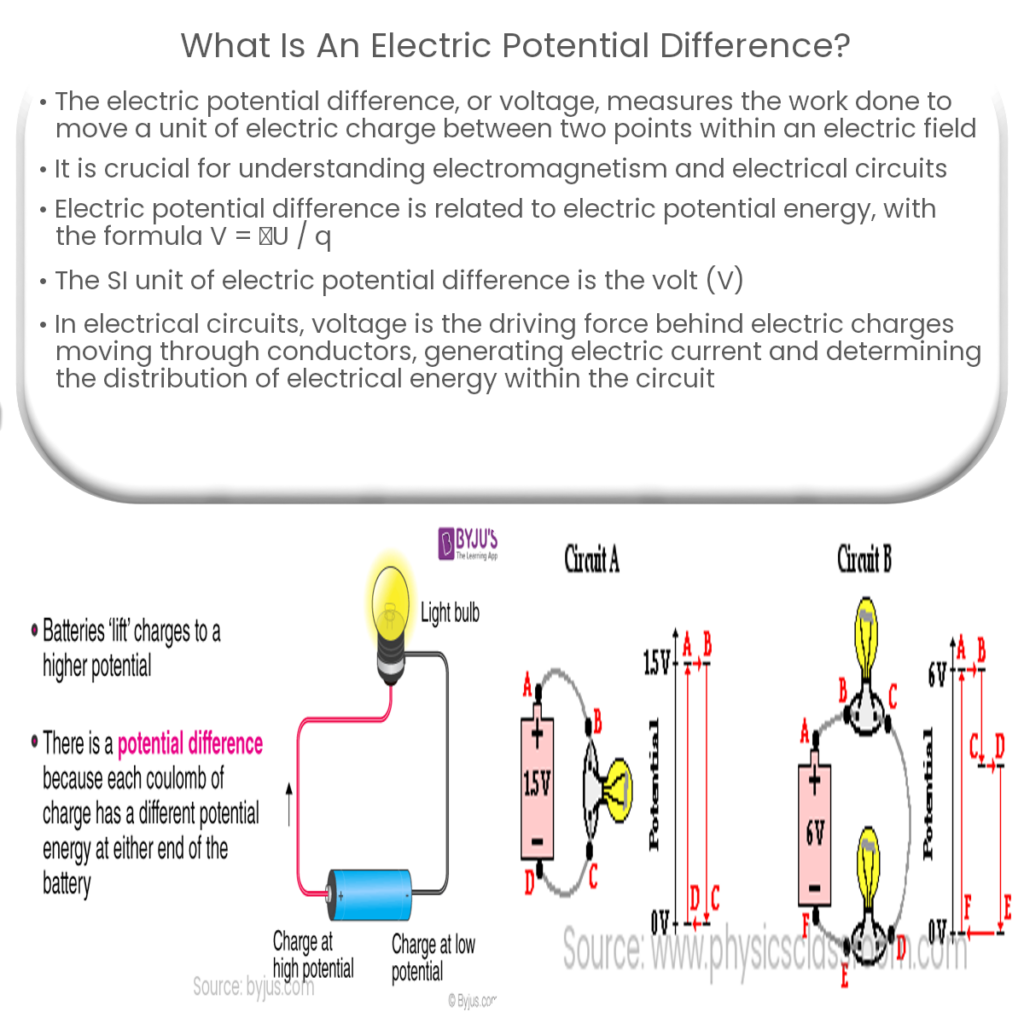
Electric potential difference, or voltage, is the work done per unit charge to move a charge between two points in an electric field.
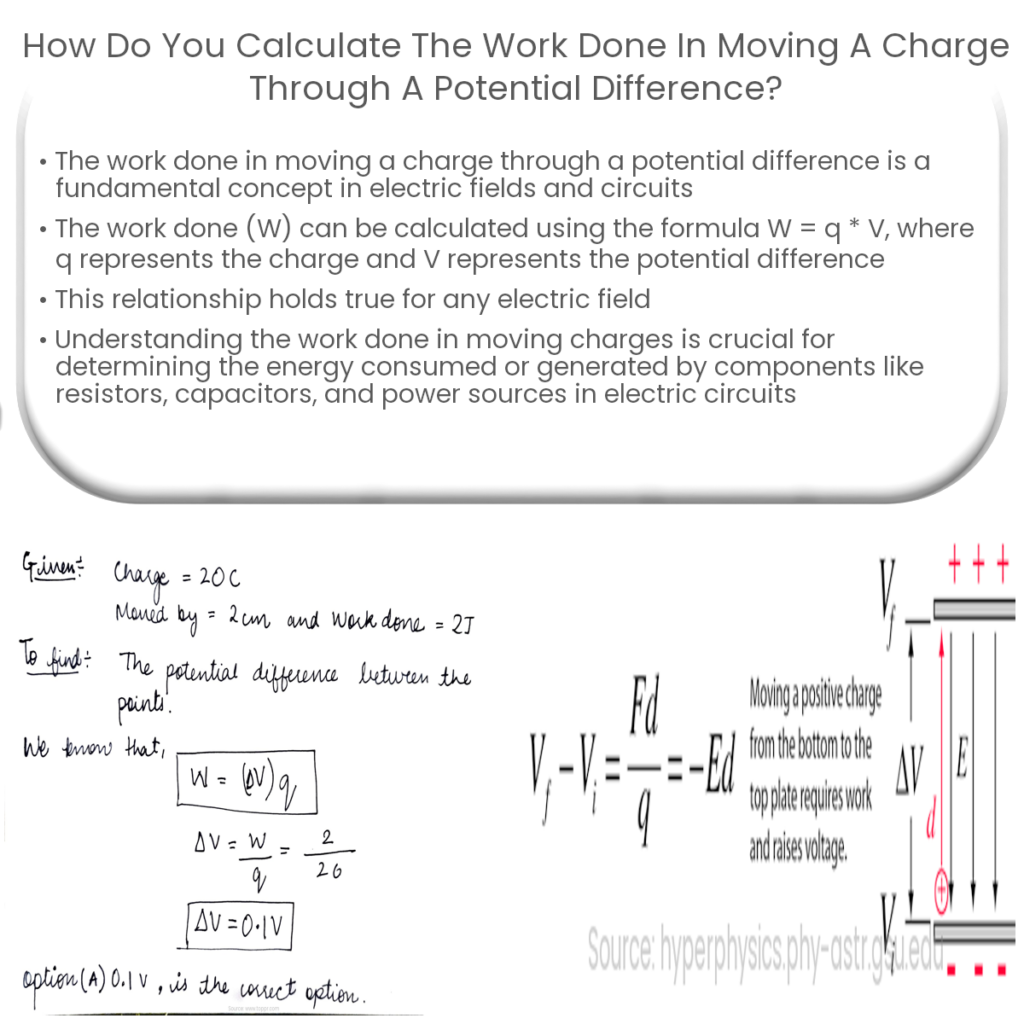
To calculate the work done in moving a charge through a potential difference, use the formula W = q * V, where W is work, q is charge, and V is voltage.

A dielectric increases a capacitor’s capacitance by raising its dielectric constant, allowing it to store more electrical energy in the same space.
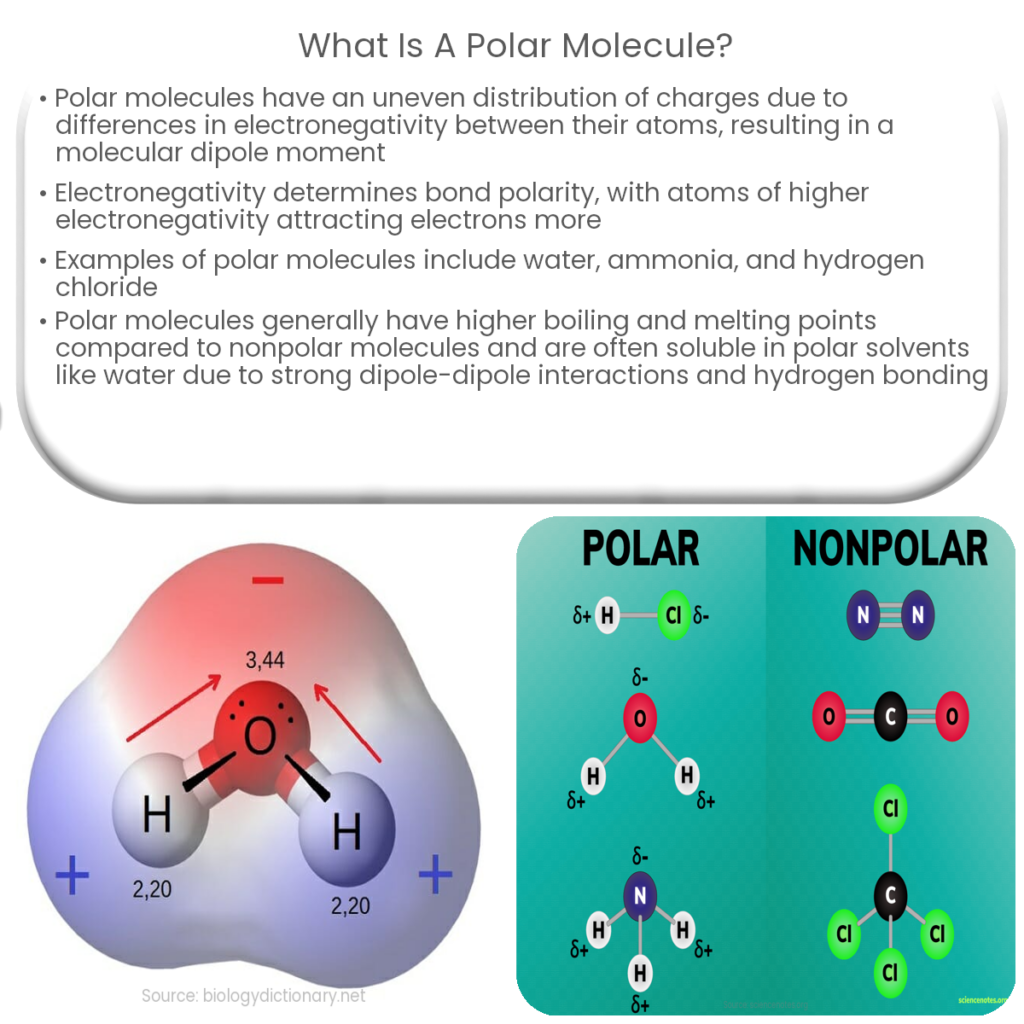
A polar molecule has an uneven distribution of charges due to differences in electronegativity, resulting in a molecular dipole moment.
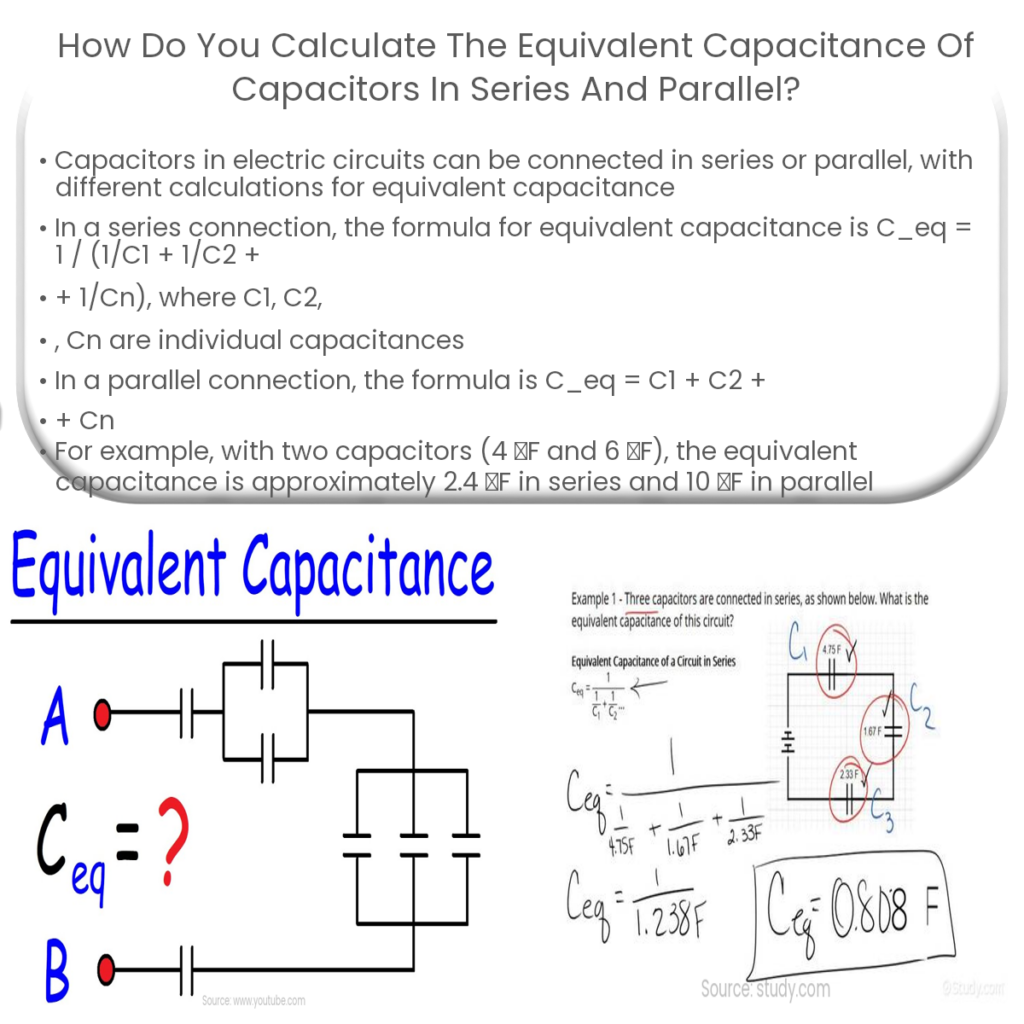
In series, 1/Ceq = 1/C1 + 1/C2 +…+ 1/Cn. In parallel, Ceq = C1 + C2 +…+ Cn. Series Ceq is smaller, while parallel Ceq is the sum of individual values.

The primary purpose of this project is to help the public to learn some exciting and important information about electricity and magnetism.
Our Website follows all legal requirements to protect your privacy. Visit our Privacy Policy page.
The Cookies Statement is part of our Privacy Policy.
The information contained on this website is for general information purposes only. This website does not use any proprietary data. Visit our Editorial note.
It’s simple:
1) You may use almost everything for non-commercial and educational use.
2) You may not distribute or commercially exploit the content, especially on another website.
