
What is a dielectric?
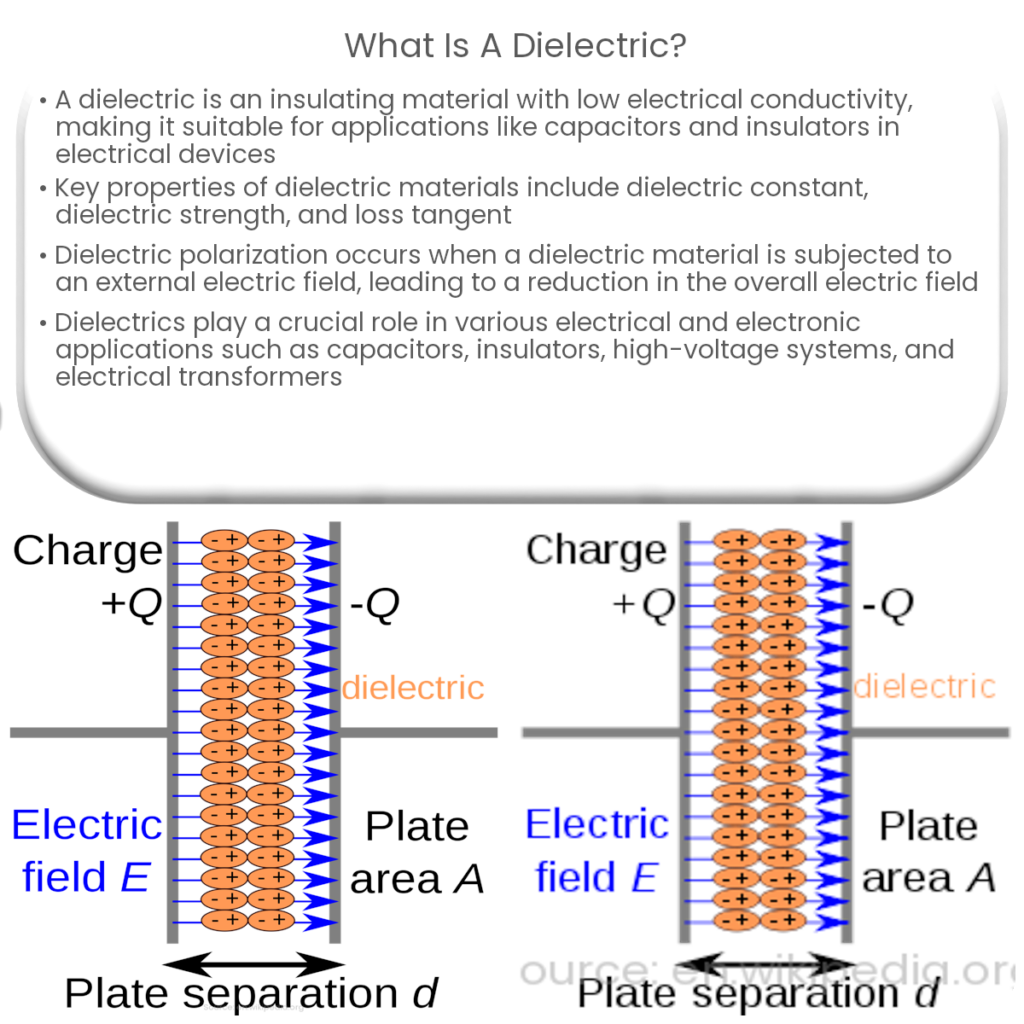
A dielectric is an insulating material that doesn’t conduct electric charge but supports an electric field. It is used in capacitors and insulators.
A dielectric is an insulating material that doesn’t conduct electric charge but supports an electric field. It is used in capacitors and insulators.
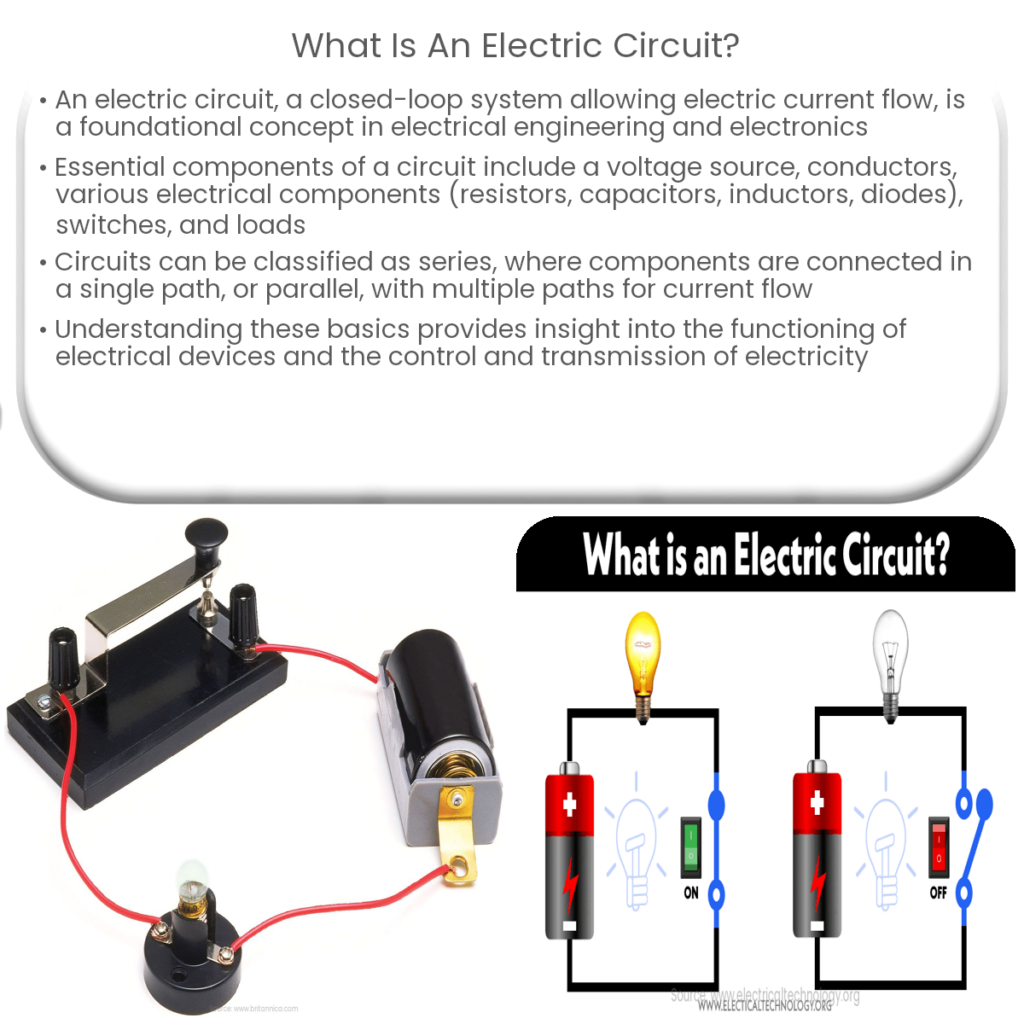
An electric circuit is a closed loop that allows the flow of electric current from a power source to various components and back to the source.
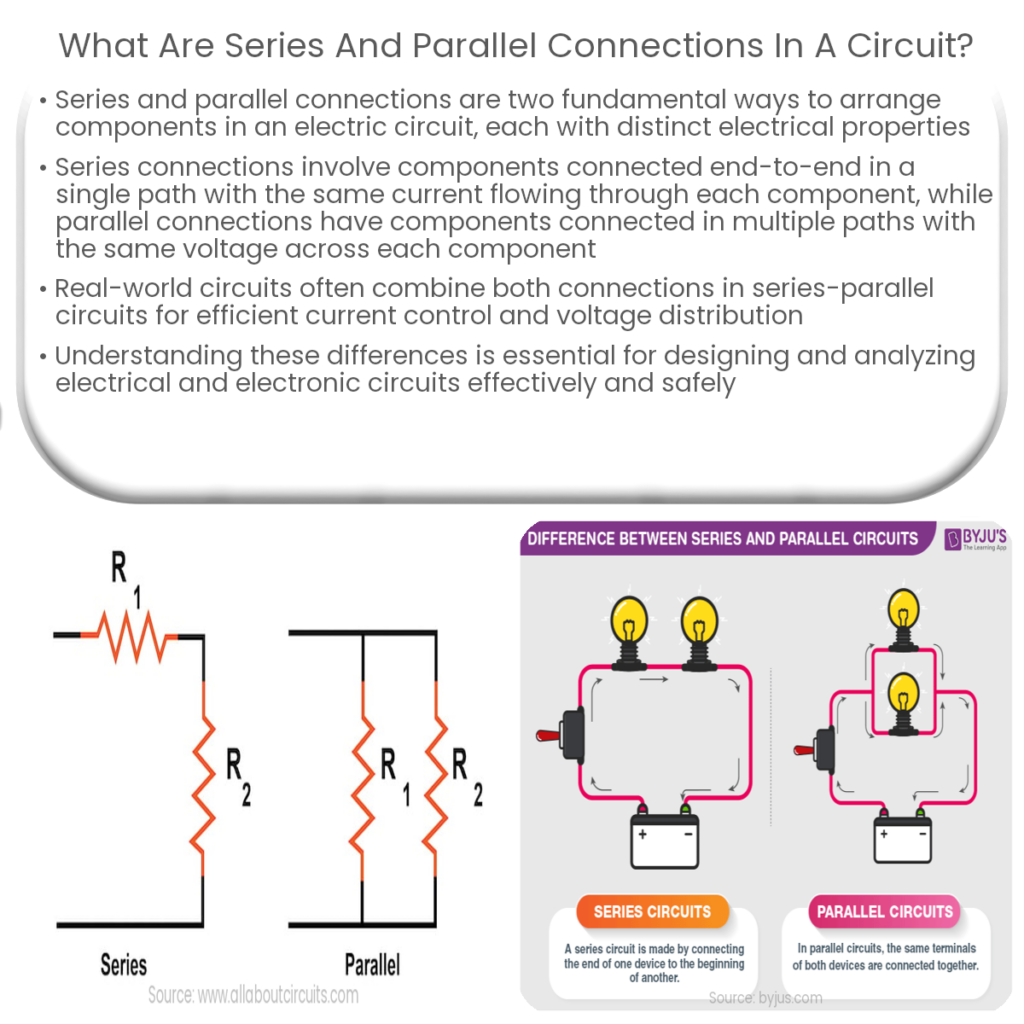
Series connections have components in a single path with equal current, while parallel connections have multiple paths with equal voltage across them.

Electric current flows in a conductor when free electrons drift under the influence of an electric field, affected by factors like conductivity and temperature.
Ohm’s Law states that the current flowing through a conductor is directly proportional to the voltage across it and inversely proportional to its resistance.
The units for charge, voltage, and capacitance are Coulomb (C), Volt (V), and Farad (F), respectively, in the International System of Units (SI).
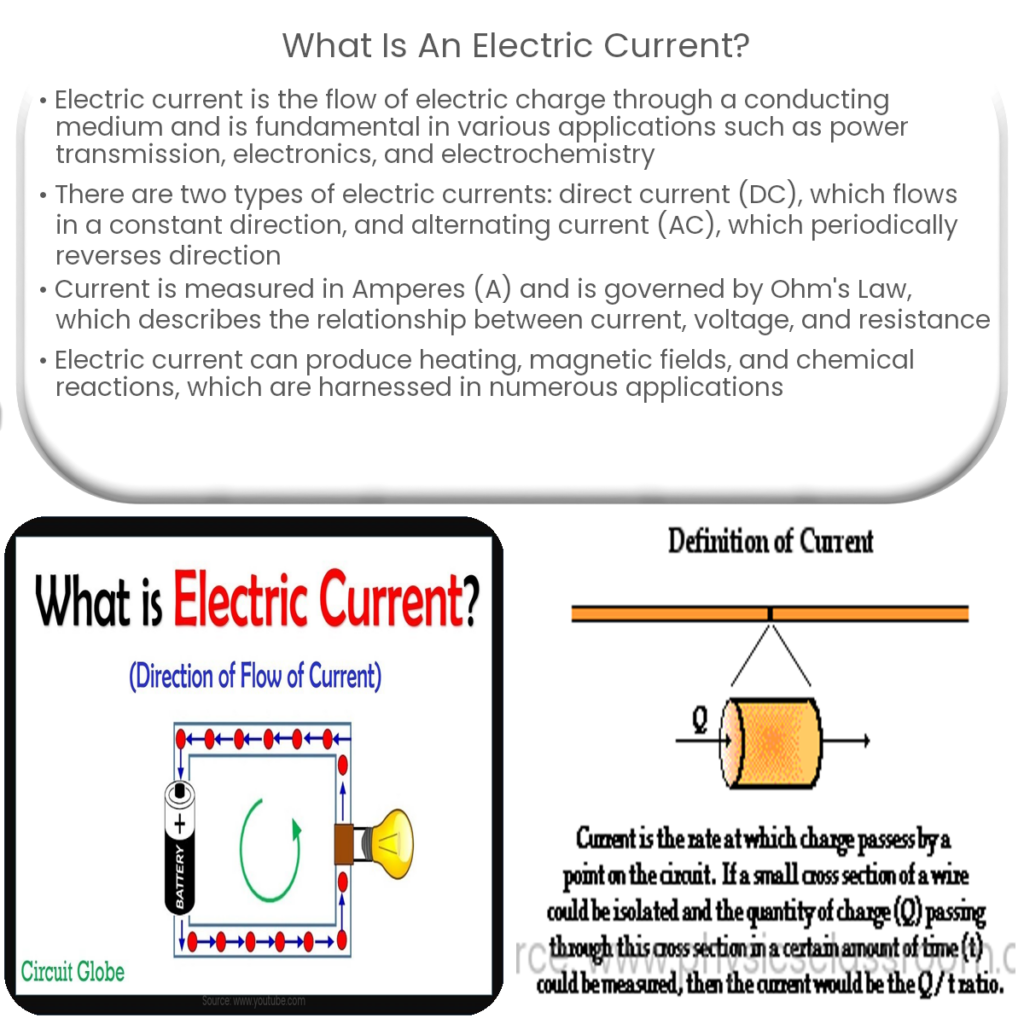
An electric current is the flow of electric charge through a conducting medium, such as a wire, and can be either direct (DC) or alternating (AC).
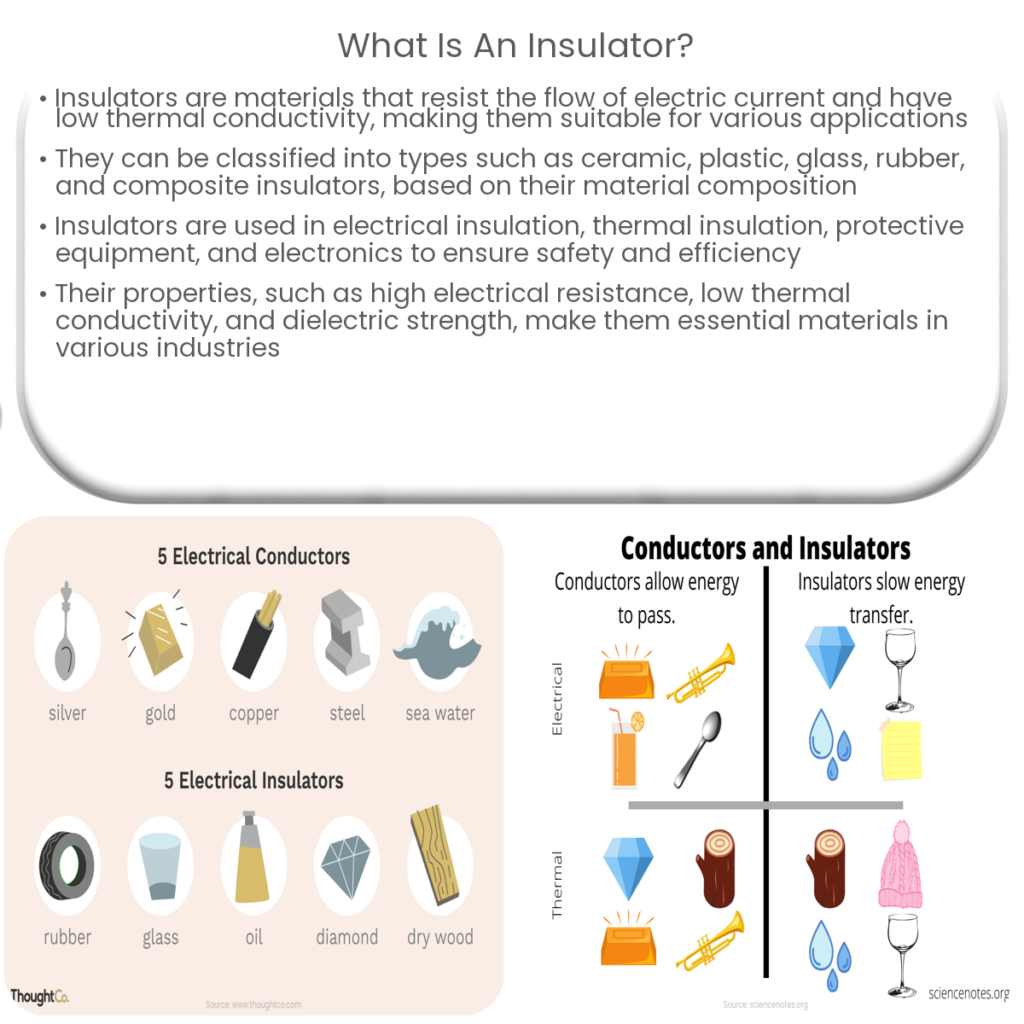
An insulator is a material that doesn’t conduct electric current easily, offering high electrical resistance, low thermal conductivity, and dielectric strength.
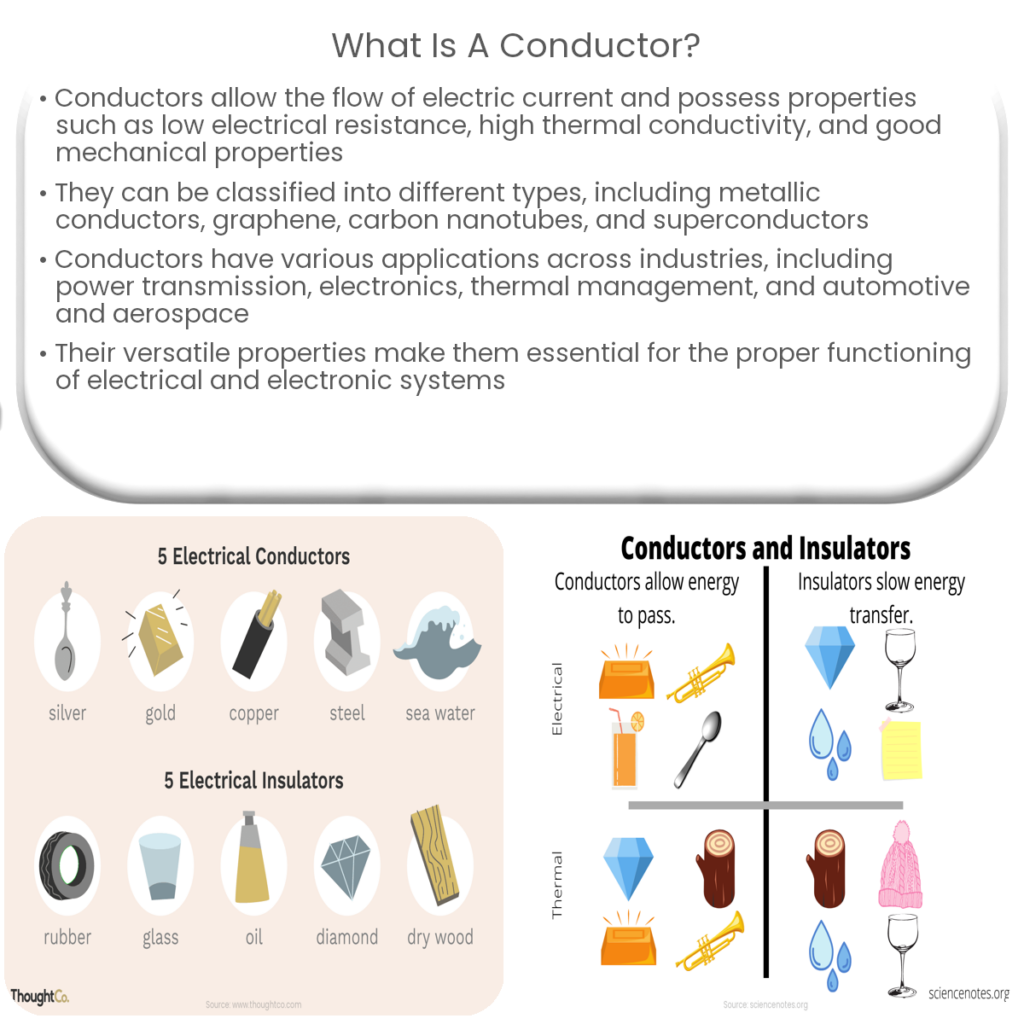
A conductor is a material that allows the flow of electric current due to the movement of free electrons, and is often used in power transmission.
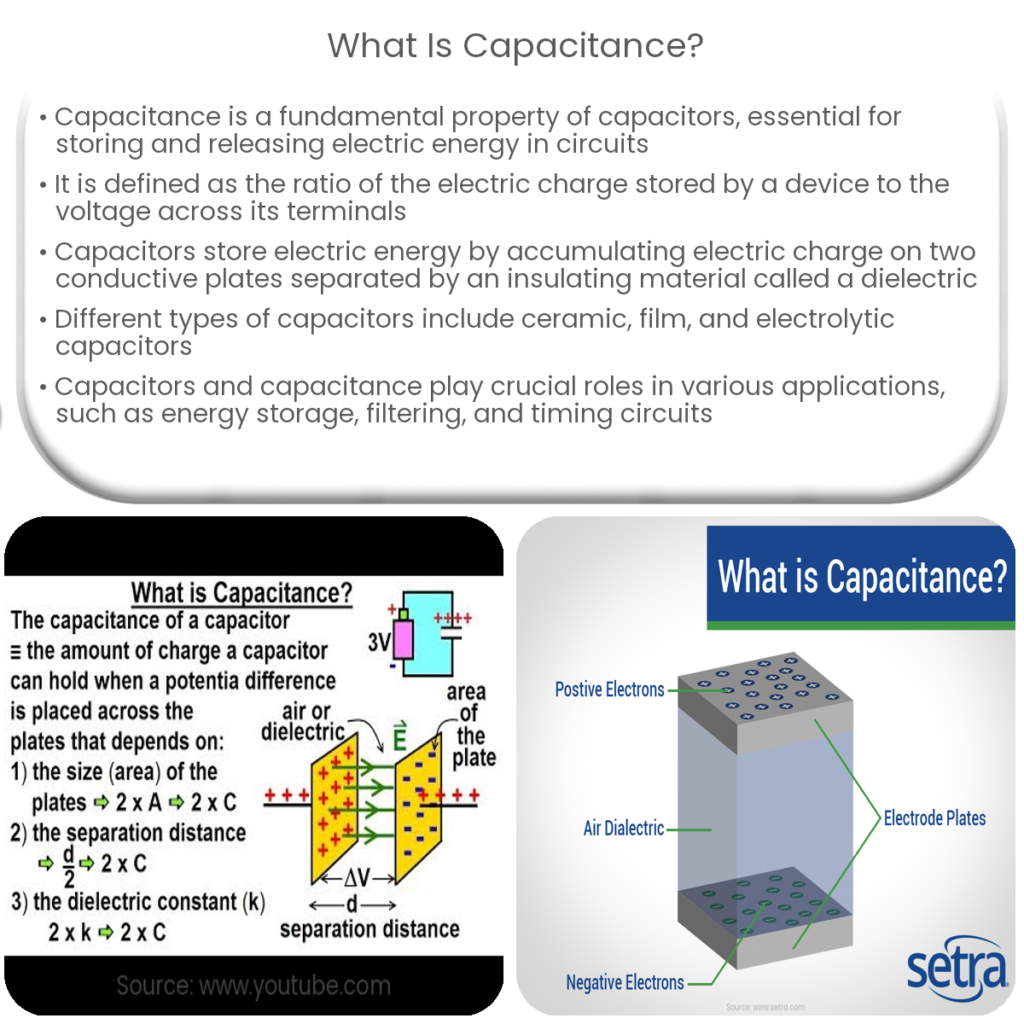
Capacitance is the ability of a device, like a capacitor, to store electric charge and is measured as the ratio of charge stored to voltage applied.

The primary purpose of this project is to help the public to learn some exciting and important information about electricity and magnetism.
Our Website follows all legal requirements to protect your privacy. Visit our Privacy Policy page.
The Cookies Statement is part of our Privacy Policy.
The information contained on this website is for general information purposes only. This website does not use any proprietary data. Visit our Editorial note.
It’s simple:
1) You may use almost everything for non-commercial and educational use.
2) You may not distribute or commercially exploit the content, especially on another website.
