
What are bound charges in a dielectric material?
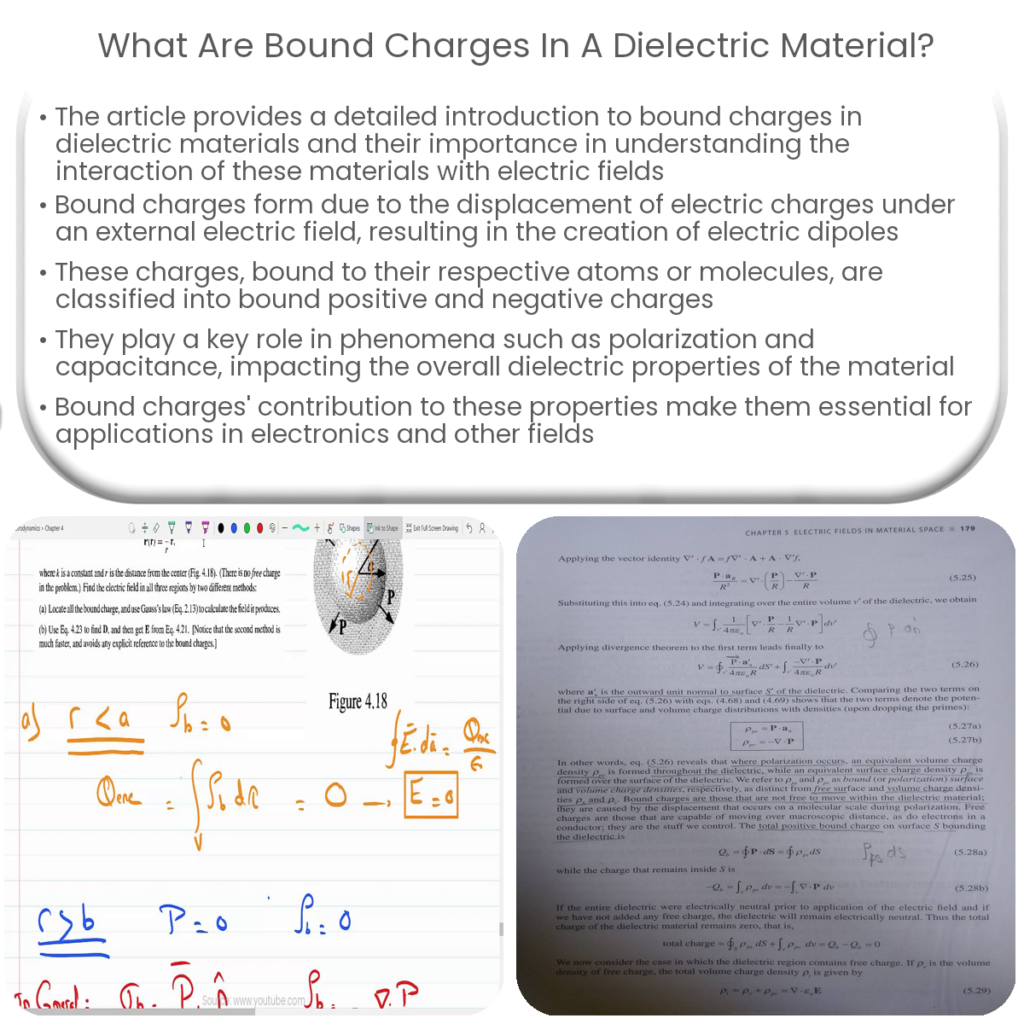
Bound charges in dielectrics are displaced charges that form dipoles under an external electric field and contribute to the material’s polarization.
Bound charges in dielectrics are displaced charges that form dipoles under an external electric field and contribute to the material’s polarization.

A Faraday cage is a conductive enclosure that blocks external electric fields and electromagnetic radiation, protecting contents inside the cage.

Electric polarization occurs in dielectrics when an external electric field causes a slight displacement of charges, inducing an electric dipole moment.
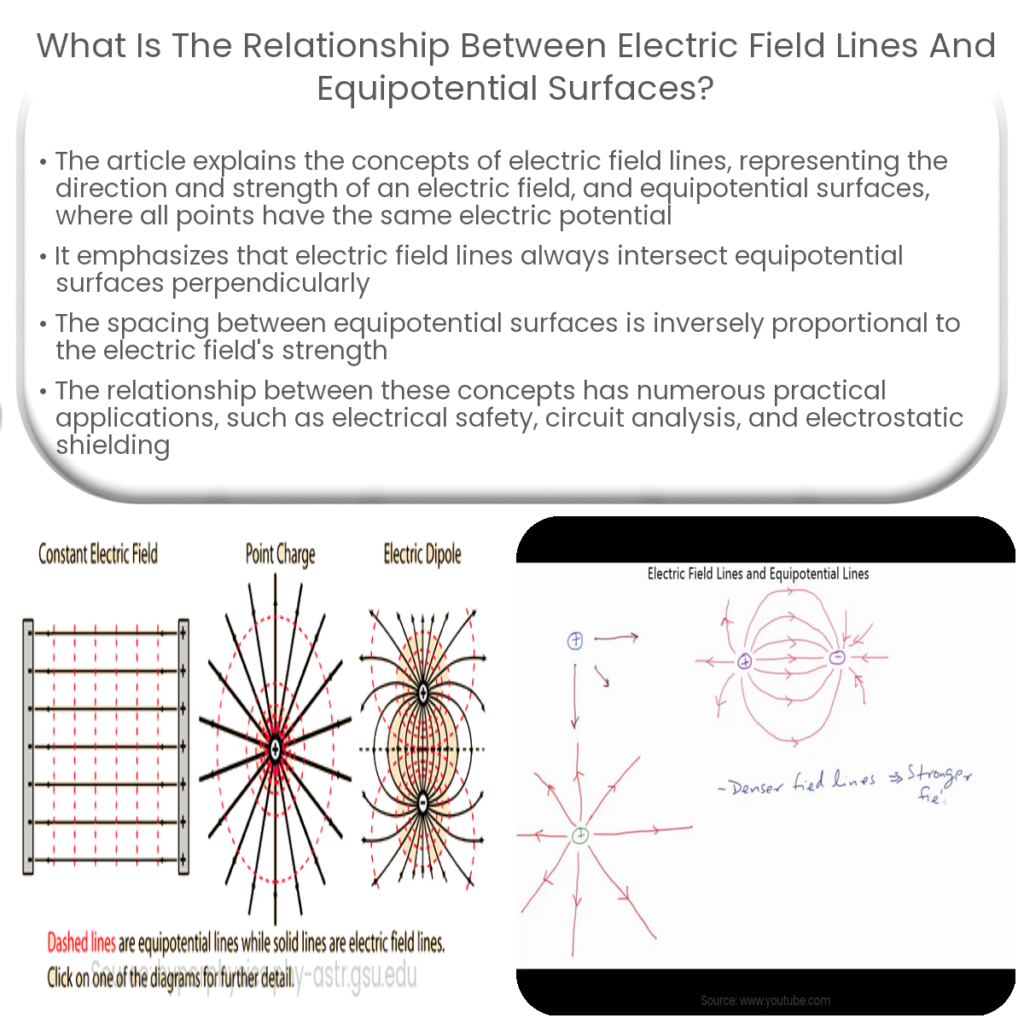
Electric field lines intersect equipotential surfaces perpendicularly, with surface spacing indicating field strength and direction.

Electrostatic shielding protects sensitive electronics from external electric fields using conductive enclosures or coatings, based on Faraday’s cage principles.

An electric field line is an imaginary line representing the direction and strength of an electric field, aiding in visualization and analysis.

Electric field lines have properties like originating from positive charges, never crossing, being perpendicular to conductors, and indicating field strength.
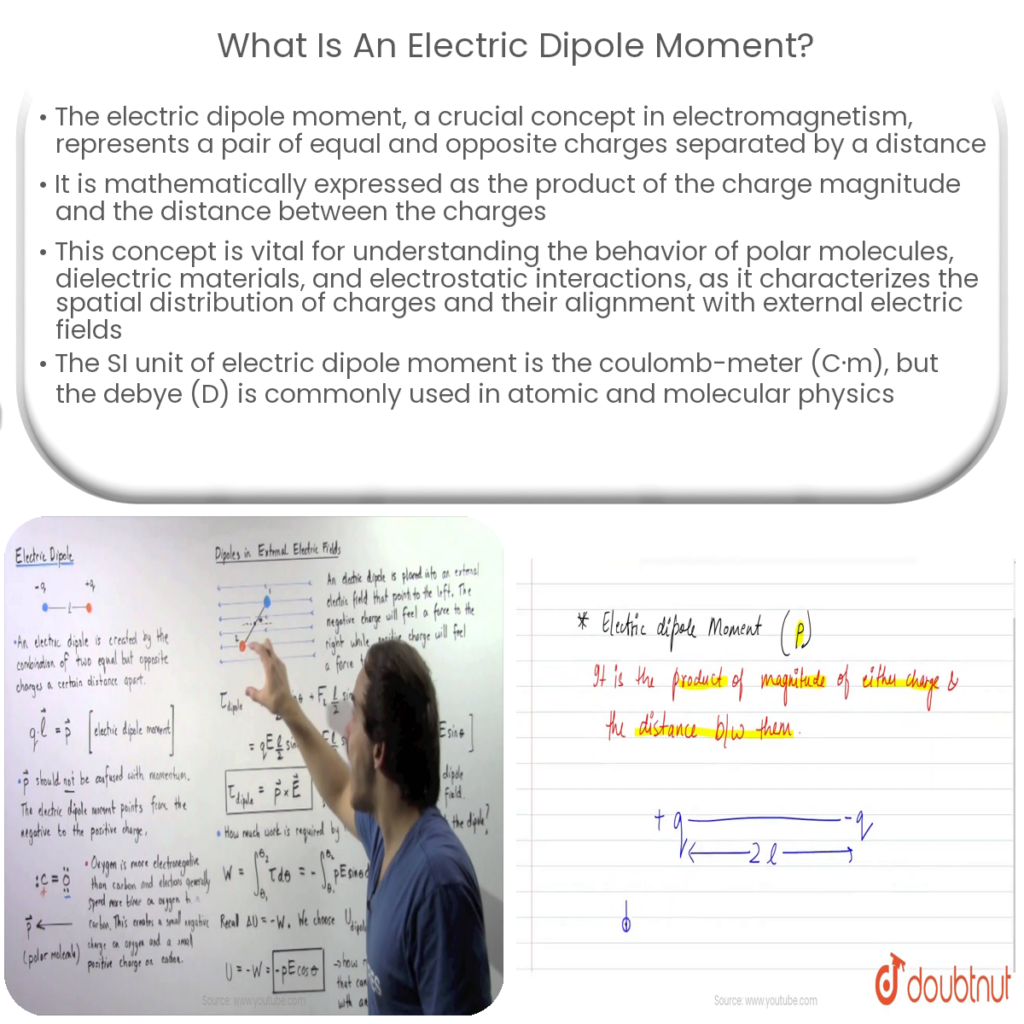
An electric dipole moment is a vector representing equal and opposite charges separated by a distance, crucial for understanding electrostatic interactions.

To calculate torque on an electric dipole in a uniform field, use τ = p × E or τ = p · E · sin(θ), where p is dipole moment, E is electric field, and θ is angle.
To apply Gauss’s law, choose a suitable Gaussian surface, calculate electric flux, determine enclosed charge, and solve for the electric field.

The primary purpose of this project is to help the public to learn some exciting and important information about electricity and magnetism.
Our Website follows all legal requirements to protect your privacy. Visit our Privacy Policy page.
The Cookies Statement is part of our Privacy Policy.
The information contained on this website is for general information purposes only. This website does not use any proprietary data. Visit our Editorial note.
It’s simple:
1) You may use almost everything for non-commercial and educational use.
2) You may not distribute or commercially exploit the content, especially on another website.
