
LCR meter (with resistance measurement)
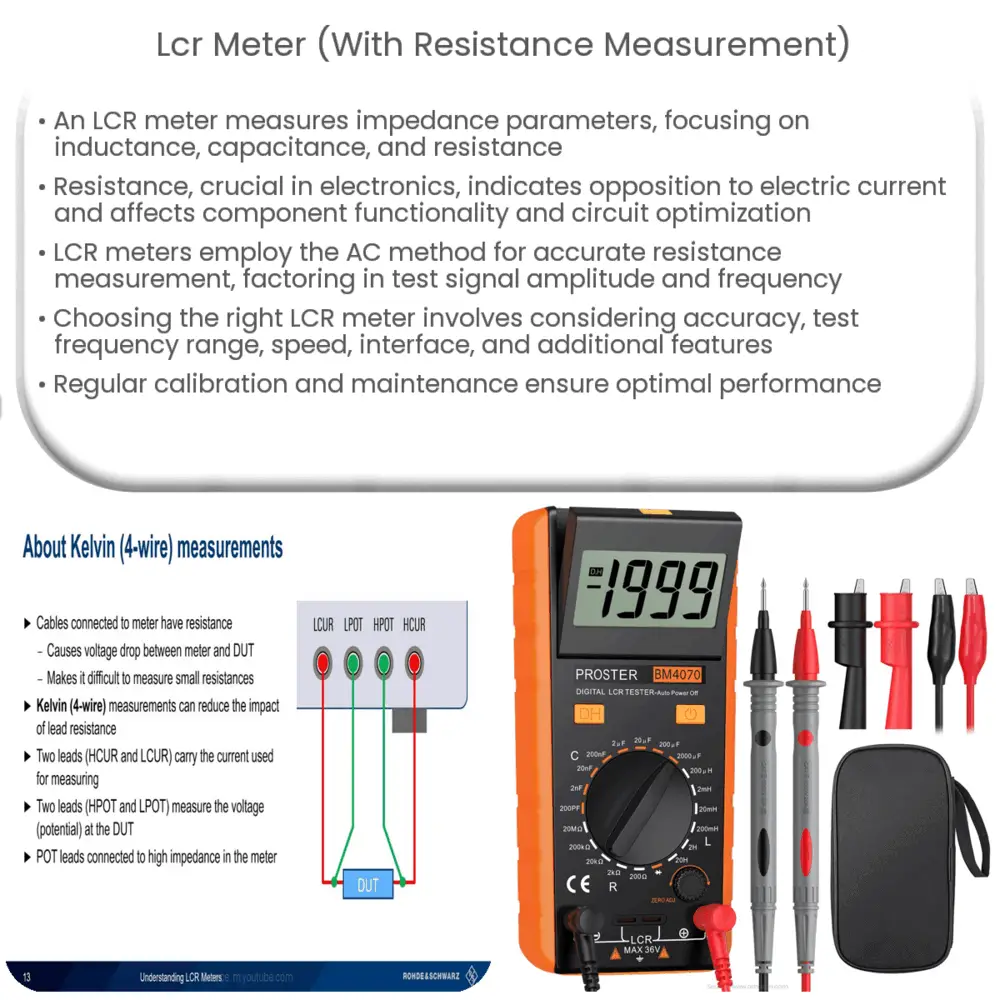
An LCR meter measures inductance (L), capacitance (C), and resistance (R) of electronic components, enabling accurate impedance testing and analysis.
An LCR meter measures inductance (L), capacitance (C), and resistance (R) of electronic components, enabling accurate impedance testing and analysis.

Clamp-on ohmmeters measure electrical resistance non-invasively, providing safety, convenience, and accuracy for diverse applications in various industries.

Explore the importance and functionality of antenna tuners in radio communication, along with an in-depth look at their different types.
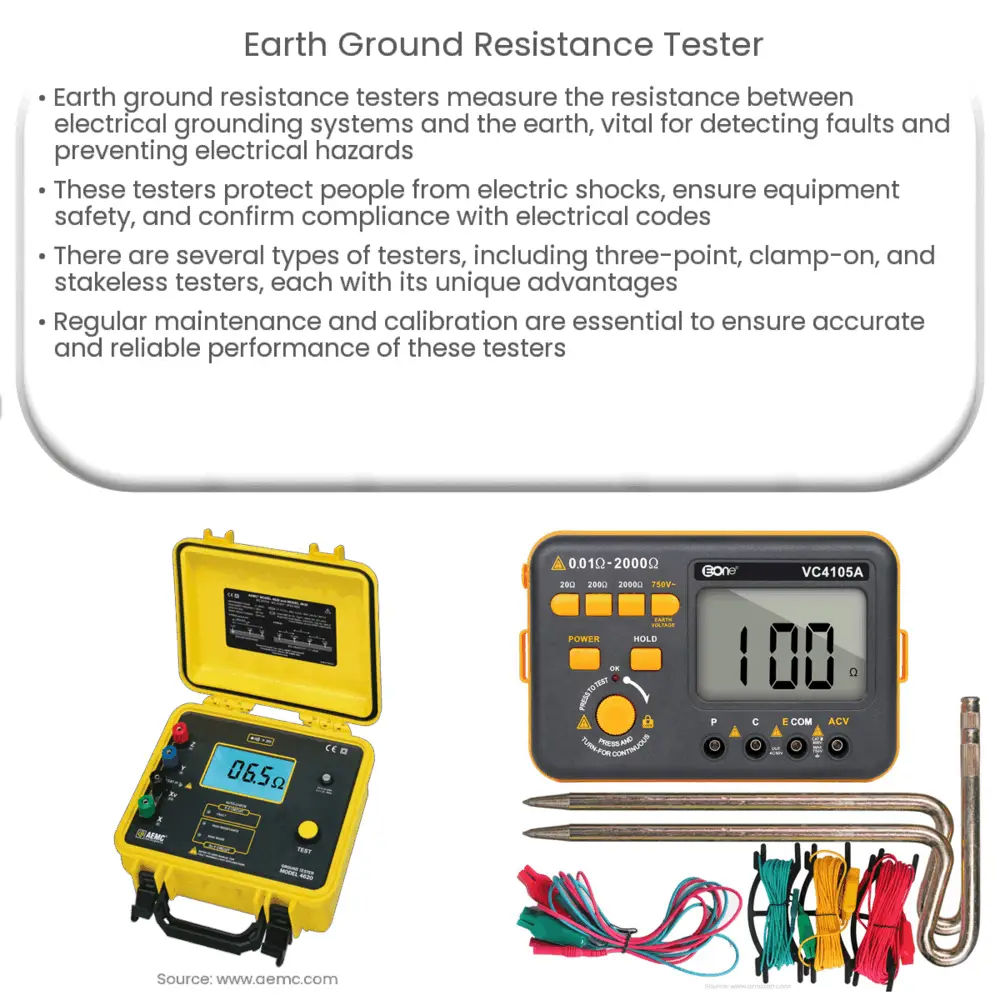
An earth ground resistance tester measures the resistance between a grounding system and the earth, ensuring safety and compliance in electrical systems.

The four-wire resistance measurement ohmmeter offers accurate resistance readings, eliminating errors caused by lead/contact resistance, ideal for various industries.

The Kelvin bridge ohmmeter is a highly accurate instrument for measuring low resistance values, widely used in electronics, electrical engineering, and materials science.

The Wheatstone bridge ohmmeter is a classic tool for accurately measuring electrical resistance, using a balanced bridge of resistive elements.

A multimeter’s ohmmeter function measures electrical resistance, helping diagnose faulty components, open circuits, and short circuits in electronic devices.
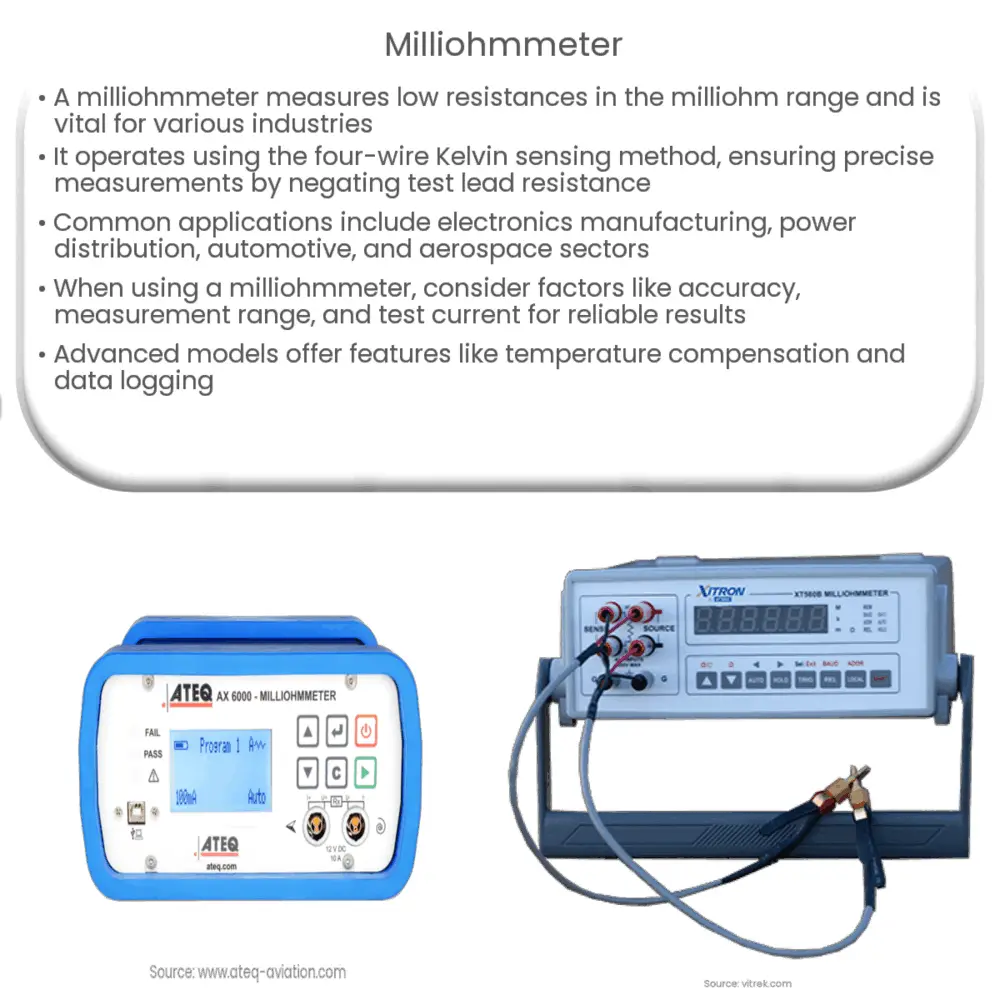
A milliohmmeter is a precise instrument used to measure low resistances in electrical and electronic applications, utilizing the four-wire Kelvin method.
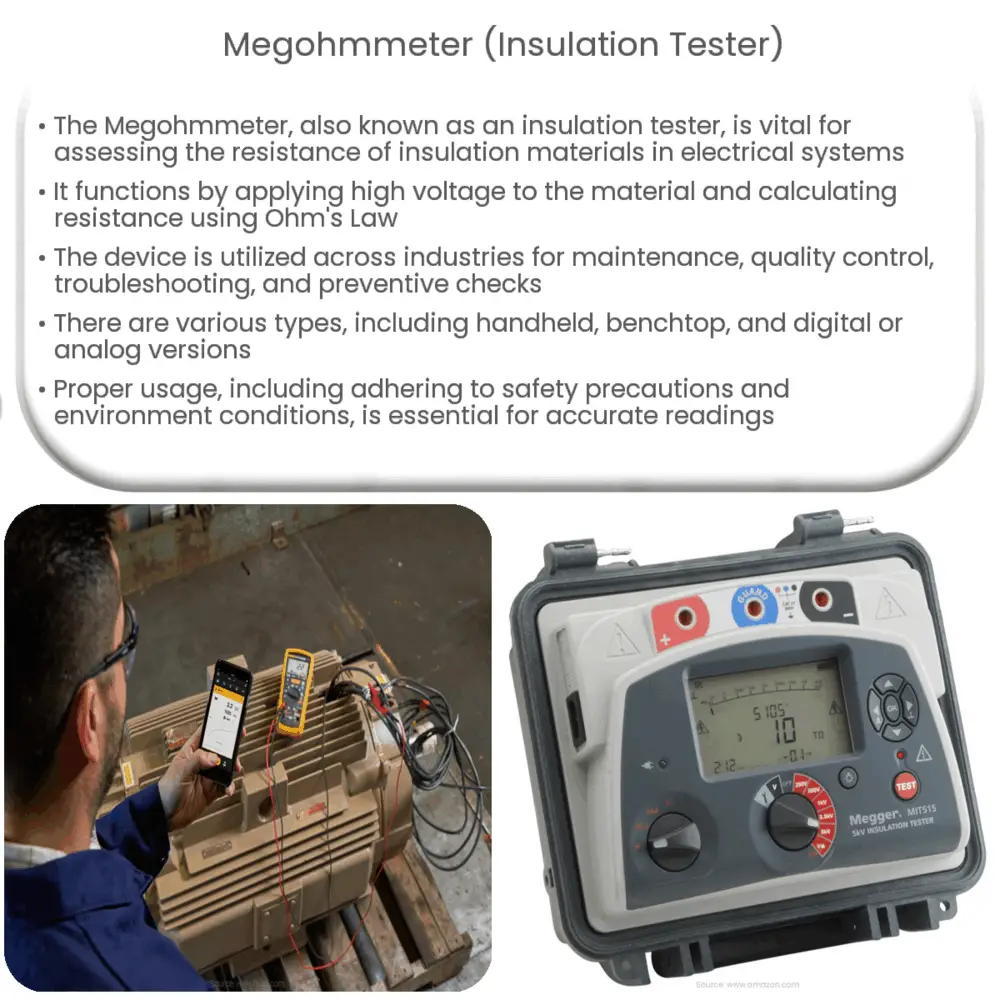
A Megohmmeter, or insulation tester, measures insulation resistance in electrical systems, ensuring safety, reliability, and preventing equipment failure.

The primary purpose of this project is to help the public to learn some exciting and important information about electricity and magnetism.
Our Website follows all legal requirements to protect your privacy. Visit our Privacy Policy page.
The Cookies Statement is part of our Privacy Policy.
The information contained on this website is for general information purposes only. This website does not use any proprietary data. Visit our Editorial note.
It’s simple:
1) You may use almost everything for non-commercial and educational use.
2) You may not distribute or commercially exploit the content, especially on another website.


