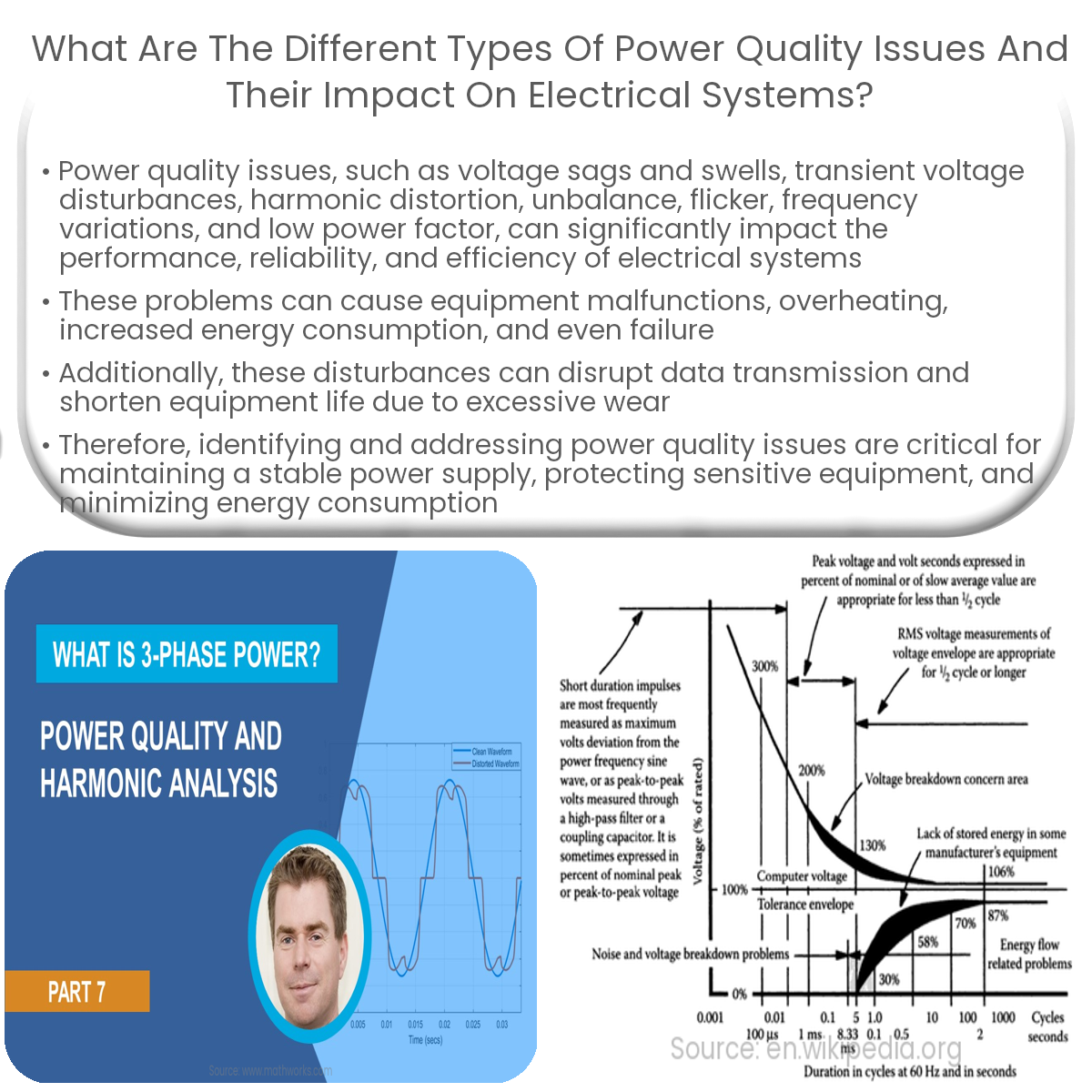
Power quality issues include voltage sags/swells, transient disturbances, harmonic distortion, unbalance, flicker, frequency variations, and low power factor.
Introduction
Power quality issues can negatively affect the performance, reliability, and efficiency of electrical systems. Understanding the different types of power quality problems and their impact is essential for maintaining a stable power supply.
Types of Power Quality Issues
- Voltage Sags and Swells: Voltage sags (short-term decreases) and swells (short-term increases) are common issues that can cause equipment malfunction, overheating, or even failure.
- Transient Voltage Disturbances: Transient disturbances are sudden, high-energy voltage spikes that can damage sensitive electronic equipment and disrupt data transmission.
- Harmonic Distortion: Harmonics are multiples of the fundamental power frequency that can cause overheating, equipment malfunction, and reduced efficiency.
- Unbalance: An unbalanced electrical system occurs when the voltages or currents in the three phases are not equal. This can lead to excessive equipment wear and reduced efficiency.
- Flicker: Voltage flicker is a rapid fluctuation in voltage levels that can cause visual disturbances and reduced performance of sensitive equipment.
- Frequency Variations: Changes in power frequency can cause instability and affect the performance of frequency-sensitive devices.
- Power Factor: A low power factor indicates inefficient utilization of electrical energy, resulting in increased energy consumption and higher utility costs.
Impact on Electrical Systems
Power quality issues can have various consequences on electrical systems, including:
- Equipment Damage: Sensitive electronic devices may malfunction or fail due to voltage sags, swells, or transient disturbances.
- Reduced Efficiency: Harmonic distortion, unbalance, and low power factor can decrease the overall efficiency of electrical systems and increase energy consumption.
- Disruptions in Data Transmission: Flicker and transient disturbances can cause interference in data transmission, resulting in errors or loss of information.
- Shortened Equipment Life: Power quality issues can cause excessive wear on motors, transformers, and other equipment, reducing their lifespan and increasing maintenance costs.
In conclusion, maintaining good power quality is essential for the reliable and efficient operation of electrical systems. Identifying and addressing power quality issues helps protect sensitive equipment, minimize energy consumption, and ensure stable power supply.