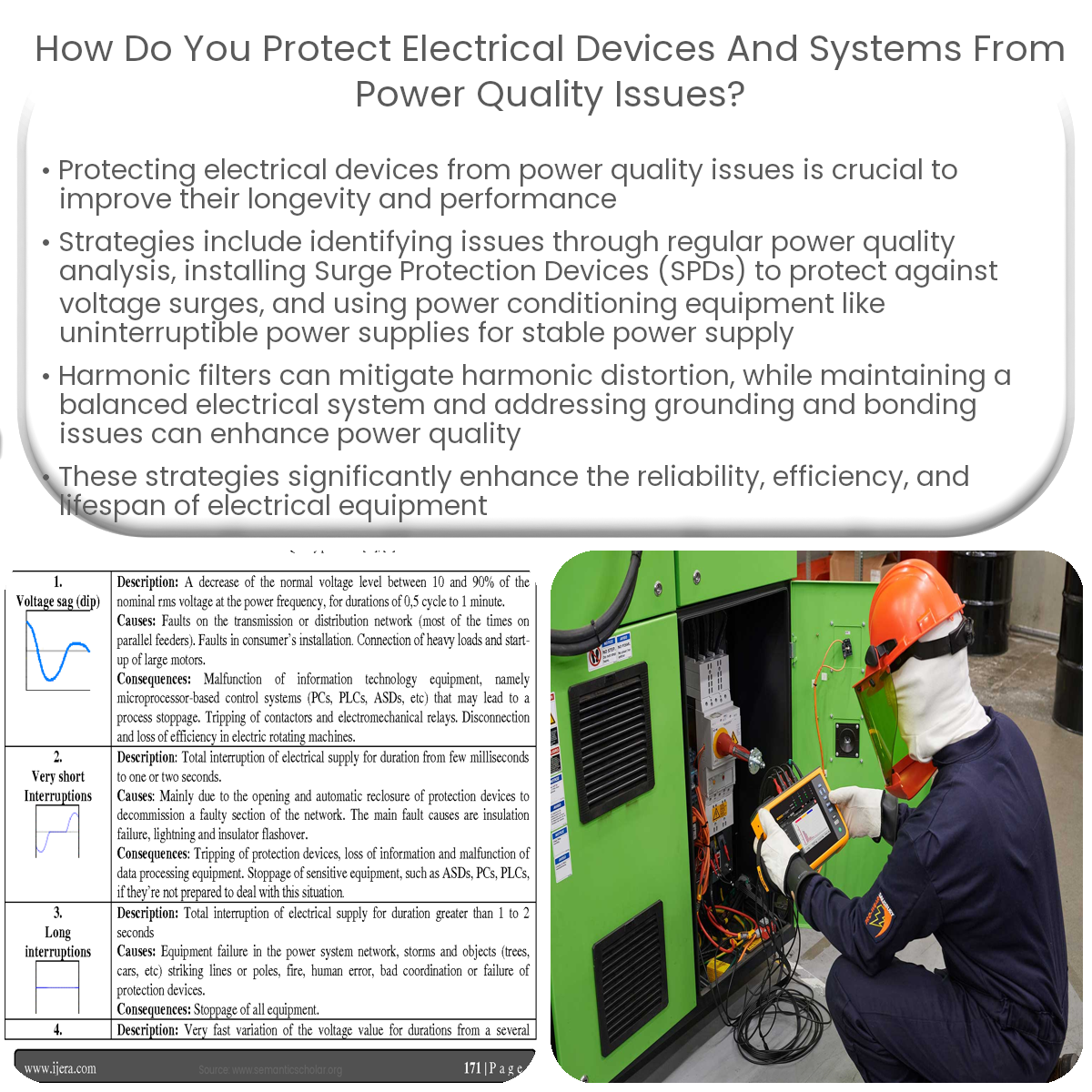
To protect electrical systems from power quality issues, use surge protection devices, power conditioning equipment, harmonic filters, and ensure proper grounding.
Protecting Electrical Devices and Systems from Power Quality Issues
Power quality issues can cause severe damage to electrical devices and systems, leading to reduced efficiency and increased maintenance costs. Implementing protective measures is crucial to ensure the longevity and performance of electrical equipment. This article discusses various strategies to safeguard electrical devices and systems from power quality issues.
1. Identify the Issues
The first step in addressing power quality problems is to identify the specific issues at hand. This can be accomplished by conducting a thorough power quality analysis using specialized monitoring equipment. Regularly monitoring the power quality helps in early detection of problems and enables timely corrective action.
2. Install Surge Protection Devices
Surge protection devices (SPDs) are designed to protect electrical systems and devices from transient voltage surges and spikes, which can cause permanent damage. Installing SPDs at critical points in the electrical system can help mitigate the impact of transient disturbances.
3. Use Power Conditioning Equipment
Power conditioning equipment, such as uninterruptible power supplies (UPS), voltage regulators, and active filters, can help improve power quality by correcting voltage fluctuations, reducing harmonic distortion, and maintaining a stable power supply to sensitive loads. These devices can be installed at critical locations in the electrical system to ensure optimal performance.
4. Opt for Harmonic Filters
Harmonic filters can be employed to mitigate the effects of harmonic distortion. These filters can either be passive or active, depending on the requirements of the electrical system. Passive filters are tuned to specific harmonic frequencies, while active filters dynamically adjust to changing harmonic conditions.
5. Maintain a Balanced Electrical System
Unbalanced loads can cause voltage and current unbalance, leading to inefficient power utilization and increased equipment stress. Ensuring proper load distribution and balance in the electrical system can help mitigate these issues.
6. Address Grounding and Bonding Issues
Proper grounding and bonding practices are essential to maintaining power quality. Grounding helps stabilize voltage levels and provides a path for fault currents, while bonding ensures a low-impedance path for fault current flow. Regularly inspecting and maintaining grounding and bonding systems can help prevent power quality problems.
In conclusion, protecting electrical devices and systems from power quality issues requires a combination of monitoring, preventive measures, and corrective actions. By implementing these strategies, the reliability, efficiency, and lifespan of electrical equipment can be significantly improved.