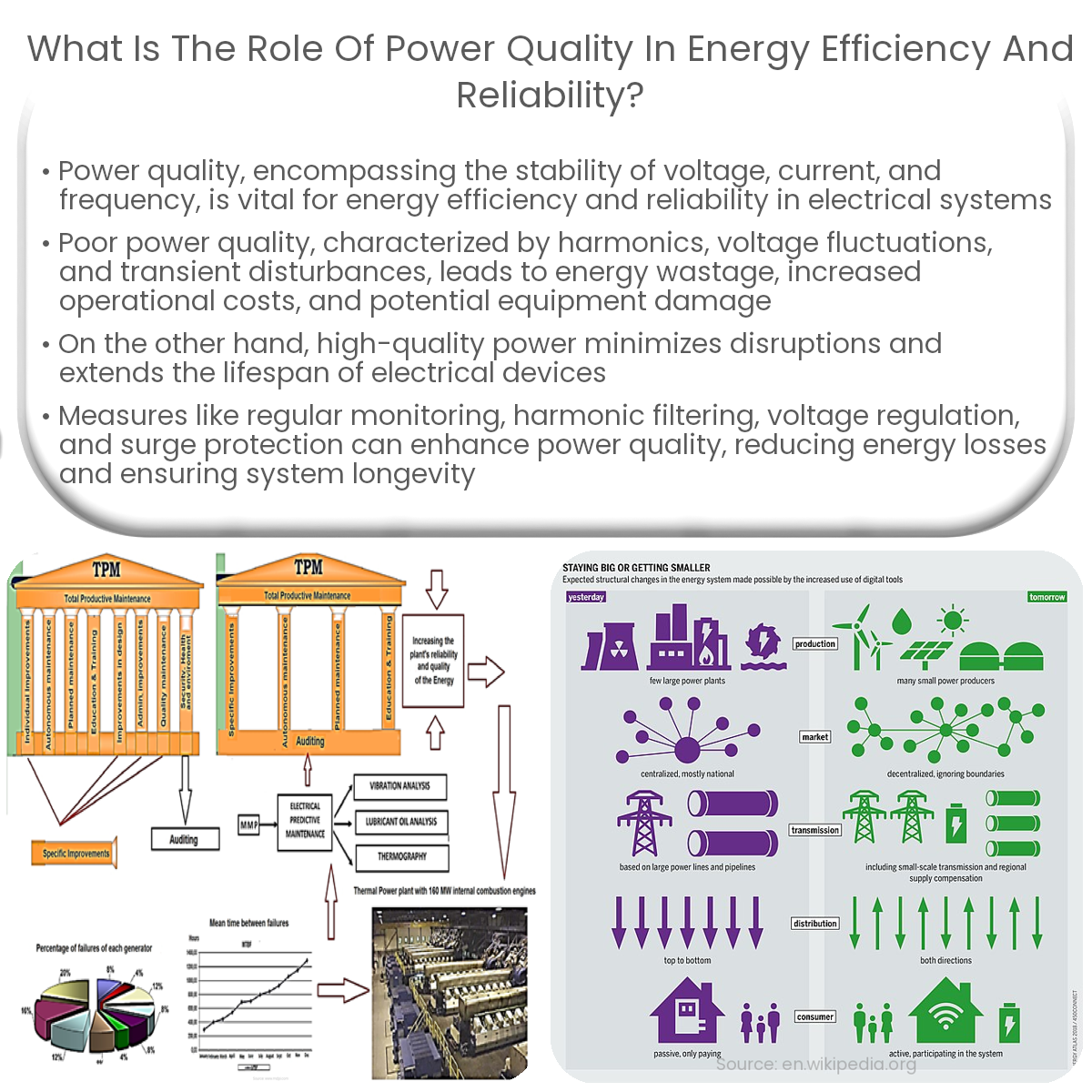
Power quality is crucial for energy efficiency and reliability, as it affects device performance, energy wastage, and equipment lifespan.
Introduction to Power Quality
Power quality plays a crucial role in ensuring energy efficiency and reliability in electrical systems. It refers to the consistency and stability of voltage, current, and frequency provided by a power system. Good power quality ensures the optimal performance of electrical devices, reduces energy wastage, and minimizes the risk of equipment failure.
Impact of Power Quality on Energy Efficiency
Energy efficiency is directly related to power quality. High-quality power enables electrical devices to operate efficiently, conserving energy and reducing operational costs. Poor power quality, on the other hand, can cause energy losses and increased energy consumption due to factors like harmonics, voltage fluctuations, and transient disturbances.
- Harmonics: Harmonics are distortions in the waveform of voltage and current, causing additional power losses and reduced efficiency in electrical devices.
- Voltage fluctuations: Variations in voltage levels can lead to inefficient energy utilization and potential damage to electrical equipment.
- Transient disturbances: Short-lived, high-energy events, such as voltage spikes or dips, can cause energy wastage and disrupt the performance of electrical systems.
Power Quality and Reliability
Reliability of an electrical system depends on the consistent delivery of high-quality power. Poor power quality can result in frequent equipment failures, increased maintenance costs, and reduced lifespan of electrical devices. In contrast, good power quality ensures reliable performance, minimizing disruptions and extending the life of electrical equipment.
Improving Power Quality
To enhance power quality and its associated benefits, several measures can be implemented:
- Monitoring and analysis: Regular monitoring and analysis of power quality parameters can help identify and address issues before they escalate.
- Harmonic filtering: Installing harmonic filters can mitigate harmonic distortion and reduce energy losses in the system.
- Voltage regulation: Voltage regulators and stabilizers can maintain voltage levels within acceptable limits, ensuring efficient energy utilization.
- Surge protection: Surge protectors can safeguard electrical equipment from transient disturbances, improving reliability and reducing maintenance costs.
In conclusion, power quality is essential for energy efficiency and reliability in electrical systems. By monitoring and addressing power quality issues, system operators can minimize energy wastage, reduce operational costs, and ensure the longevity of electrical equipment.