
30-second summary
Capacitor
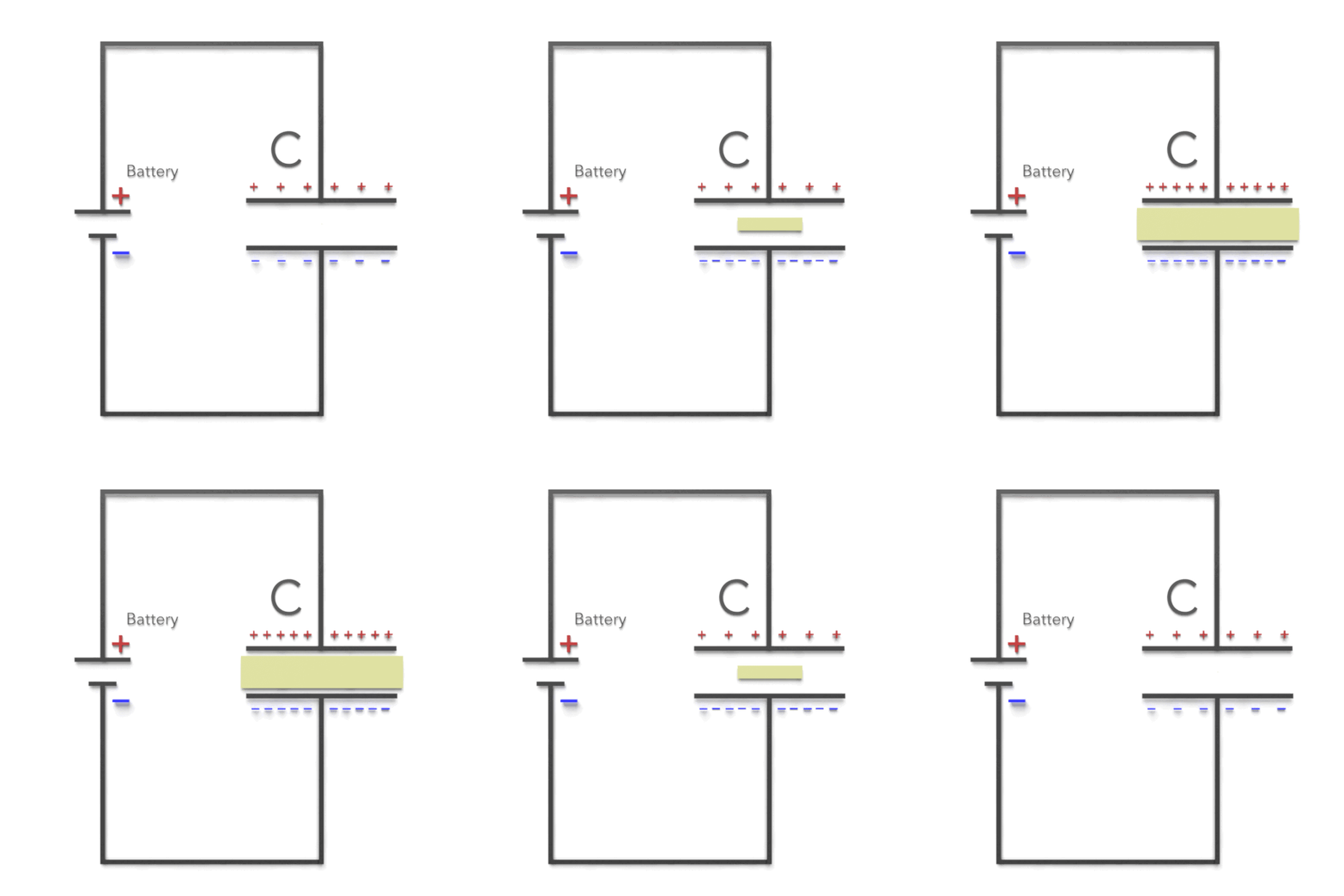
A capacitor is a device that can store electric charge and normally consists of two conducting objects (usually plates or sheets) placed near each other but not touching.
Basically, capacitors consist of two metal plates separated by an insulator. The insulator is called a dielectric. (e.g., polystyrene, oil, or air).
Capacitors are one of the most used and useful electronic components used in any modern electronic and electrical circuit and devices.
The most common kinds of capacitors are:
- Electrolytic capacitors
- Ceramic capacitors
- Paper capacitors
- Film capacitors
- Mica capacitors
- Supercapacitors
See also: Capacitance
See also: Dielectrics
Supercapacitors
Supercapacitors, also known as ultracapacitors or electric double-layer capacitors (EDLCs), are a type of capacitor that can store much more energy than a traditional capacitor. Here are some characteristics of supercapacitors:
- High energy density: Supercapacitors have a much higher energy density than traditional capacitors, which means that they can store much more energy in the same amount of space. This makes them useful for applications that require high power output or energy storage.
- High power density: Supercapacitors have a very high power density, which means that they can deliver high amounts of power quickly. This makes them useful in applications that require a lot of power in short bursts, such as electric vehicles and power tools.
- Fast charging and discharging: Supercapacitors can be charged and discharged very quickly, often in just a few seconds. This makes them useful in applications where rapid energy storage and release is required.
- Long cycle life: Supercapacitors have a long cycle life, typically lasting for tens of thousands or even hundreds of thousands of charge and discharge cycles. This makes them useful in applications where durability and reliability are important.
- Temperature sensitivity: Supercapacitors are sensitive to temperature and may experience changes in performance in extreme temperatures. Careful consideration of the operating environment is necessary to ensure optimal performance.
Overall, supercapacitors have high energy density, high power density, and fast charging and discharging capabilities, making them useful in a variety of applications where traditional batteries or capacitors may not be suitable. They are often used in hybrid and electric vehicles, renewable energy systems, and backup power systems.

