
Discover the essentials of speaker wire, including its function, factors influencing performance, materials, gauge, and terminations for optimal audio quality.
Understanding Speaker Wire: A Comprehensive Guide
Introduction
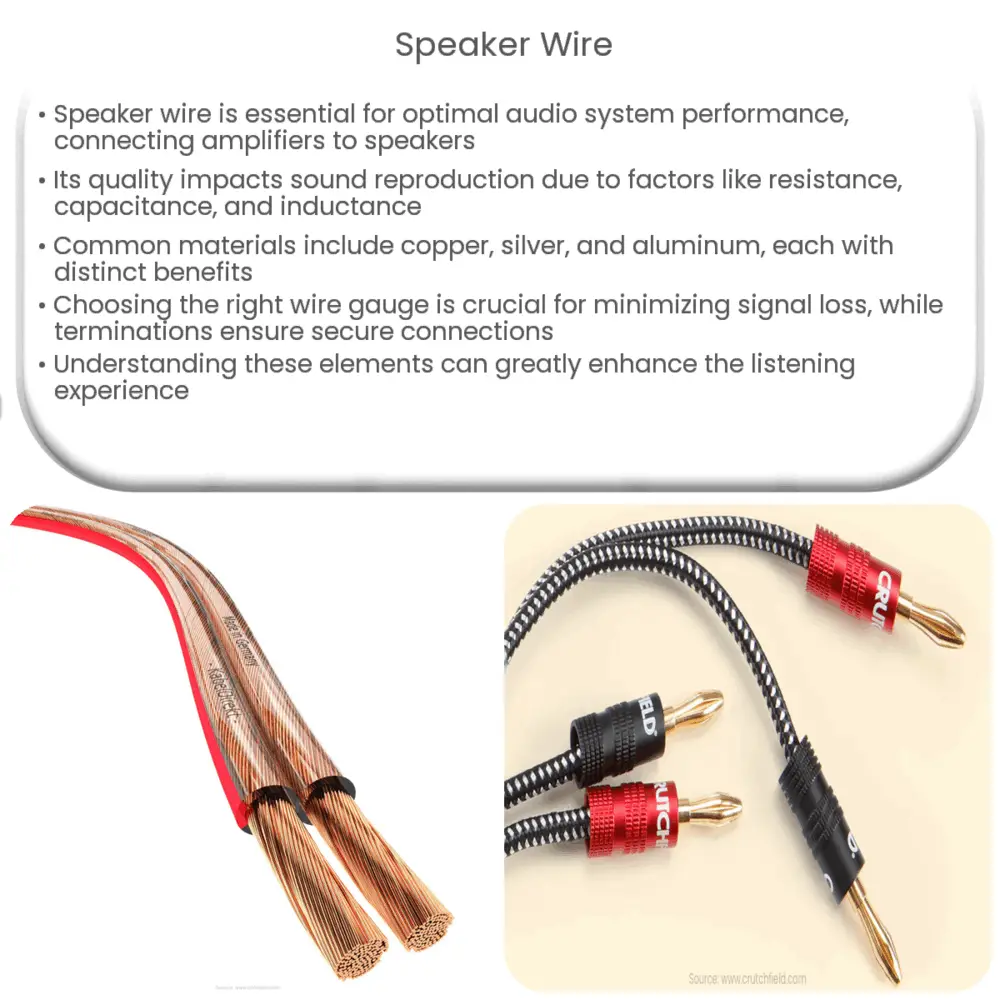
Speaker wire plays a vital role in the performance of your audio system, as it connects your audio receiver or amplifier to your speakers. To make an informed decision when choosing speaker wire, it’s essential to understand the factors that impact its performance, as well as the various types and materials available on the market. In this comprehensive guide, we will cover everything you need to know about speaker wire, including its function, the factors influencing its performance, and the most common types and materials.
Function of Speaker Wire
Speaker wire serves as the conduit between your audio receiver or amplifier and your speakers, transmitting electrical signals that ultimately produce sound. The quality of the speaker wire can have a significant impact on the overall audio quality of your system, as it influences factors such as resistance, capacitance, and inductance. A higher-quality speaker wire will generally provide more accurate sound reproduction and minimal signal loss, ensuring an enjoyable listening experience.
Factors Influencing Speaker Wire Performance
Several factors impact the performance of speaker wire, including:
- Resistance: Resistance is the opposition to the flow of electrical current, which can result in signal loss and reduced audio quality. Lower resistance is generally better, especially for longer wire runs.
- Capacitance: Capacitance refers to the ability of the speaker wire to store electrical energy. Higher capacitance can cause high-frequency signal loss and alter the sound produced by your speakers. It’s essential to select a speaker wire with low capacitance.
- Inductance: Inductance is the speaker wire’s ability to create a magnetic field that opposes changes in current. Although inductance is generally less critical than resistance and capacitance, it can still impact the audio quality, especially at higher frequencies.
Types and Materials of Speaker Wire
There are numerous types and materials of speaker wire available, each with its own set of advantages and disadvantages:
- Copper: Copper is the most common material used in speaker wire due to its excellent electrical conductivity and relatively low cost. Oxygen-free copper (OFC) is considered to be a higher-quality option, as it contains fewer impurities that can cause signal degradation.
- Silver: Silver is a superior conductor compared to copper but is significantly more expensive. While it offers lower resistance and better performance at higher frequencies, the price difference may not justify the improvement for most users.
- Aluminum: Aluminum is a more affordable alternative to copper and silver but has higher resistance and is more prone to oxidation. It’s often used in conjunction with copper in a composite wire called copper-clad aluminum (CCA).
It’s also crucial to consider the speaker wire’s gauge, or thickness, when selecting the appropriate wire for your audio system. Thicker wires, indicated by a lower gauge number, provide lower resistance and are better suited for longer wire runs and higher power applications.
Choosing the Right Gauge
Selecting the right gauge of speaker wire is essential to ensure optimal performance and minimize signal loss. The gauge, or thickness, of the wire is measured in American Wire Gauge (AWG) units. Lower AWG numbers represent thicker wires, while higher numbers correspond to thinner wires. Here’s a general guideline for choosing the appropriate gauge based on your audio setup:
- 18 AWG: Suitable for runs up to 25 feet and power levels up to 50 watts.
- 16 AWG: Recommended for runs up to 50 feet and power levels up to 100 watts.
- 14 AWG: Ideal for runs up to 100 feet and power levels up to 200 watts.
- 12 AWG: Suitable for runs over 100 feet or power levels above 200 watts.
Speaker Wire Terminations
Terminations are connectors used at the ends of speaker wires to ensure a secure connection between the wire and the speaker or amplifier terminals. Various types of terminations are available, including:
- Bare wire: The simplest and most affordable option, bare wire involves stripping the ends of the speaker wire and inserting them directly into the speaker or amplifier terminals.
- Spade connectors: These U-shaped connectors slide onto the binding post or screw terminals of your speaker or amplifier, providing a more secure connection than bare wire.
- Banana plugs: Banana plugs are inserted into the binding posts of your speaker or amplifier, offering a convenient and secure connection that is easy to install and remove.
- Pin connectors: Pin connectors are suitable for spring-clip terminals, providing a more secure connection compared to bare wire.
While terminations offer convenience and a more secure connection, they may also introduce additional resistance and affect the overall audio quality. High-quality terminations can minimize this impact.
Conclusion
Understanding the various aspects of speaker wire is crucial to optimizing your audio system’s performance. By considering factors such as resistance, capacitance, inductance, materials, gauge, and terminations, you can make an informed decision when selecting the ideal speaker wire for your setup. Remember that investing in high-quality speaker wire can significantly enhance your listening experience by minimizing signal loss and ensuring accurate sound reproduction.



