
An isolated DC-DC converter transfers energy between electrical systems, providing voltage conversion, electrical isolation, and safety in various applications.
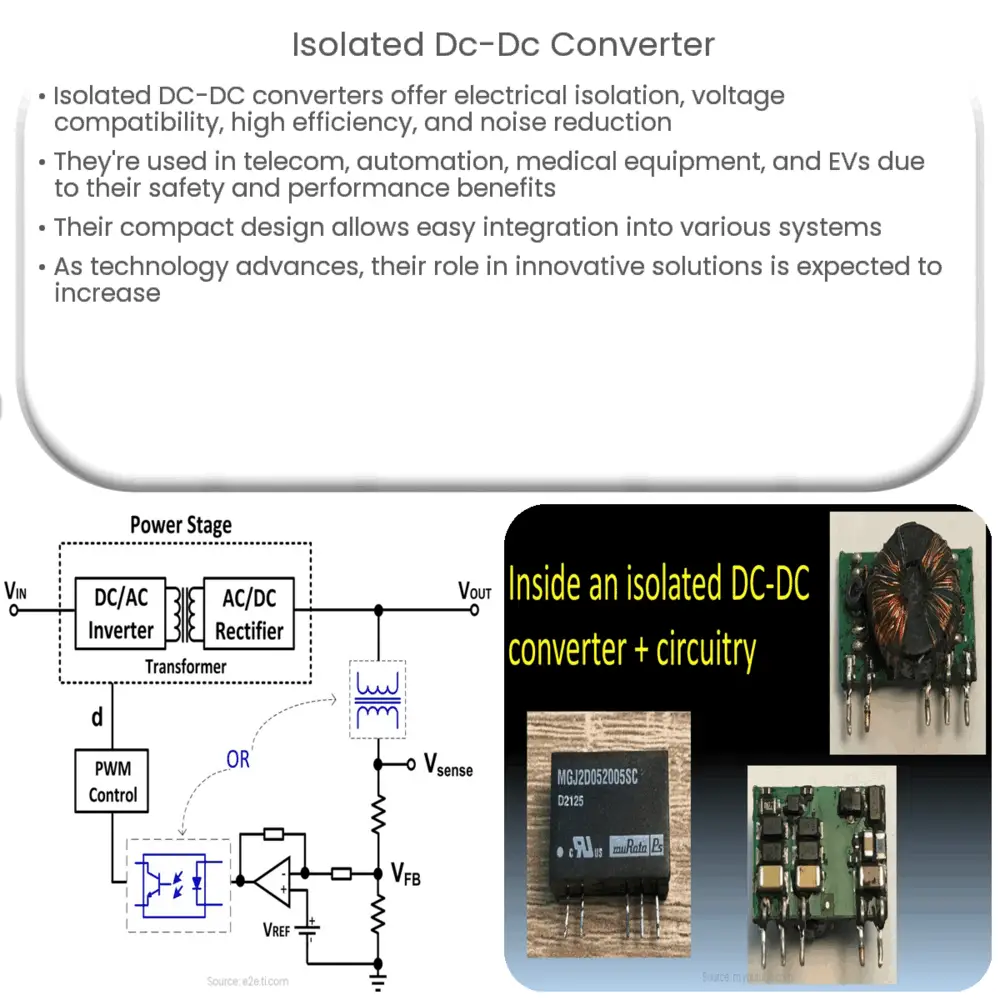
Isolated DC-DC Converter: An In-depth Look at Its Applications and Benefits
Introduction
An isolated DC-DC converter is a type of power electronic device that transfers energy from one electrical system to another, converting direct current (DC) voltage levels in the process. As the name suggests, it provides electrical isolation between the input and output circuits, ensuring safety and reducing the risk of electrical hazards. This article delves into the key features, applications, and advantages of isolated DC-DC converters, highlighting their significance in various industries.
Key Features of Isolated DC-DC Converters
Isolated DC-DC converters exhibit several unique features that make them indispensable in various applications. Some of these key features include:
- Electrical isolation: The primary and secondary sides of the converter are electrically separated, which prevents direct current flow between them. This ensures the safety of both the load and the supply, minimizing the risk of electrical faults and hazards.
- Wide input voltage range: Isolated converters can handle a broad range of input voltages, making them suitable for diverse applications with varying voltage requirements.
- High efficiency: These converters are designed to operate with minimal energy loss, ensuring that the majority of input power is converted into usable output power.
- Compact size: Modern isolated DC-DC converters are compact and lightweight, making them easy to integrate into various systems and devices.
- Regulated output voltage: The output voltage of an isolated converter is regulated, providing a stable voltage supply to the load, regardless of input voltage variations.
Applications of Isolated DC-DC Converters
Isolated DC-DC converters are widely used in numerous industries and applications. Some of the most common applications include:
- Telecommunication systems: In telecommunication networks, isolated converters provide stable and regulated power supplies for equipment like base stations, switches, and routers. The electrical isolation feature is crucial to prevent potential damage caused by ground loops or voltage transients.
- Industrial automation: Automation systems rely on various sensors, actuators, and controllers to function. Isolated converters ensure that these devices receive the required voltage levels while maintaining electrical isolation between components, preventing interference and enhancing system reliability.
- Medical equipment: In medical devices, isolated converters are used to provide stable power to sensitive electronics while maintaining patient safety by electrically isolating the device from the patient.
- Electric vehicles (EVs): Isolated DC-DC converters are essential in EVs for tasks such as charging the high-voltage battery pack, supplying power to auxiliary systems, and managing energy flow between different components of the vehicle.
Benefits of Isolated DC-DC Converters
There are several advantages to using isolated DC-DC converters in various applications, including:
- Safety: By providing electrical isolation between input and output circuits, isolated converters minimize the risk of electrical hazards, ensuring the safety of both users and equipment.
- Noise reduction: The electrical isolation feature helps reduce noise and interference between different components of a system, resulting in improved performance and reliability.
- Voltage compatibility:
Voltage compatibility: With their wide input voltage range and regulated output voltage, isolated converters enable compatibility between devices and systems operating at different voltage levels. - Energy efficiency: Isolated DC-DC converters are designed for high efficiency, ensuring minimal energy loss during the conversion process, which results in reduced energy consumption and lower operating costs.
- Compact design: The small size of modern isolated converters allows for easy integration into various systems and devices, making them a versatile and convenient solution for power conversion needs.
- Enhanced reliability: By maintaining a stable output voltage and reducing noise and interference, isolated converters contribute to the overall reliability and performance of the systems in which they are employed.
Conclusion
Isolated DC-DC converters play a crucial role in a wide range of industries and applications, thanks to their unique features and numerous benefits. Providing electrical isolation, voltage compatibility, high efficiency, and noise reduction, these converters are indispensable in ensuring the safety, performance, and reliability of various systems and devices. As technology continues to advance, it is likely that isolated DC-DC converters will play an even more significant role in the development of innovative solutions and applications.



