
Hydrostatic pressure sensors measure fluid pressure, offering accuracy and reliability in various industries like water management and environmental monitoring.
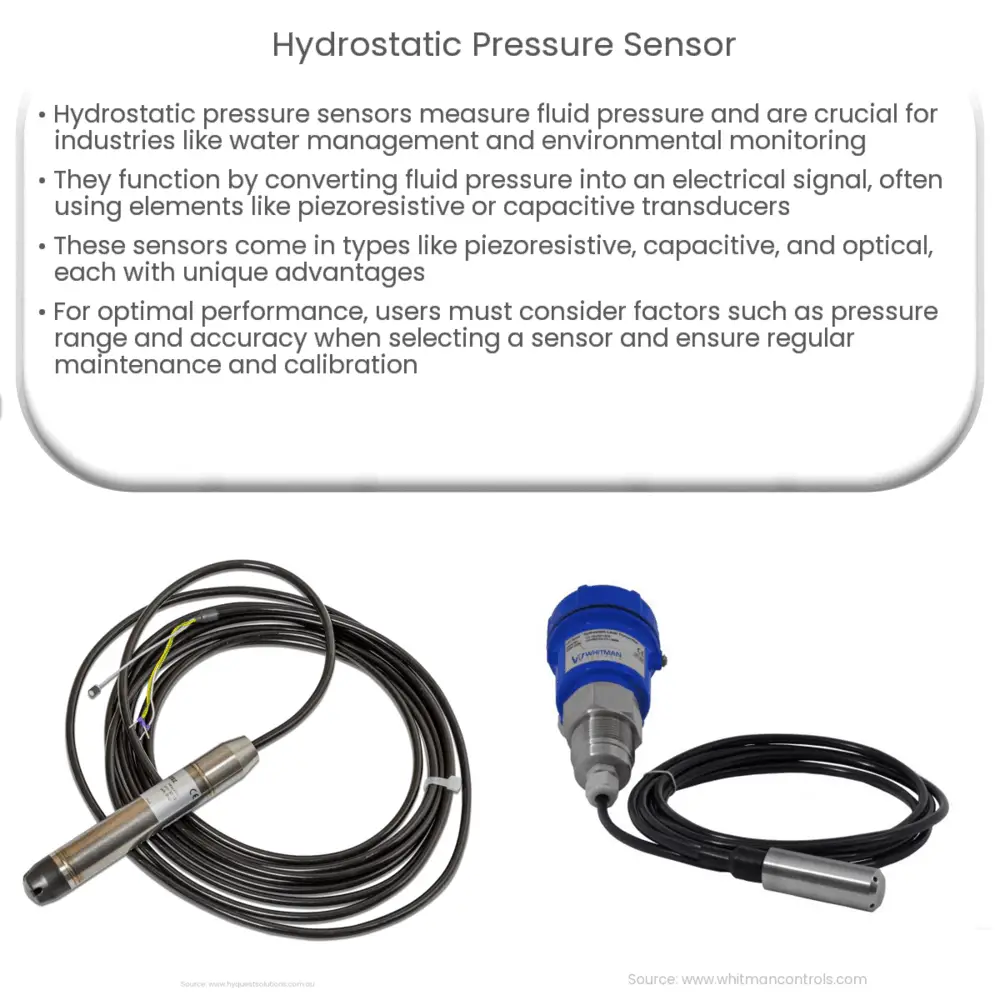
Understanding Hydrostatic Pressure Sensors
Hydrostatic pressure sensors are an essential tool in a variety of industries and applications, including water management, environmental monitoring, and industrial processes. By accurately measuring the pressure of fluids in different environments, these sensors can help optimize processes, enhance safety, and improve overall efficiency. In this article, we will discuss the principles behind hydrostatic pressure sensors, their types, and their applications.
What is Hydrostatic Pressure?
Hydrostatic pressure is the pressure exerted by a fluid at rest due to the force of gravity. It can be calculated as the product of the fluid’s density, gravitational acceleration, and the height of the fluid column above the point of interest. This pressure increases linearly with the depth of the fluid and is independent of the shape or volume of the container holding it.
Working Principle of Hydrostatic Pressure Sensors
Hydrostatic pressure sensors work by converting the pressure exerted by a fluid column into an electrical signal. They typically consist of a pressure-sensitive element, such as a piezoresistive or capacitive transducer, which undergoes deformation when subjected to pressure. This deformation causes a change in the electrical properties of the sensing element, which can be measured and converted into a pressure reading.
Some hydrostatic pressure sensors use a sealed reference chamber filled with a reference fluid, which allows them to measure differential pressure between the reference fluid and the fluid being monitored. This differential measurement can be useful in applications where the pressure of the fluid being measured is affected by external factors, such as atmospheric pressure or temperature fluctuations.
Types of Hydrostatic Pressure Sensors
There are several types of hydrostatic pressure sensors, each with its own advantages and limitations. Some common types include:
- Piezoresistive pressure sensors: These sensors use a piezoresistive material, such as a silicon strain gauge, which changes its electrical resistance when subjected to mechanical stress. They are known for their accuracy, repeatability, and wide pressure range capabilities.
- Capacitive pressure sensors: Capacitive sensors measure the change in capacitance caused by the deformation of a diaphragm due to applied pressure. These sensors offer high sensitivity, low power consumption, and good resistance to temperature changes.
- Optical pressure sensors: Optical sensors rely on the change in light intensity, wavelength, or polarization as a result of pressure-induced deformation in a sensing element. These sensors offer high sensitivity, immunity to electromagnetic interference, and the ability to operate in harsh environments.
Applications of Hydrostatic Pressure Sensors
Hydrostatic pressure sensors are used in a wide range of industries and applications. Some common examples include:
- Water level monitoring in reservoirs, wells, and tanks
- Pressure measurement in pipes, pumps, and valves
- Leak detection in pipelines and storage vessels
- Weather stations for monitoring atmospheric pressure
- Environmental monitoring of water bodies, such as rivers, lakes, and oceans
Selection Criteria for Hydrostatic Pressure Sensors
When selecting a hydrostatic pressure sensor for a specific application, several factors must be considered to ensure optimal performance and reliability. These factors include:
- Pressure range: Choose a sensor with an appropriate pressure range for the application. Selecting a sensor with a range that is too low may result in inaccurate measurements or sensor damage, while a range that is too high may compromise sensitivity and resolution.
- Accuracy and resolution: The accuracy and resolution of the sensor should be suitable for the specific application requirements. Higher accuracy and resolution sensors may be more expensive, but they can provide more precise and reliable measurements.
- Temperature range: Ensure that the sensor can operate within the temperature range of the application. Temperature fluctuations can affect the performance and accuracy of some sensors, so it is important to choose a sensor with appropriate temperature compensation mechanisms.
- Material compatibility: The materials used in the construction of the sensor should be compatible with the fluid being measured. Incompatible materials may result in sensor degradation, contamination, or failure.
- Output signal and communication protocols: Select a sensor with an output signal and communication protocol that is compatible with the monitoring or control system being used. Common output signals include analog (e.g., 4-20 mA) and digital (e.g., Modbus, HART).
Maintenance and Calibration of Hydrostatic Pressure Sensors
Proper maintenance and calibration of hydrostatic pressure sensors are essential for ensuring accurate and reliable measurements. Some maintenance and calibration tips include:
- Regular inspection: Regularly inspect the sensor for signs of wear, damage, or contamination. Clean the sensor as needed and replace any damaged components.
- Calibration: Periodically calibrate the sensor to ensure that it provides accurate measurements. Calibration should be performed according to the manufacturer’s recommendations, using appropriate calibration equipment and procedures.
- Documentation: Maintain detailed records of sensor maintenance and calibration activities. This can help identify trends, potential issues, and support quality assurance processes.
Conclusion
Hydrostatic pressure sensors are versatile instruments that provide accurate and reliable pressure measurements in a variety of industries and applications. By understanding the principles behind these sensors, selecting the appropriate type for a specific application, and ensuring proper maintenance and calibration, users can optimize processes, enhance safety, and improve overall efficiency. Whether monitoring water levels, detecting leaks, or controlling industrial processes, hydrostatic pressure sensors are an invaluable tool in the modern world.



