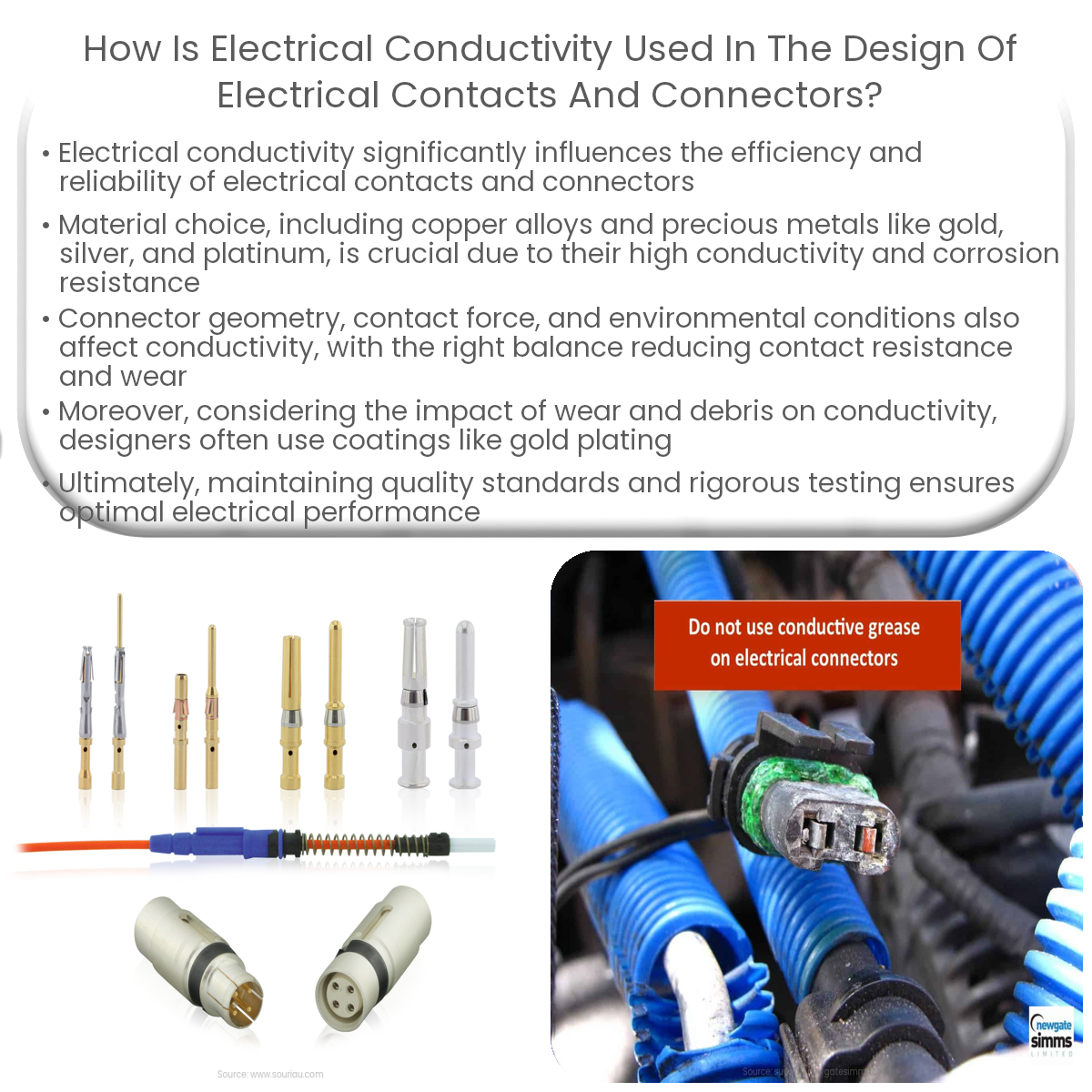
Electrical conductivity is crucial in designing contacts and connectors to ensure efficient signal transmission, minimal resistance, and reliable connections.
Electrical Conductivity in Contact and Connector Design
Electrical conductivity is a vital consideration in the design of electrical contacts and connectors. These components are responsible for establishing and maintaining reliable electrical connections between different parts of a circuit or system. The efficiency, signal integrity, and overall performance of the electrical system depend on the effectiveness of these connections.
Material Selection
Choosing the right material is crucial in designing contacts and connectors. Materials with high electrical conductivity, such as copper and its alloys, are commonly used due to their excellent ability to transmit electrical signals with minimal resistance. Silver, gold, and platinum are also used for their low contact resistance and resistance to corrosion, despite their higher cost.
Geometry and Contact Force
The geometry of a connector can influence its electrical conductivity. Optimizing the contact surface area and shape can reduce contact resistance and improve overall conductivity. Contact force also plays a significant role in establishing a reliable connection. Higher contact force helps to reduce contact resistance by ensuring better contact between mating surfaces, but it may also increase wear and mechanical stress on the components.
Environmental Factors
Environmental factors, such as temperature, humidity, and the presence of corrosive elements, can impact the electrical conductivity of contacts and connectors. Designers must consider these factors and choose materials and coatings that can resist corrosion and maintain their conductivity under various conditions.
Wear and Debris
Wear and debris can accumulate on contact surfaces over time, affecting electrical conductivity. In connector design, the selection of appropriate materials and platings, along with proper maintenance, can help to mitigate this issue. Gold plating, for example, is commonly used to provide a low-contact resistance and wear-resistant surface.
Quality and Reliability
As electrical conductivity plays a critical role in the performance of electrical contacts and connectors, it is essential to ensure their quality and reliability. This includes implementing proper manufacturing processes, testing and inspection, and adherence to industry standards and specifications.
Conclusion
Electrical conductivity is a key factor in designing efficient and reliable electrical contacts and connectors. By selecting the right materials, optimizing geometry and contact force, and considering environmental factors, wear, and debris, designers can create connectors that ensure optimal electrical performance and long-lasting connections in various applications.