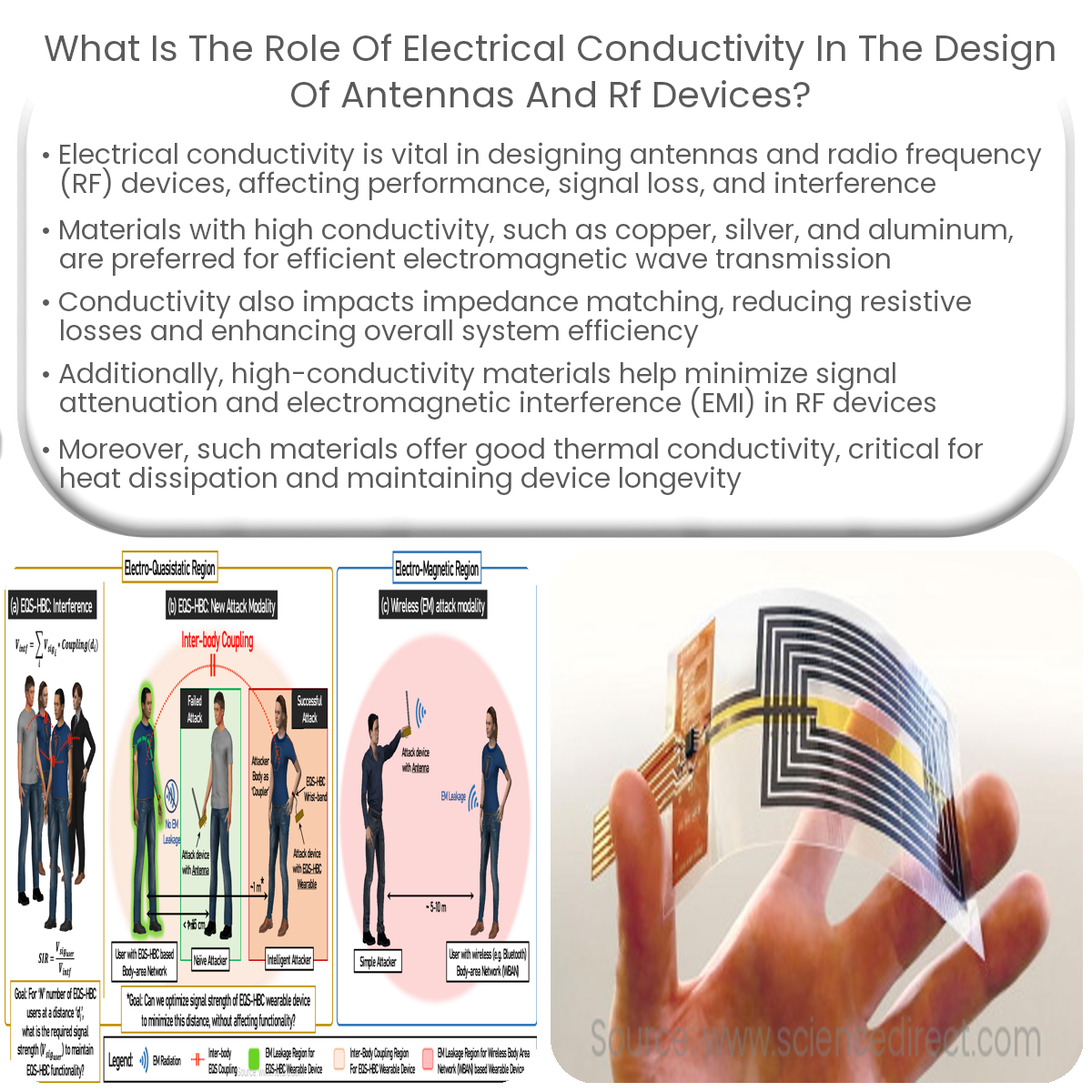
Electrical conductivity is crucial in antenna and RF device design for efficient signal transmission, impedance matching, minimizing losses, and thermal management.
Role of Electrical Conductivity in Antennas and RF Devices Design
Electrical conductivity plays a pivotal role in the design and performance of antennas and radio frequency (RF) devices. These devices operate on the principle of efficiently transmitting and receiving electromagnetic waves. The design process must take into consideration the electrical conductivity of materials to maximize performance, minimize signal loss, and reduce interference.
Material Selection and Signal Transmission
Antennas and RF devices require materials with high electrical conductivity to facilitate the efficient transmission of electromagnetic waves. Materials like copper, silver, and aluminum are commonly used due to their superior conductivity, which enables them to effectively radiate or receive electromagnetic waves with minimal losses. Selecting materials with high conductivity ensures a strong and clear signal transmission, which is crucial for the performance of antennas and RF devices.
Impedance Matching and Signal Reflection
Electrical conductivity also plays a crucial role in impedance matching – the process of ensuring that the input impedance of a load is matched to the output impedance of the source. This minimizes signal reflection and maximizes power transfer between the components of an RF system. A good match between the source and load impedances requires materials with high electrical conductivity, which reduces resistive losses and improves overall efficiency.
Minimizing Signal Loss and Interference
High electrical conductivity materials are essential in reducing resistive losses and signal attenuation in RF devices. As electromagnetic waves travel through conductive materials, they lose energy due to resistance. Using materials with high electrical conductivity helps minimize this loss, ensuring that RF devices can operate at their intended frequency range and power levels. Furthermore, high conductivity materials reduce electromagnetic interference (EMI), which can disrupt or degrade the performance of nearby electronic devices.
Thermal Management
In addition to their electrical properties, materials with high electrical conductivity also possess good thermal conductivity. This characteristic helps dissipate heat generated during the operation of antennas and RF devices, ensuring optimal performance and preventing thermal-related failures. Proper thermal management is critical for maintaining the longevity and reliability of RF systems.
In summary, electrical conductivity plays a significant role in the design of antennas and RF devices. It influences material selection, signal transmission, impedance matching, signal loss minimization, and thermal management. Designers must carefully consider the electrical conductivity of materials to optimize the performance and reliability of antennas and RF systems.