
Explore the importance of ESD safe wipes in controlling Electrostatic Discharge in sensitive environments, their unique features, and proper usage.
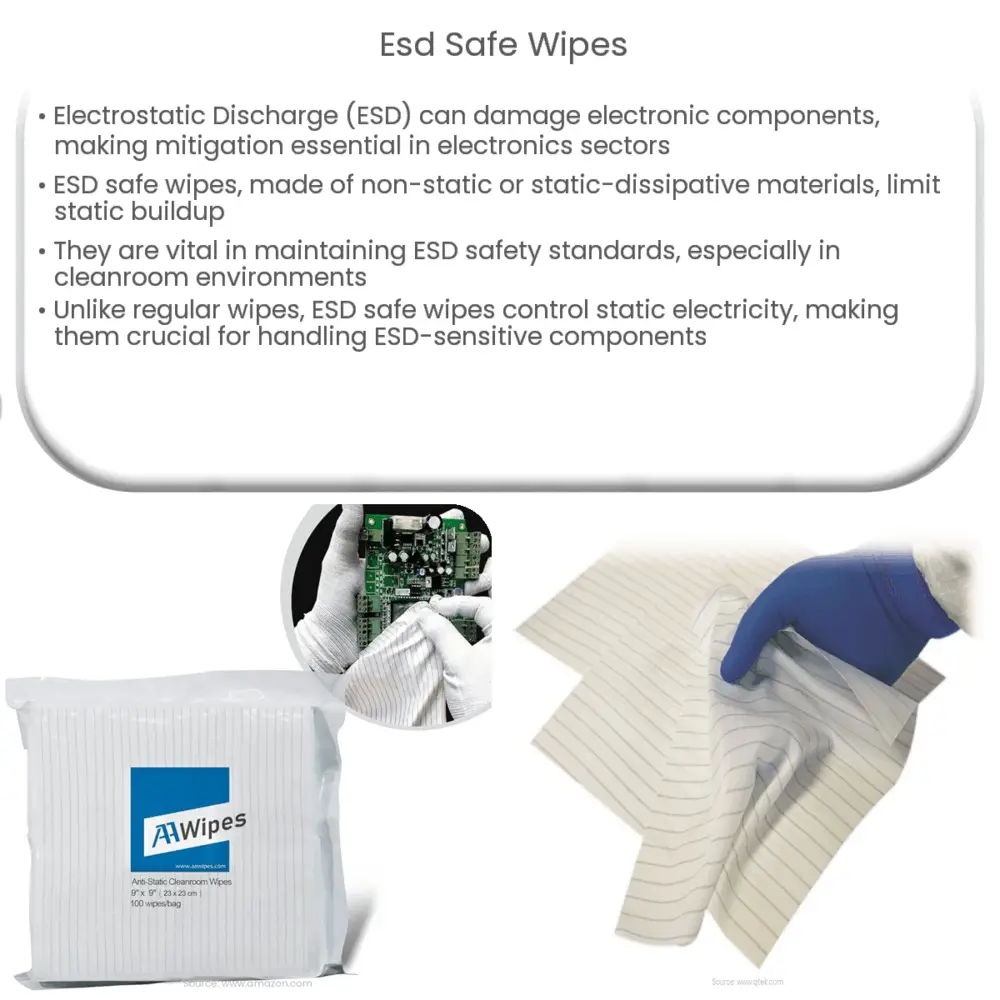
Introduction to ESD Safe Wipes
Electrostatic Discharge (ESD) is a rapid, unexpected electrical event that occurs when two differently charged objects come in contact or are within close proximity. This phenomenon can have severe consequences, particularly in environments that handle sensitive electronic components. ESD can cause damage ranging from component malfunction to total device failure. Therefore, mitigating ESD is a paramount concern in electronics manufacturing, repair, and handling environments.
Role of ESD Safe Wipes
In the quest to mitigate ESD, one essential tool often overlooked is ESD safe wipes. These specialized wipes are designed to limit the buildup of static electricity when used for cleaning in ESD sensitive environments. Unlike regular wipes, ESD safe wipes are made of materials that are either non-static generating or static-dissipative.
Composition of ESD Safe Wipes
- Non-Static Generating Materials: These are materials that do not generate static electricity under normal conditions. They include certain types of polyester, nylon, and other synthetics.
- Static-Dissipative Materials: These materials allow the transfer of charge to ground or other conductive objects. These can include certain forms of cotton or other natural fibers.
Why Use ESD Safe Wipes?
ESD safe wipes play an important role in maintaining ESD safety standards. They are often used in cleanroom environments, where the control of electrostatic discharge is critical. The application of these wipes can be found in various industries, including electronics manufacturing, pharmaceuticals, biotech, and any other field where sensitive components could be affected by ESD.
ESD Safe Wipes versus Regular Wipes
The difference between regular wipes and ESD safe wipes lies in their ability to control static electricity. Regular wipes, while effective in removing dust and grime, can generate static electricity when rubbed against surfaces. This static build-up can then discharge, potentially causing damage to sensitive electronic components. On the other hand, ESD safe wipes are specially designed to limit or eliminate static charge build-up, making them an essential tool for any environment handling ESD-sensitive components.
Choosing the Right ESD Safe Wipes
When selecting ESD safe wipes, several factors should be considered to ensure they are suitable for your specific environment and needs. These factors include:
- Material: As mentioned earlier, the materials used in the wipe can either be non-static generating or static-dissipative. Depending on your requirements, one may be more suitable than the other.
- Size: ESD safe wipes come in various sizes. You need to choose a size that fits your application.
- Saturation: Some ESD safe wipes are pre-saturated with a cleaning solution. These wipes provide additional cleaning power but may not be appropriate in all settings.
Proper Usage of ESD Safe Wipes
ESD safe wipes, while highly effective, must be used properly to maintain their effectiveness. They should be stored in a dry, cool place, and it’s best to keep them sealed until they’re needed. Once a wipe becomes dirty, it should be discarded to prevent cross-contamination. Additionally, ESD safe wipes should never be used with alcohol or other solvents that can generate a static charge.
The Importance of a Complete ESD Control Program
It’s important to note that while ESD safe wipes are an essential tool in ESD prevention, they are just one part of a comprehensive ESD control program. Such a program should also include ESD safe workstations, personal grounding equipment (such as ESD wrist straps), and staff training on the importance of ESD control and proper handling of ESD-sensitive components.
Conclusion
In conclusion, ESD safe wipes are a crucial component of any ESD control program, offering a practical solution for cleaning while minimizing the risk of static build-up. Their unique properties make them an indispensable tool in environments dealing with sensitive electronic components. However, these wipes should be seen as part of a broader ESD control strategy that involves the right equipment, procedures, and training to ensure a truly ESD-safe environment.



