
Explore the importance of ESD safe totes in safeguarding electronic components, their features, selection guide, and best usage practices.
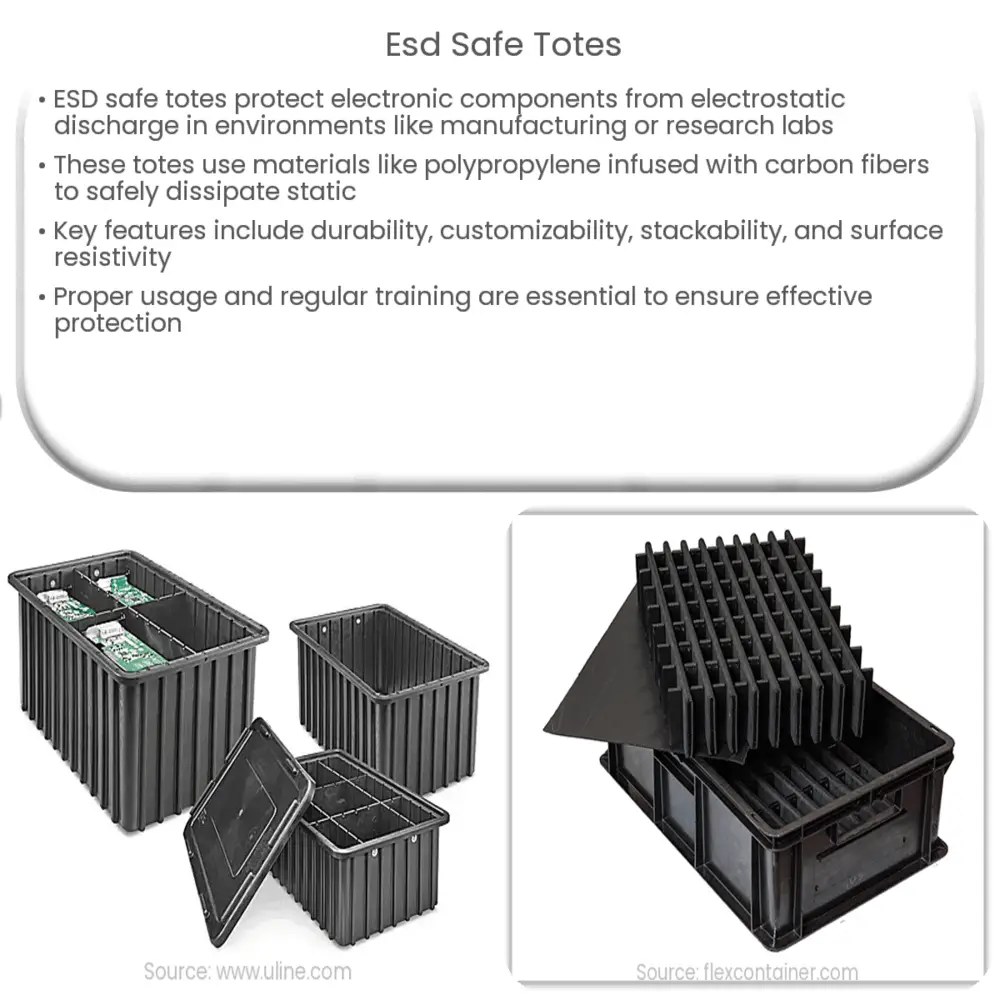
Understanding ESD Safe Totes
Electrostatic discharge (ESD) safe totes, also known as ESD protective totes, are specialized storage containers designed to safeguard electronic components from electrostatic discharge. They are a crucial part of any environment where electronic components are handled, such as electronics manufacturing or assembly lines, repair centers, and research laboratories.
Why ESD Protection is Necessary
Electrostatic discharge can cause significant damage to sensitive electronic components. Even a minor ESD event, which might not be perceptible to humans, can lead to failure in electronic devices. This can cause costly production delays, component loss, and potential damage to a company’s reputation. Therefore, using ESD safe totes is not just a proactive measure; it is a vital part of responsible electronic handling and storage.
The Science Behind ESD Safe Totes
ESD safe totes are made from materials that are designed to dissipate static electricity safely. They typically incorporate a mix of conductive and dissipative materials, such as polypropylene or high-density polyethylene infused with carbon fibers. The infused carbon fibers allow the tote to safely conduct any build-up of static electricity away from the stored components and into a grounding point.
Key Features of ESD Safe Totes
- Durability: ESD safe totes are designed for durability. They can withstand the wear and tear of a busy industrial environment, and they resist impact and are resilient to chemical exposure.
- Customizability: Depending on the needs of the user, ESD safe totes can be custom fitted with dividers or other organizing components to facilitate the easy retrieval and insertion of stored items.
- Stackability: These totes are usually designed to be easily stackable to maximize space utilization in a storage environment.
- Surface Resistivity: A key specification of ESD safe totes is their surface resistivity. The lower the resistivity, the faster static dissipates. This measurement is often marked on the tote itself.
Understanding the importance of ESD safe totes and how they work is the first step in ensuring the longevity and functionality of sensitive electronic components. In the following sections, we will delve further into how to select the right ESD safe totes and best practices for their use.
Selecting the Right ESD Safe Totes
Choosing the right ESD safe tote depends on various factors. The first consideration should always be the tote’s surface resistivity, which should be within the acceptable range for the components you’re storing. It’s also essential to consider the tote’s size and the configuration of its interior. It should be spacious enough to accommodate your components without cramming and have organizing elements, like dividers, if necessary.
Best Practices for Using ESD Safe Totes
Simply using ESD safe totes does not guarantee ESD protection. Proper usage and handling are paramount. Always ensure that the tote is grounded before placing or removing items from it. This can be done by connecting the tote to an ESD grounding point using a grounding cord. Secondly, try to minimize the handling of electronic components as much as possible. The less direct contact, the less likely an ESD event will occur.
- Training: Ensure that all personnel handling the totes are adequately trained on ESD safe practices.
- Inspection: Regularly inspect your totes for any signs of damage or wear that could compromise their ESD safe properties.
- Compliance: Always ensure that your ESD safe totes are compliant with the necessary industry standards, such as IEC 61340-5-1.
Conclusion
ESD safe totes are a vital tool in the preservation and handling of sensitive electronic components. Understanding their importance, how they work, and how to use them effectively is key to maintaining the integrity of these components and ensuring smooth operations in any electronic handling or storage environment. By selecting the right totes and adhering to the best practices in their use, you can significantly mitigate the risk of ESD damage and maintain the longevity of your electronic components.



