
How do capacitors and piezoelectric materials work together in sensing applications?
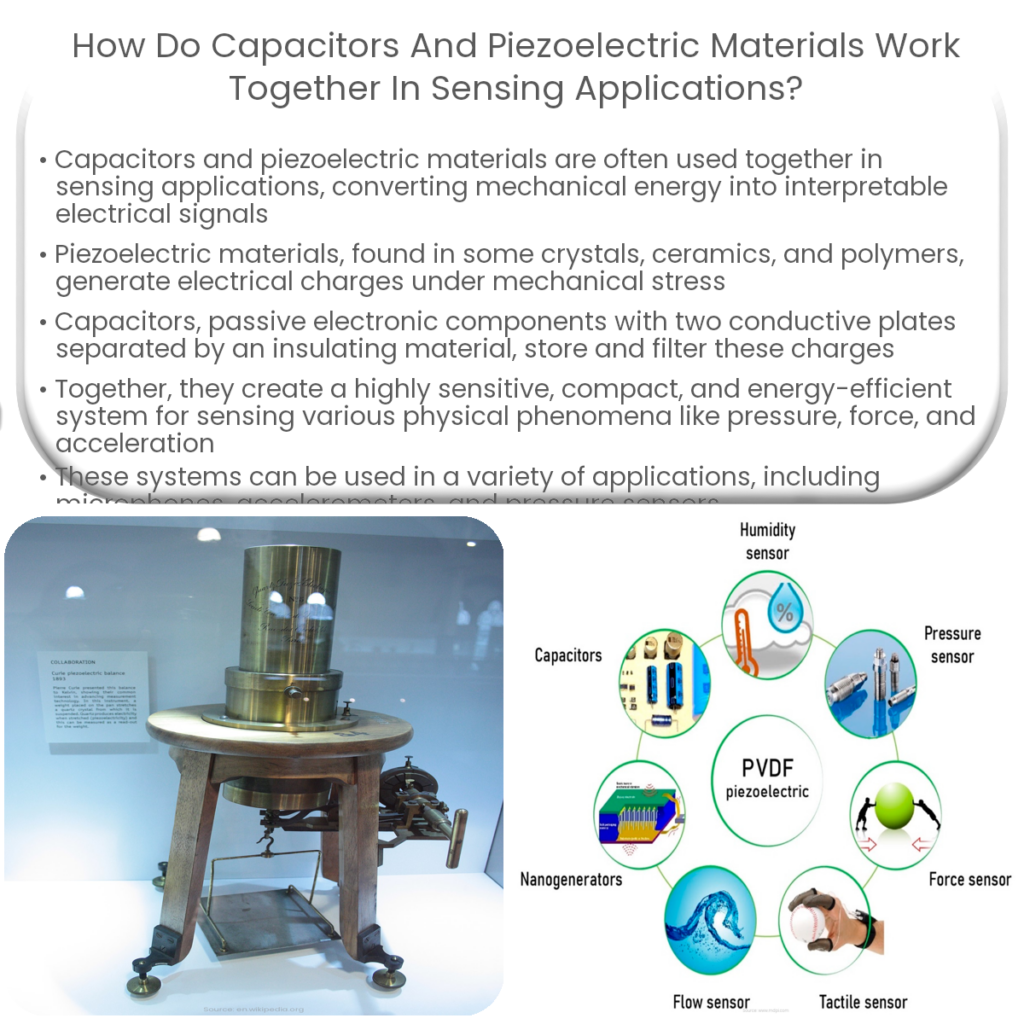
Capacitors store charges from piezoelectric materials, helping convert mechanical energy into electrical signals for various sensing applications.
Capacitors store charges from piezoelectric materials, helping convert mechanical energy into electrical signals for various sensing applications.
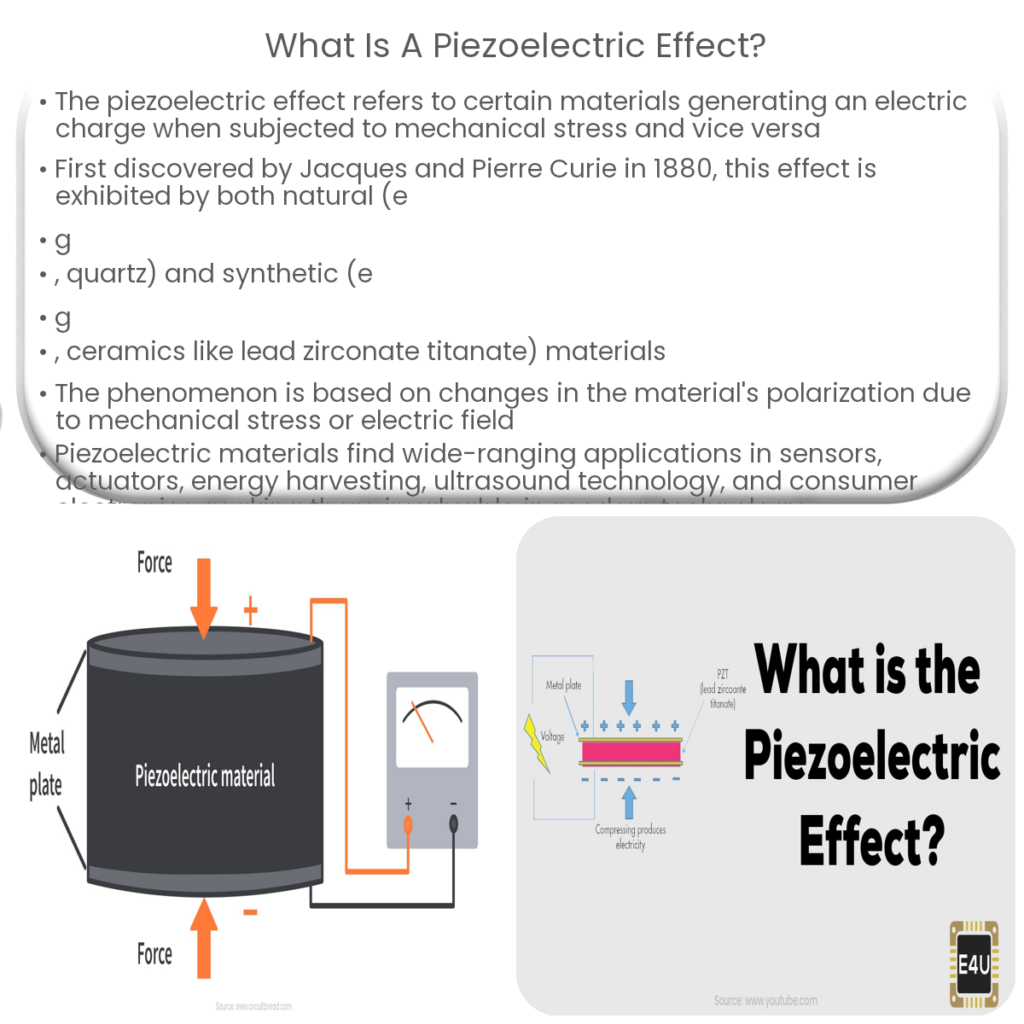
The piezoelectric effect is when certain materials generate electric charge under mechanical stress or deform when exposed to an electric field.
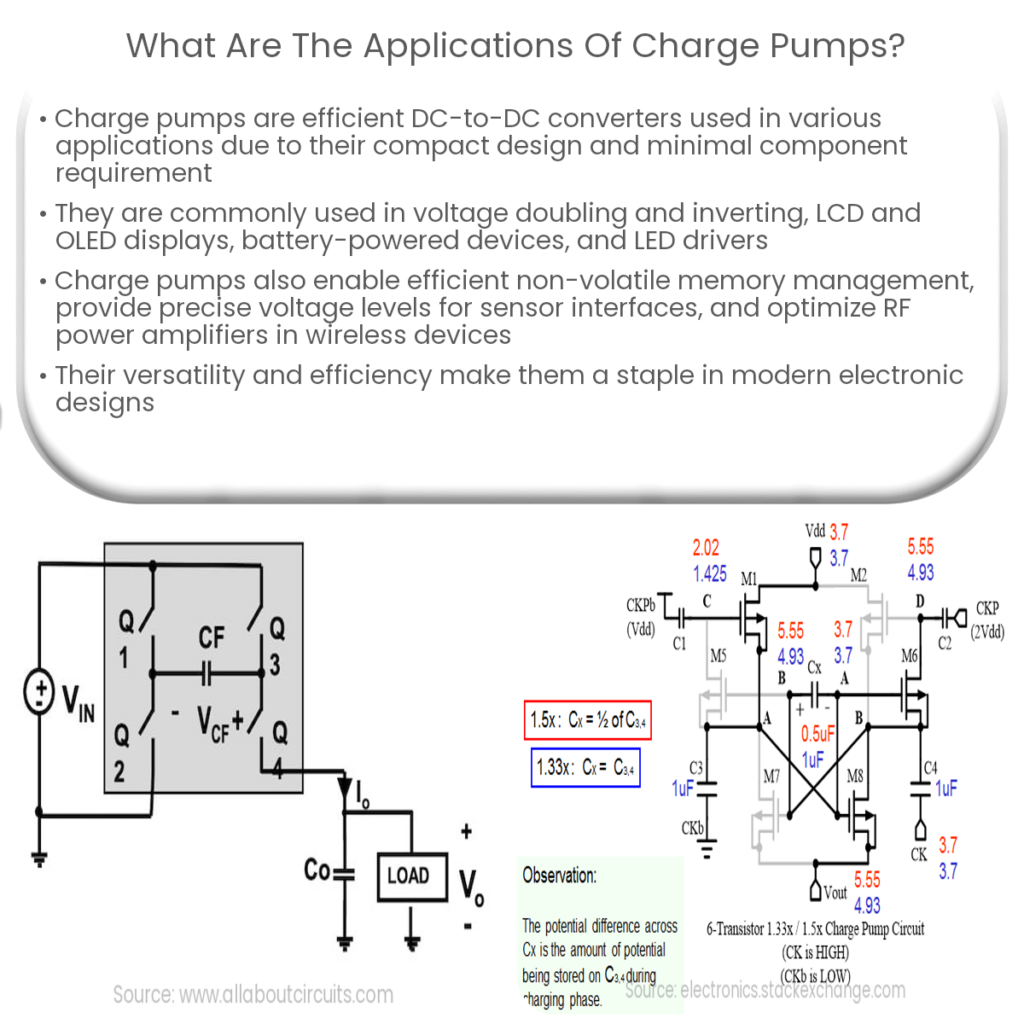
Charge pumps are used in voltage doubling, voltage inversion, LCD/OLED displays, battery-powered devices, LED drivers, non-volatile memory, and sensor interfaces.
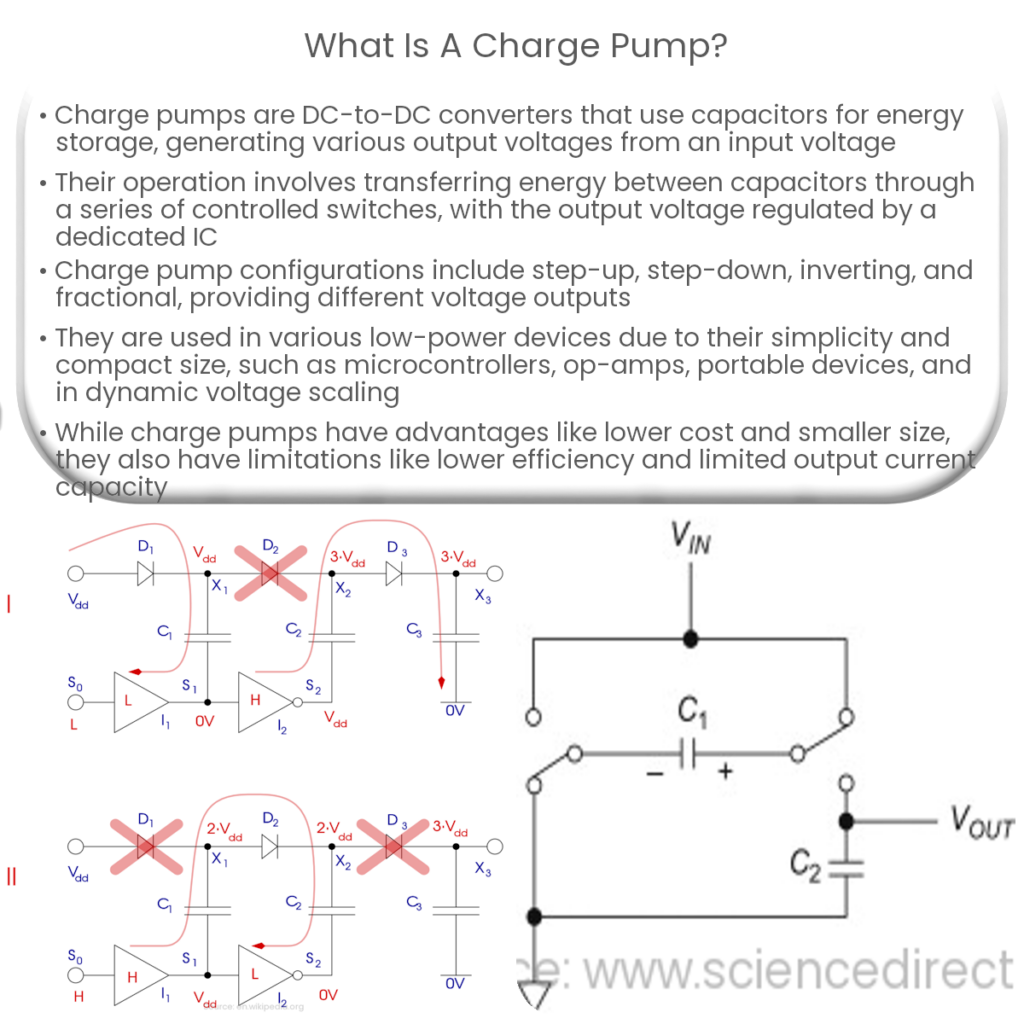
A charge pump is a DC-to-DC converter that uses capacitors to generate higher or lower output voltages from an input voltage in low-power applications.

Capacitors in charge pump circuits store energy, convert voltage, filter fluctuations, and provide isolation, enabling efficient voltage regulation.

Voltage multiplier circuits are used in high-voltage power supplies, electrostatic precipitators, photomultiplier tubes, X-ray machines, particle accelerators, lasers, electric fences, and testing equipment.

A voltage tripler circuit amplifies input AC voltage to approximately three times its initial amplitude using diodes and capacitors for various applications.

A voltage doubler circuit is an electronic circuit that doubles the amplitude of an input AC voltage, using diodes and capacitors to generate a higher DC output.
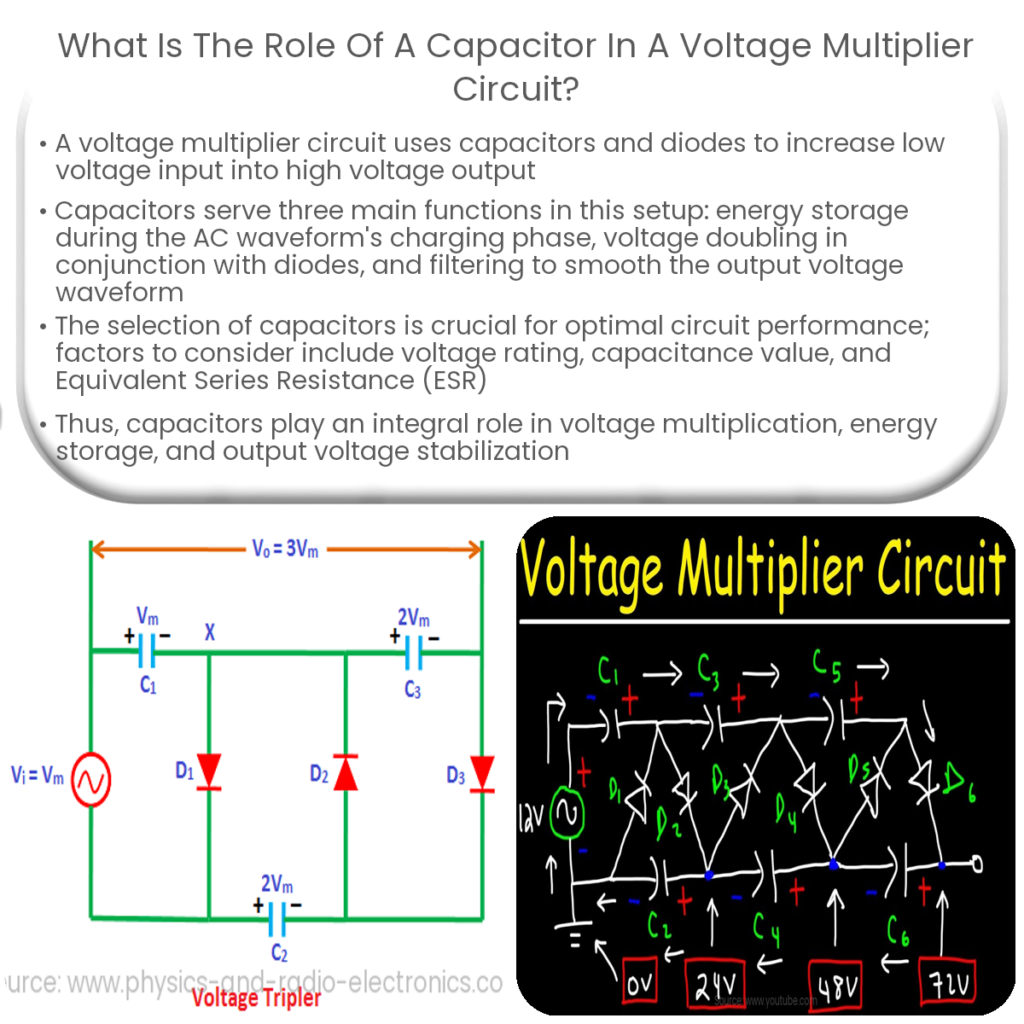
In a voltage multiplier circuit, capacitors store energy, double the voltage in each stage, and filter the output voltage for a smooth waveform.
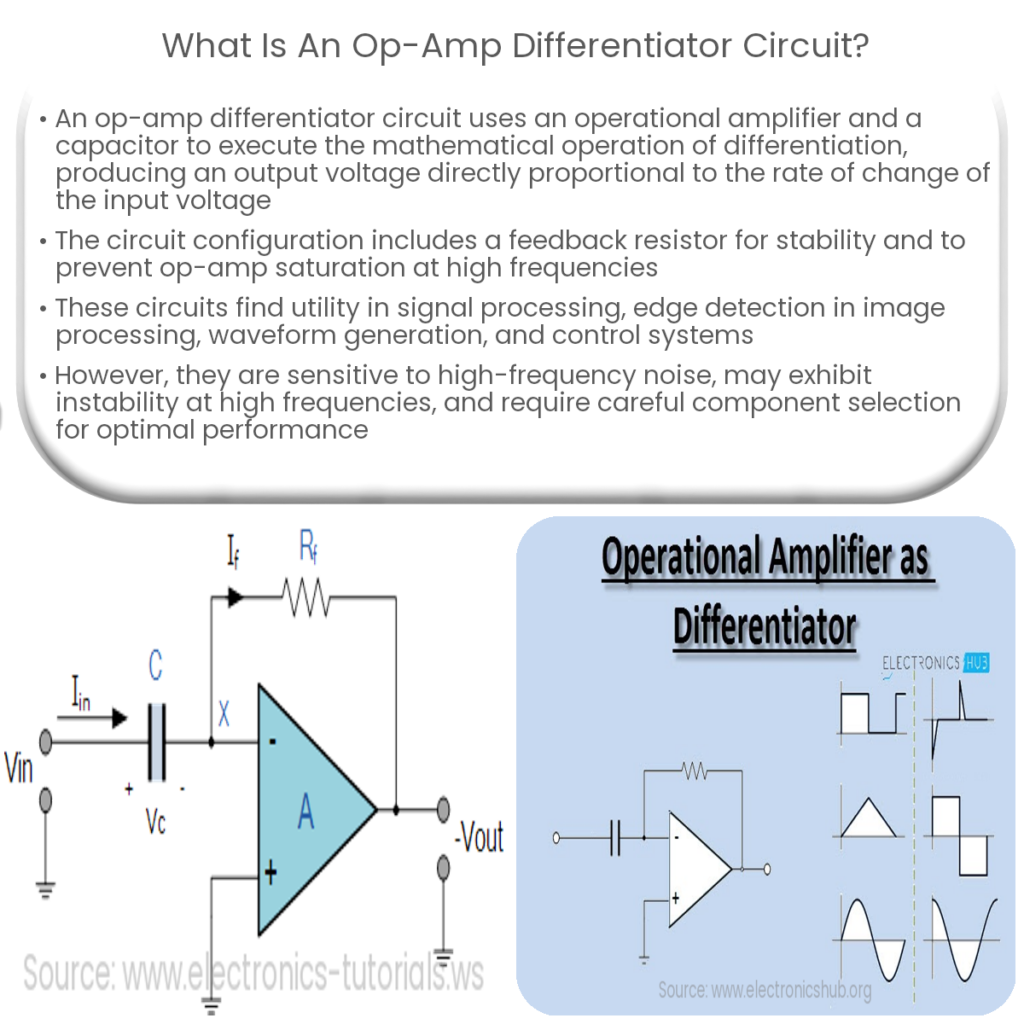
An op-amp differentiator circuit uses an operational amplifier and a capacitor to differentiate an input signal, producing an output proportional to the input’s rate of change.

The primary purpose of this project is to help the public to learn some exciting and important information about electricity and magnetism.
Our Website follows all legal requirements to protect your privacy. Visit our Privacy Policy page.
The Cookies Statement is part of our Privacy Policy.
The information contained on this website is for general information purposes only. This website does not use any proprietary data. Visit our Editorial note.
It’s simple:
1) You may use almost everything for non-commercial and educational use.
2) You may not distribute or commercially exploit the content, especially on another website.


