
How do capacitors help in electromagnetic interference (EMI) suppression in electronic circuits?
Capacitors help suppress EMI in electronic circuits by decoupling power supplies, filtering high-frequency noise, and snubbing voltage spikes.
Capacitors help suppress EMI in electronic circuits by decoupling power supplies, filtering high-frequency noise, and snubbing voltage spikes.

PWM is used in DC-DC converters, LED dimming, motor control, Class D audio amplifiers, and switched-mode power supplies for efficient power management.
In PWM circuits, capacitors help filter and smooth output signals, provide decoupling, control timing, and protect devices in snubber circuits.

A snubber circuit protects power devices from voltage spikes, reduces ringing, and improves system reliability in power electronic applications.

In a snubber circuit, the capacitor absorbs voltage spikes, mitigates voltage overshoots, and provides an alternative current path to protect switching devices.
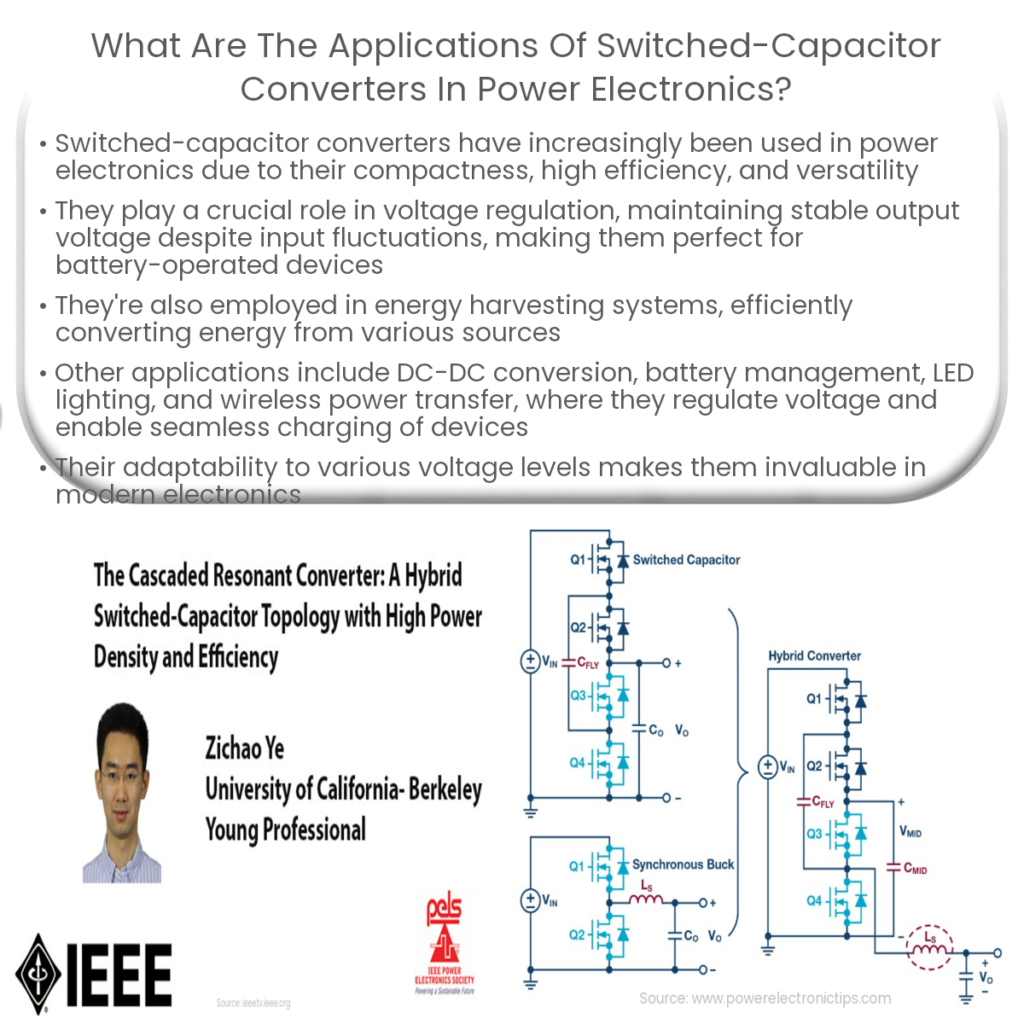
Switched-capacitor converters are used in voltage regulation, energy harvesting, DC-DC conversion, battery management, LED lighting, and wireless power transfer.

Switched-capacitor converters use capacitors and switches to transfer energy between voltage levels, enabling voltage regulation in compact, low-power devices.

A switched-capacitor converter is an electronic circuit that transfers energy using capacitors, switches, and clock signals for voltage regulation.
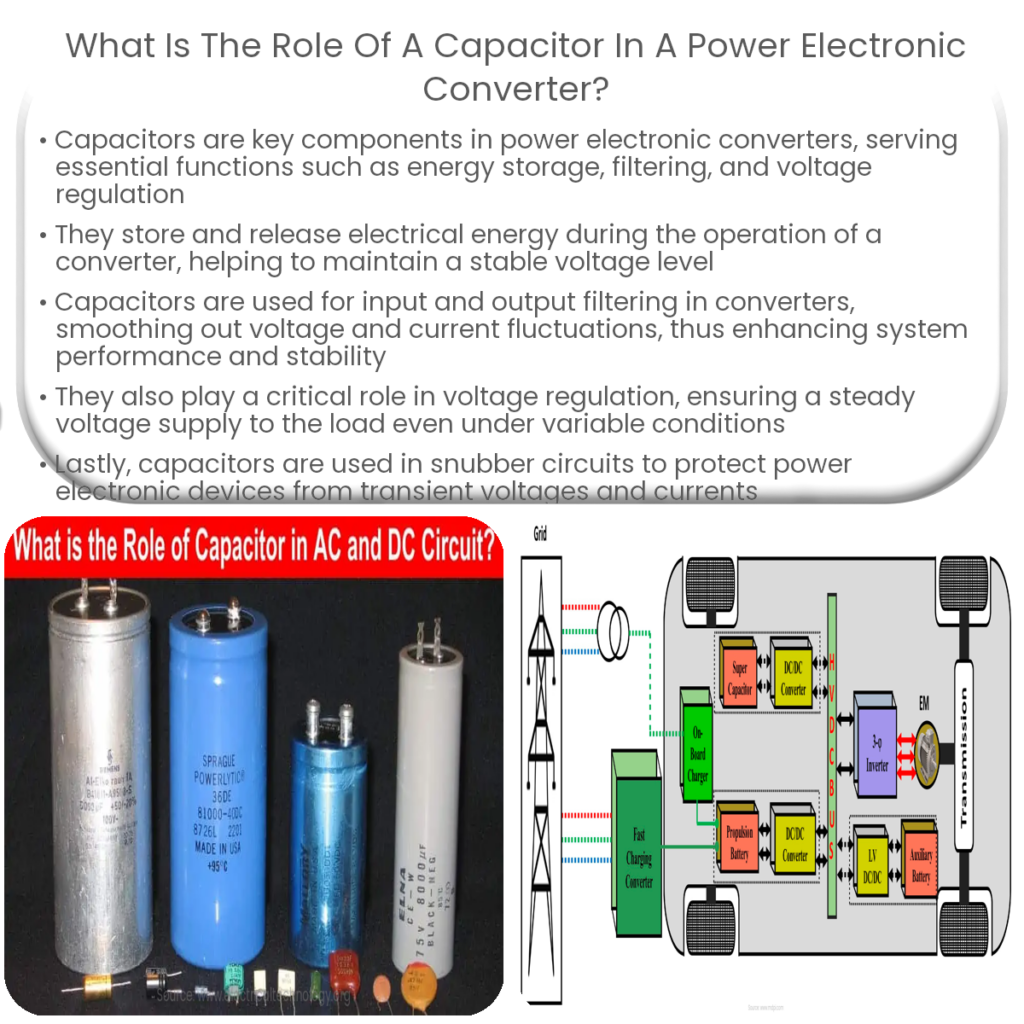
In power electronic converters, capacitors store energy, filter voltage and current ripples, regulate voltage, and protect devices in snubber circuits.
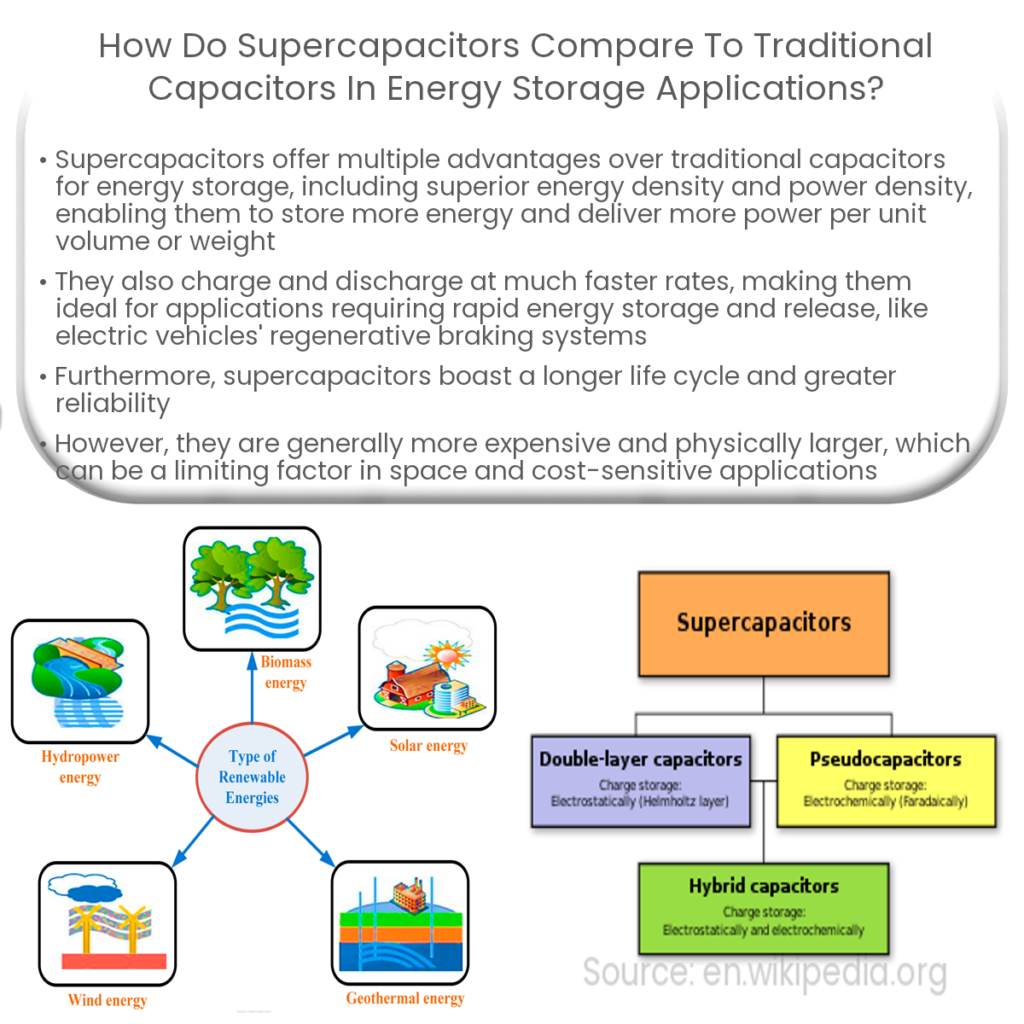
Supercapacitors offer higher energy density, power density, faster charge/discharge rates, and longer life cycles but are costlier and larger.

The primary purpose of this project is to help the public to learn some exciting and important information about electricity and magnetism.
Our Website follows all legal requirements to protect your privacy. Visit our Privacy Policy page.
The Cookies Statement is part of our Privacy Policy.
The information contained on this website is for general information purposes only. This website does not use any proprietary data. Visit our Editorial note.
It’s simple:
1) You may use almost everything for non-commercial and educational use.
2) You may not distribute or commercially exploit the content, especially on another website.


