
What causes a short circuit?

Short circuits are caused by worn or damaged insulation, incorrect wiring, manufacturing defects, and external factors like moisture and dust.
Short circuits are caused by worn or damaged insulation, incorrect wiring, manufacturing defects, and external factors like moisture and dust.

A short circuit occurs when an unintended low-resistance connection forms in a circuit, causing a surge in current that can lead to damage or hazards.

Series circuits are simple with conserved current, while parallel circuits offer independent operation and increased power. Each has its pros and cons.

A parallel circuit has multiple current paths, constant voltage across components, divided current, and a total resistance lower than individual ones.

A series circuit connects components in a single path, with constant current, divided voltage, and a total resistance equal to the sum of components.
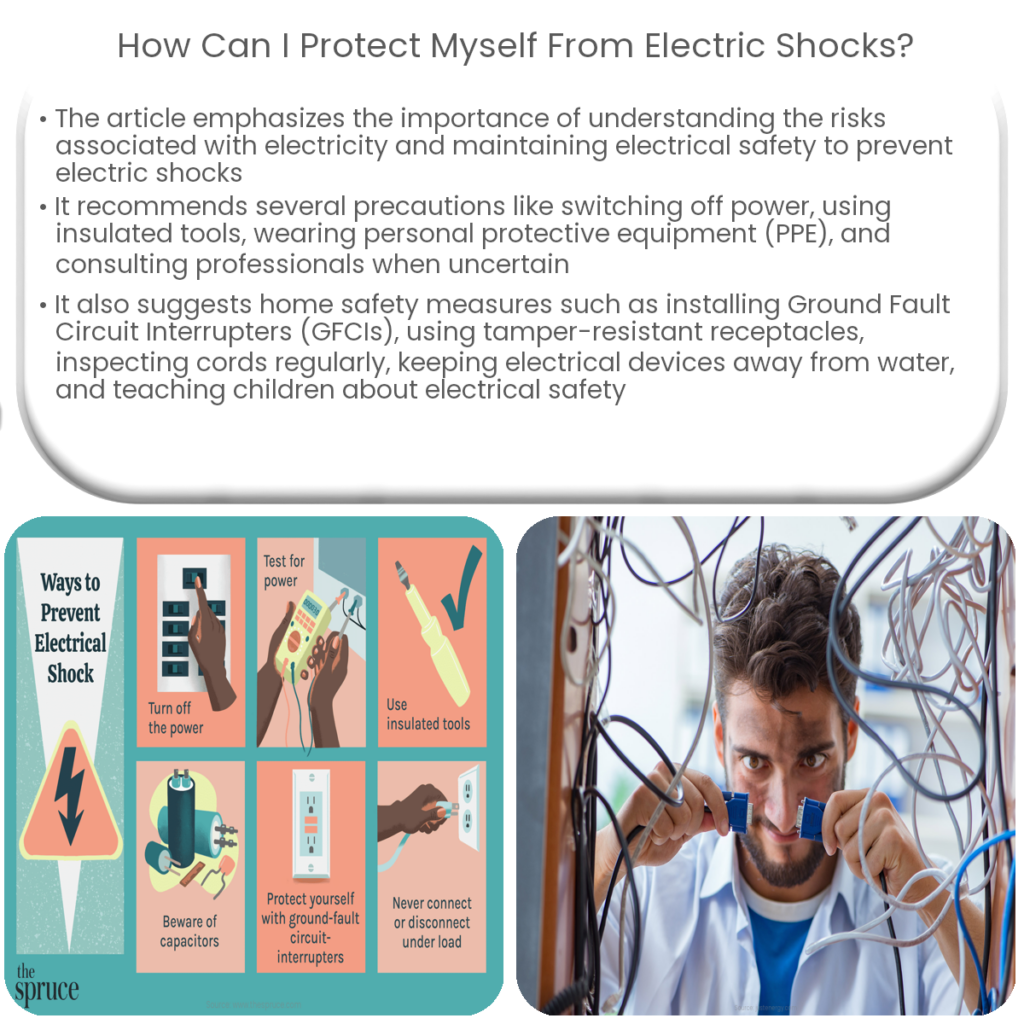
To protect from electric shocks, turn off power, use insulated tools, wear PPE, test for voltage, follow local codes, and install GFCIs at home.
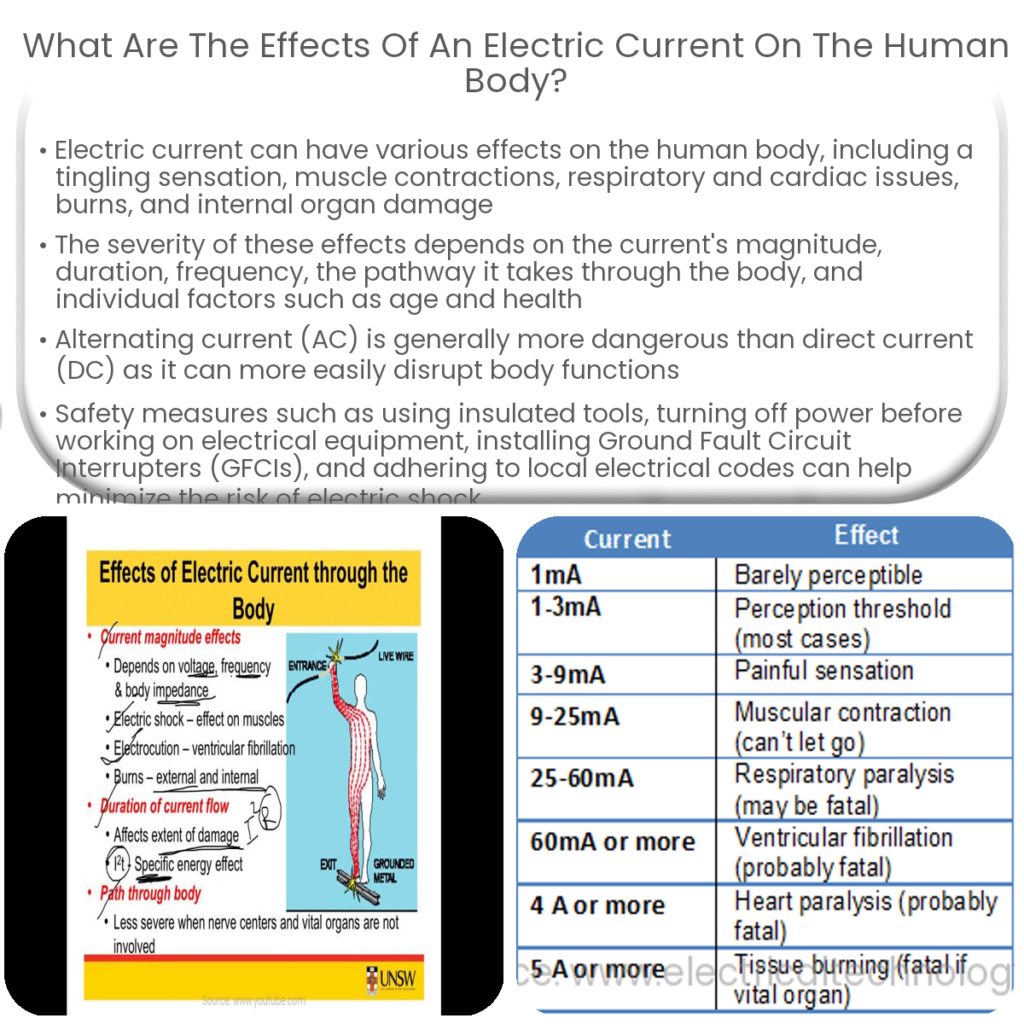
Electric current can cause tingling, muscle contractions, respiratory issues, cardiac problems, burns, and internal organ damage, depending on factors.
To apply KCL in a circuit, identify nodes, assign current directions, write KCL equations for each node, and solve the equations for unknowns.
Kirchhoff’s Current Law (KCL) states that the sum of currents entering a node in a circuit equals the sum of currents leaving the node.
To apply KVL in a circuit, identify closed loops, assign voltage polarities, write KVL equations, and solve for unknown voltages or currents.

The primary purpose of this project is to help the public to learn some exciting and important information about electricity and magnetism.
Our Website follows all legal requirements to protect your privacy. Visit our Privacy Policy page.
The Cookies Statement is part of our Privacy Policy.
The information contained on this website is for general information purposes only. This website does not use any proprietary data. Visit our Editorial note.
It’s simple:
1) You may use almost everything for non-commercial and educational use.
2) You may not distribute or commercially exploit the content, especially on another website.


