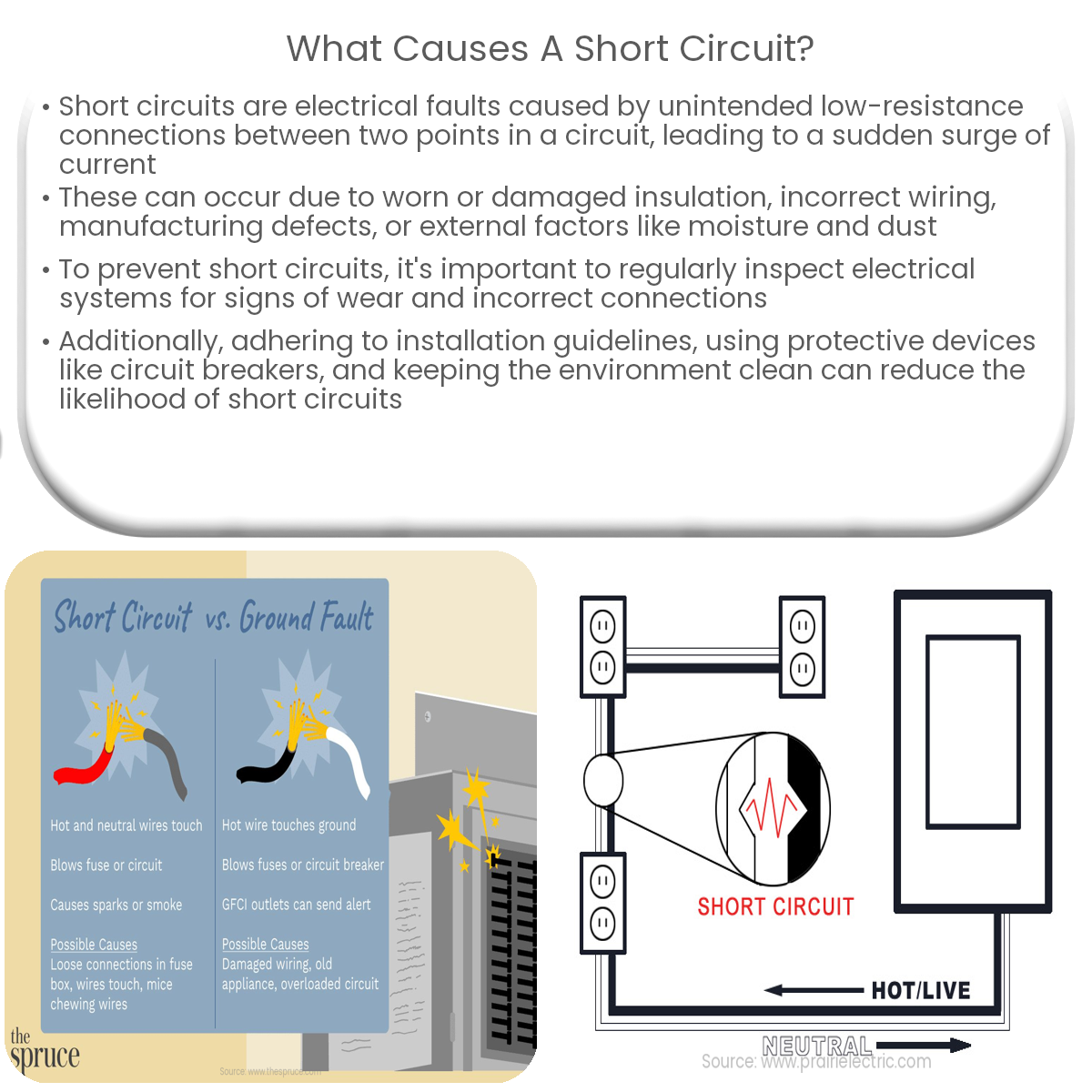
Short circuits are caused by worn or damaged insulation, incorrect wiring, manufacturing defects, and external factors like moisture and dust.
What Causes a Short Circuit?
A short circuit is an electrical fault that occurs when an unintended low-resistance connection forms between two points in a circuit. The result is a sudden surge of current, which can lead to various negative consequences. Understanding the causes of short circuits is essential for identifying and preventing them in electrical systems.
Common Causes of Short Circuits
There are several factors that can lead to the formation of a short circuit:
- Worn or damaged insulation: Insulation around electrical wires and components can wear down or become damaged over time. This deterioration can expose conductive materials, allowing them to make unintended contact with other conductive surfaces or wires, thus creating a short circuit.
- Incorrect wiring: Improper installation or connection of electrical components can create unintended conductive paths, leading to short circuits. Examples include connecting wires to the wrong terminals or improperly wiring components within a circuit.
- Manufacturing defects: Faulty components or errors in manufacturing can introduce conductive paths that were not intended in the original circuit design. This can result in short circuits when the faulty component is used in a system.
- External factors: Environmental factors such as moisture, dust, or physical damage can cause conductive materials to bridge connections, creating short circuits. For example, water ingress can create a conductive path between two exposed wires, resulting in a short circuit.
Preventing Short Circuits
To minimize the risk of short circuits, it is crucial to implement preventative measures:
- Regular inspections: Periodically check electrical systems for signs of wear, damage, or incorrect connections. This can help identify potential short circuits before they cause significant problems.
- Proper installation: Ensure that electrical systems are installed according to codes and manufacturer guidelines. This reduces the likelihood of short circuits resulting from incorrect wiring or component connections.
- Use of protective devices: Employ circuit breakers, fuses, and ground fault circuit interrupters (GFCIs) to protect against short circuits. These devices interrupt the flow of current when a fault is detected, preventing damage and hazards.
- Maintaining a clean environment: Keep electrical systems free of dust, moisture, and debris. By doing so, you reduce the chances of conductive paths forming and causing short circuits.
In conclusion, short circuits occur due to various causes such as worn or damaged insulation, incorrect wiring, manufacturing defects, and external factors. Preventing short circuits requires regular inspections, proper installation, the use of protective devices, and maintaining a clean environment around electrical systems.