
Transistor-based current regulator

Transistor-based current regulators maintain consistent current flow in electronic circuits, ensuring stability and protecting components.
Transistor-based current regulators maintain consistent current flow in electronic circuits, ensuring stability and protecting components.

A hysteretic current regulator is a control technique for regulating output current, offering simplicity, fast response, and excellent stability.
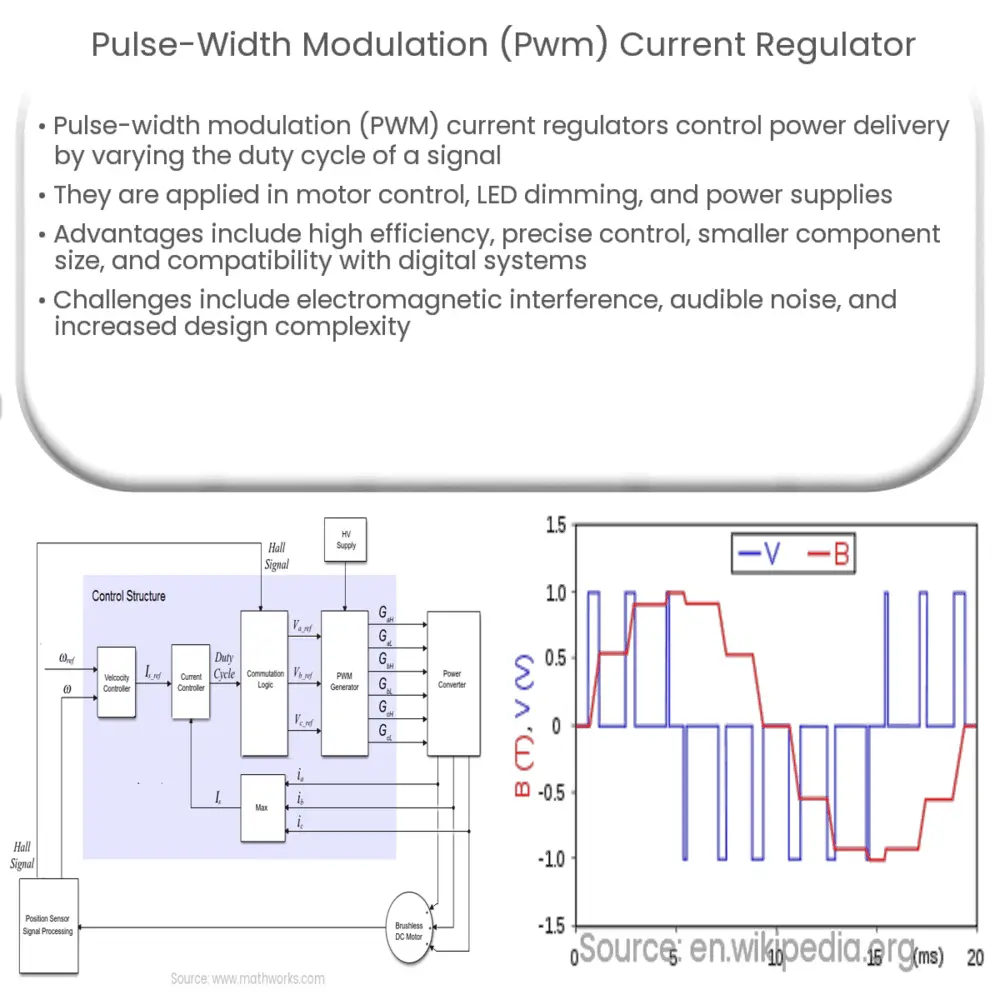
PWM current regulators control power in various applications by adjusting the duty cycle, enabling efficient and precise power delivery.

A current-mode controller regulates output current in power electronics & analog circuits, offering fast response, wide range, and noise immunity.

A series current regulator maintains a stable current flow in circuits, protecting components and ensuring efficiency, despite input voltage variations.

A current mirror is a fundamental circuit in analog electronics, replicating a constant current flow between branches for biasing, level shifting, and waveform generation.

Explore the science behind piezo transducers, their diverse applications, advantages, limitations, and future prospects in this comprehensive guide.

A shunt current regulator stabilizes output current in electronic systems, enhancing efficiency, safety, and performance while preventing overcurrent damage.

A constant current source is an electronic component that maintains a stable current flow, regardless of load resistance or input voltage changes.
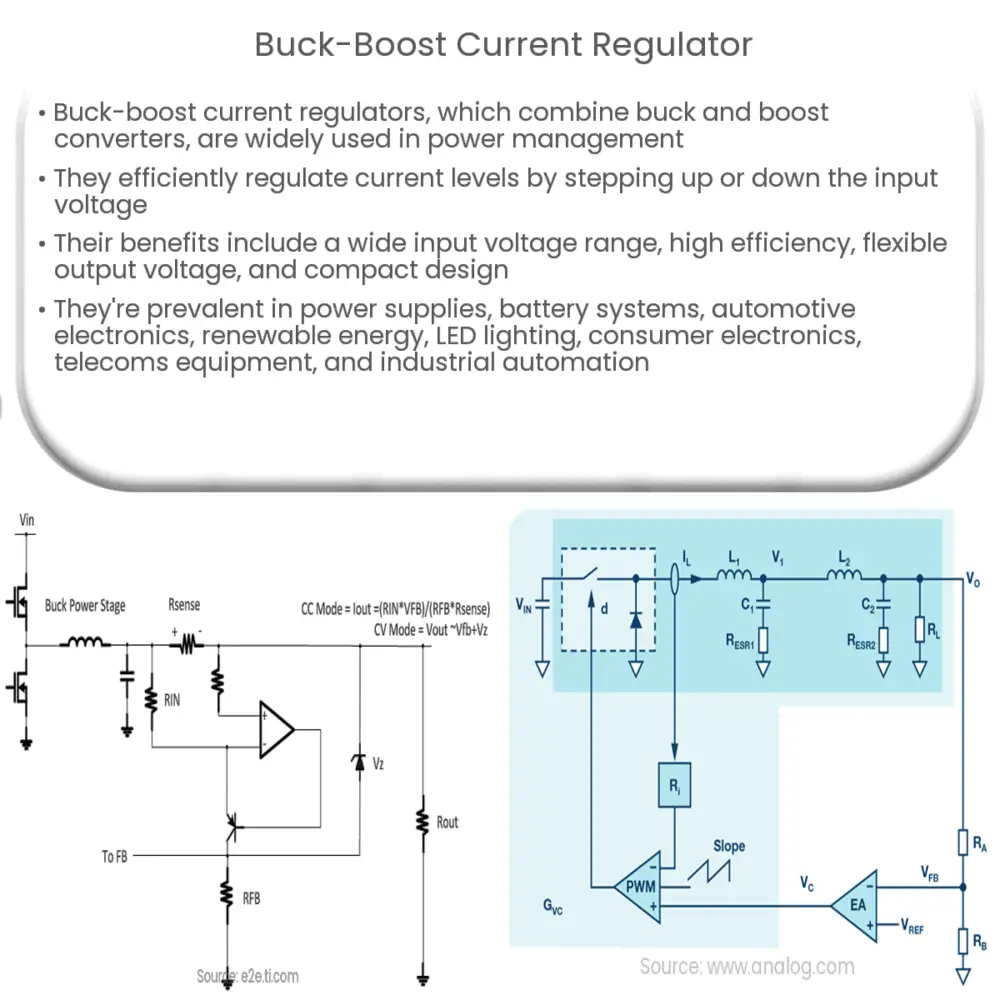
A buck-boost current regulator combines buck and boost converter functionalities for efficient power management across diverse applications.

The primary purpose of this project is to help the public to learn some exciting and important information about electricity and magnetism.
Our Website follows all legal requirements to protect your privacy. Visit our Privacy Policy page.
The Cookies Statement is part of our Privacy Policy.
The information contained on this website is for general information purposes only. This website does not use any proprietary data. Visit our Editorial note.
It’s simple:
1) You may use almost everything for non-commercial and educational use.
2) You may not distribute or commercially exploit the content, especially on another website.


