
Surface acoustic wave (SAW) gas sensor
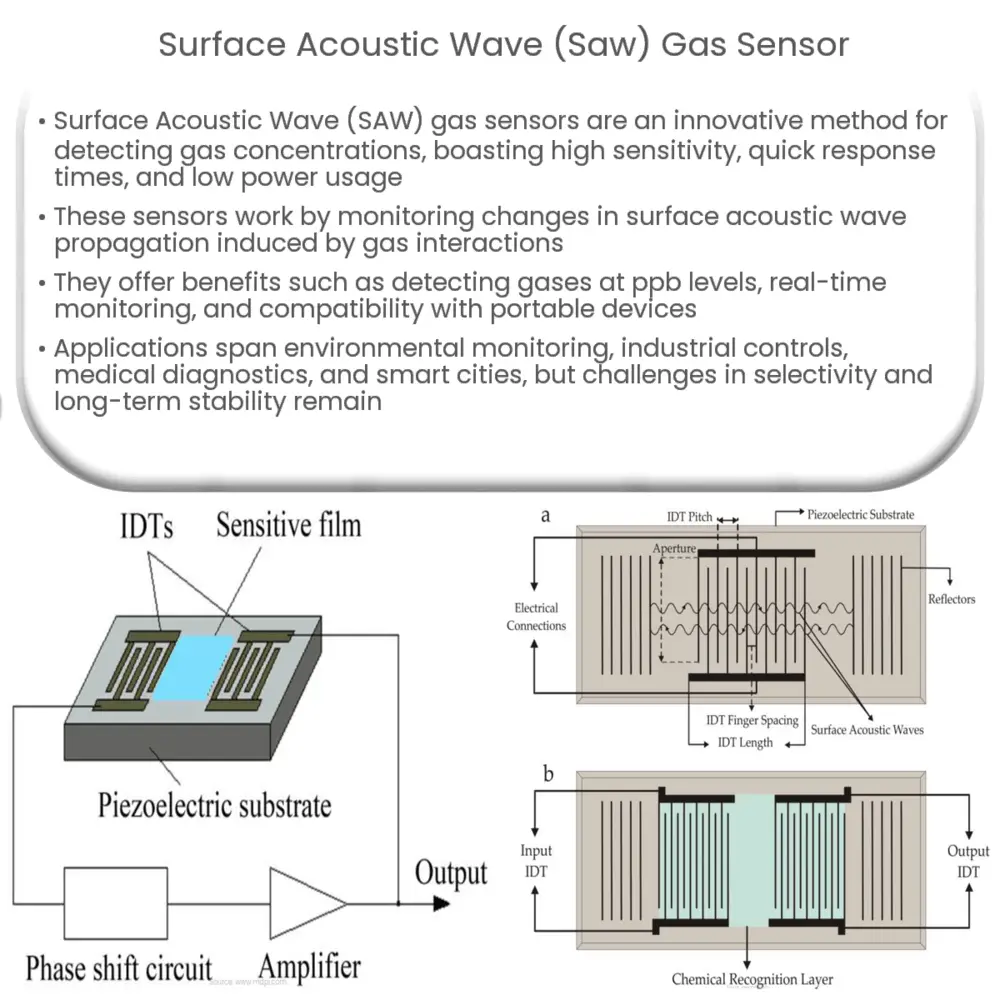
Surface Acoustic Wave (SAW) technology has emerged as an innovative and effective approach for detecting and measuring gas concentrations in various applications
Surface Acoustic Wave (SAW) technology has emerged as an innovative and effective approach for detecting and measuring gas concentrations in various applications

Ultrasonic gas sensors detect leaks & monitor concentrations using high-frequency sound waves, offering high sensitivity, fast response, & low maintenance.
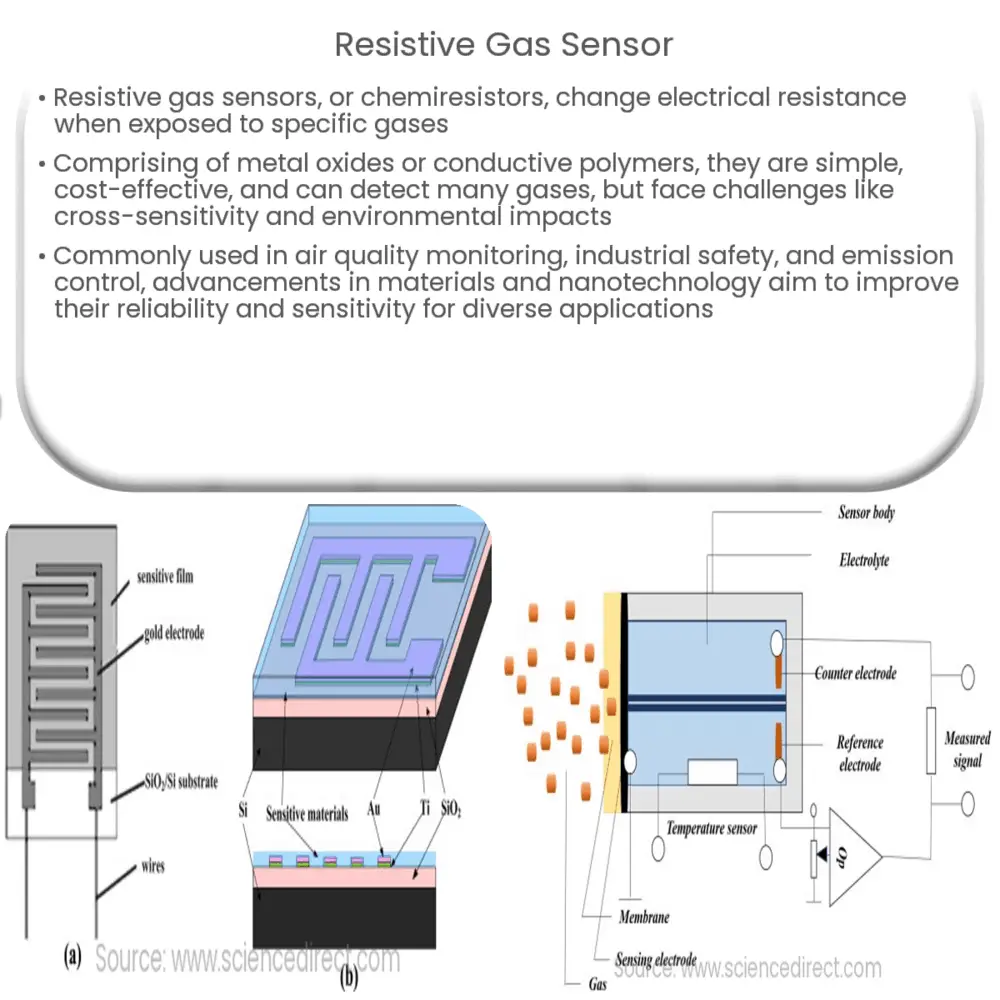
Resistive gas sensors are affordable, versatile devices that detect target gases by altering electrical resistance, used in air quality monitoring, industrial safety, and automotive emissions.

Capacitive gas sensors detect gas presence via capacitance changes, offering high sensitivity, selectivity, low power use, and rapid response times.

Acoustic gas sensors use sound waves to detect gas presence and concentration, offering non-intrusive, real-time monitoring across industries.

Optical gas sensors detect and quantify gases using light interactions, offering high sensitivity and selectivity for diverse applications.

QCM gas sensors offer high sensitivity, fast response, and low power consumption, making them ideal for environmental monitoring, industrial control, and medical diagnostics.

NDIR gas sensors use infrared absorption to detect specific gases, offering high sensitivity, selectivity, and stability across various applications.
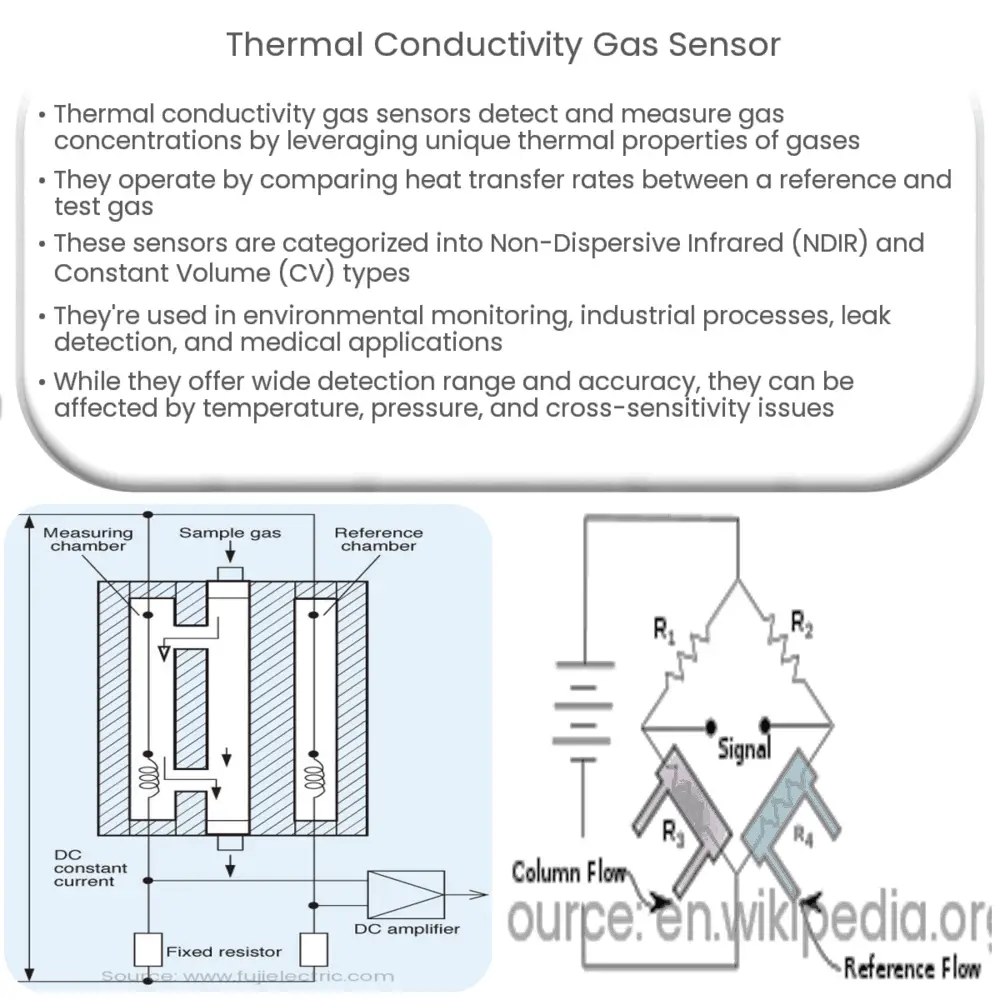
Thermal conductivity gas sensors detect and measure gas concentrations using heat transfer properties, with applications in environmental monitoring, industrial control, and healthcare.

A photoionization detector (PID) is a device that detects volatile organic compounds and toxic gases using ultraviolet light for ionization.

The primary purpose of this project is to help the public to learn some exciting and important information about electricity and magnetism.
Our Website follows all legal requirements to protect your privacy. Visit our Privacy Policy page.
The Cookies Statement is part of our Privacy Policy.
The information contained on this website is for general information purposes only. This website does not use any proprietary data. Visit our Editorial note.
It’s simple:
1) You may use almost everything for non-commercial and educational use.
2) You may not distribute or commercially exploit the content, especially on another website.


