
High Force Solenoid

Explore the principles, types, and applications of high force solenoids in various industries, along with key selection considerations.
Explore the principles, types, and applications of high force solenoids in various industries, along with key selection considerations.

Explore the workings, types, applications, advantages, and design considerations of magnetic latching solenoids in modern technology.

Explore the intricacies of open frame solenoids, their structure, operating principles, applications, pros, and cons in our comprehensive guide.

A monostable solenoid is an electromechanical device that converts electrical energy into mechanical motion, typically used in electronic and mechanical systems.

A bistable solenoid is an energy-efficient electromagnetic device that can hold two states (‘on’ or ‘off’) without continuous electrical power.

A cylindrical solenoid is a coiled wire that creates a magnetic field when electric current passes through it.

A frame solenoid is an electromechanical device that converts electrical energy into mechanical movement, widely used in various industries.

Explore the world of DC motor controllers, their operation principles, types, design considerations, and their role in modern technology.

A tubular solenoid is an electro-mechanical device converting electrical energy into mechanical motion, widely used across various industries.
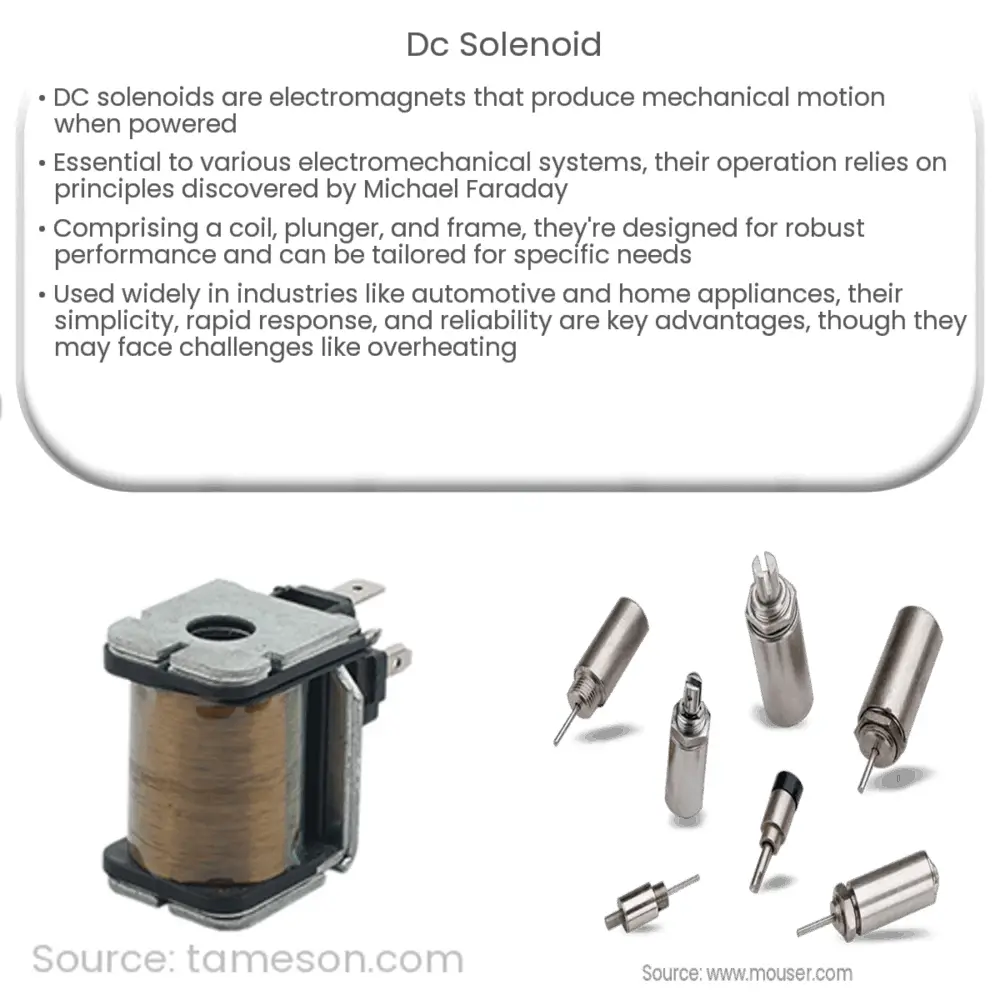
A DC solenoid is an electromechanical device that converts electrical energy into linear motion, widely used in industries and consumer electronics.

The primary purpose of this project is to help the public to learn some exciting and important information about electricity and magnetism.
Our Website follows all legal requirements to protect your privacy. Visit our Privacy Policy page.
The Cookies Statement is part of our Privacy Policy.
The information contained on this website is for general information purposes only. This website does not use any proprietary data. Visit our Editorial note.
It’s simple:
1) You may use almost everything for non-commercial and educational use.
2) You may not distribute or commercially exploit the content, especially on another website.


