
A frame solenoid is an electromechanical device that converts electrical energy into mechanical movement, widely used in various industries.
Understanding the Basics of a Frame Solenoid
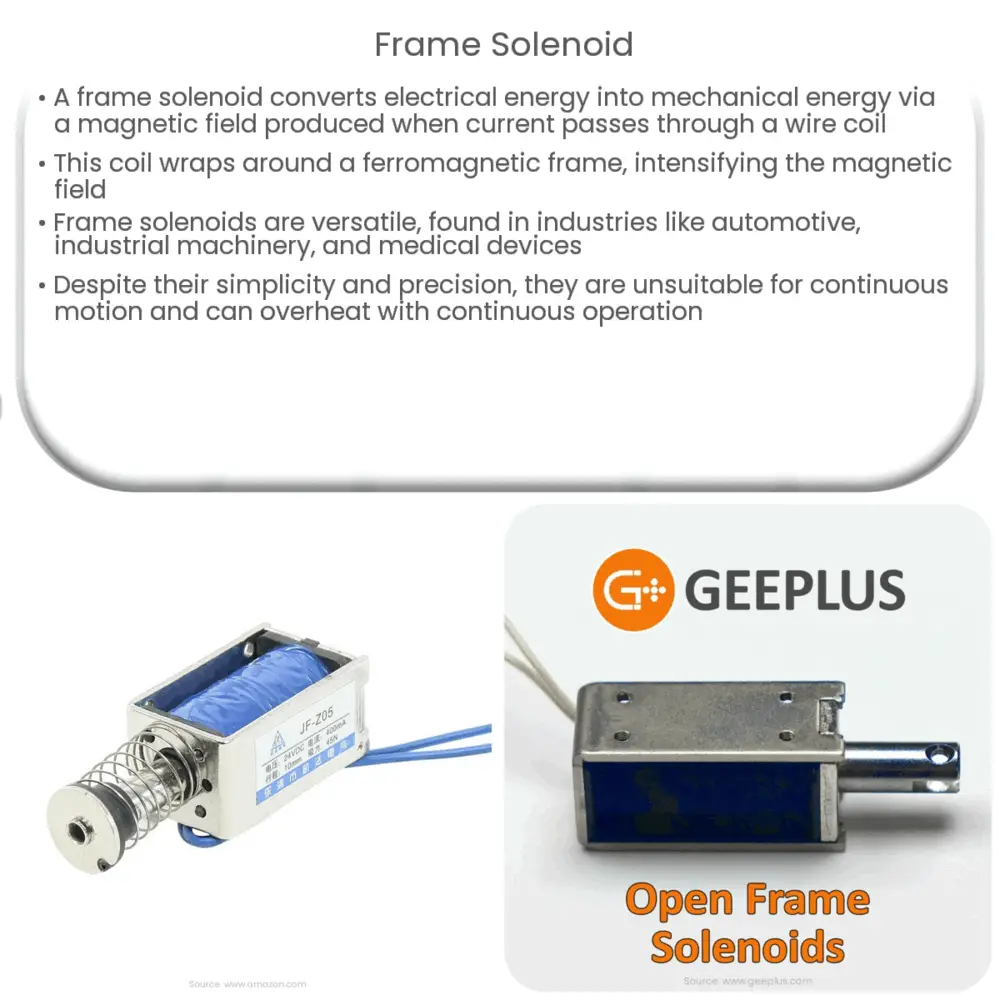
A frame solenoid is a type of electromechanical device that converts electrical energy into mechanical energy. This transformation is done through the generation of a magnetic field when an electric current passes through a coil of wire. Solenoids are fundamental to a wide variety of applications, from starter motors in automobiles to high-tech scientific instruments and industrial machinery.
In a frame solenoid, the coil of wire is typically wound around a ‘frame’ structure, giving the device its name. The frame, usually made of a ferromagnetic material, enhances the magnetic field generated by the coil. When an electric current is applied, it induces a magnetic field in the coil. The interaction of this magnetic field with the ferromagnetic frame creates a strong, localized magnetic field.
The Construction and Operation of a Frame Solenoid
The key components of a frame solenoid include the coil, the frame, and often, a movable plunger. The coil, or solenoid winding, is typically made of copper wire due to its excellent electrical conductivity. The frame, on the other hand, is usually constructed of a soft iron or similar ferromagnetic material that can significantly enhance the strength of the magnetic field.
When a current is applied to the coil, it creates a magnetic field around the coil. The magnetic field lines are concentrated within the ferromagnetic frame, leading to a strong magnetic field in this region. If a movable plunger made of a ferromagnetic material is placed inside the frame, it is attracted towards the center of the coil, causing it to move. This movement can be harnessed to perform mechanical work, such as opening or closing a valve, moving a lever, or pushing a button.
The strength of the magnetic field, and hence the force exerted on the plunger, can be controlled by varying the electric current supplied to the coil. This offers a high degree of control over the operation of the frame solenoid, making it a versatile tool for a wide range of applications.
The design and construction of a frame solenoid can vary widely depending on its intended application. Factors such as the size and shape of the frame, the number of turns in the coil, and the material of the plunger can all influence the performance and characteristics of the device.
Applications of Frame Solenoids
Frame solenoids are used in a multitude of applications due to their versatile nature and efficiency in converting electrical energy to mechanical energy. They are found in various industries including automotive, industrial machinery, consumer electronics, and medical devices, among others.
In the automotive industry, frame solenoids are a crucial component in starter motors, which use the mechanical action of a frame solenoid to engage the starter drive with the flywheel of the engine. They are also used in automatic door locks and power windows.
In the world of industrial machinery, frame solenoids are used to actuate hydraulic or pneumatic valves, controlling the flow of fluid through the system. They are also used in various kinds of safety interlocks, where they can lock or unlock doors and gates based on the input from safety sensors.
The medical field also relies heavily on frame solenoids. For instance, in many types of medical imaging equipment, frame solenoids are used to control the movement of components. In addition, solenoids are used in some types of drug delivery systems, where they can precisely control the dosage of medication.
Advantages and Limitations of Frame Solenoids
One of the primary advantages of frame solenoids is their simplicity and reliability. They consist of only a few components and have no complex mechanical parts, making them highly durable and low maintenance. Moreover, they can produce a significant amount of force for their size, making them ideal for applications where space is at a premium.
Another advantage is their controllability. The force exerted by a frame solenoid can be easily controlled by varying the electric current supplied to the coil, allowing for precise control of the movement and position of the plunger.
However, frame solenoids do have their limitations. They are not suitable for applications requiring continuous motion, as they can only provide a single stroke of movement. In addition, they can generate a significant amount of heat when operated continuously, which can lead to performance degradation over time. Therefore, it’s essential to consider these factors when choosing a frame solenoid for a specific application.



