
Explore zinc-aluminum solder, an eco-friendly & versatile metal joining material offering lower melting points, corrosion resistance, and cost-effectiveness.
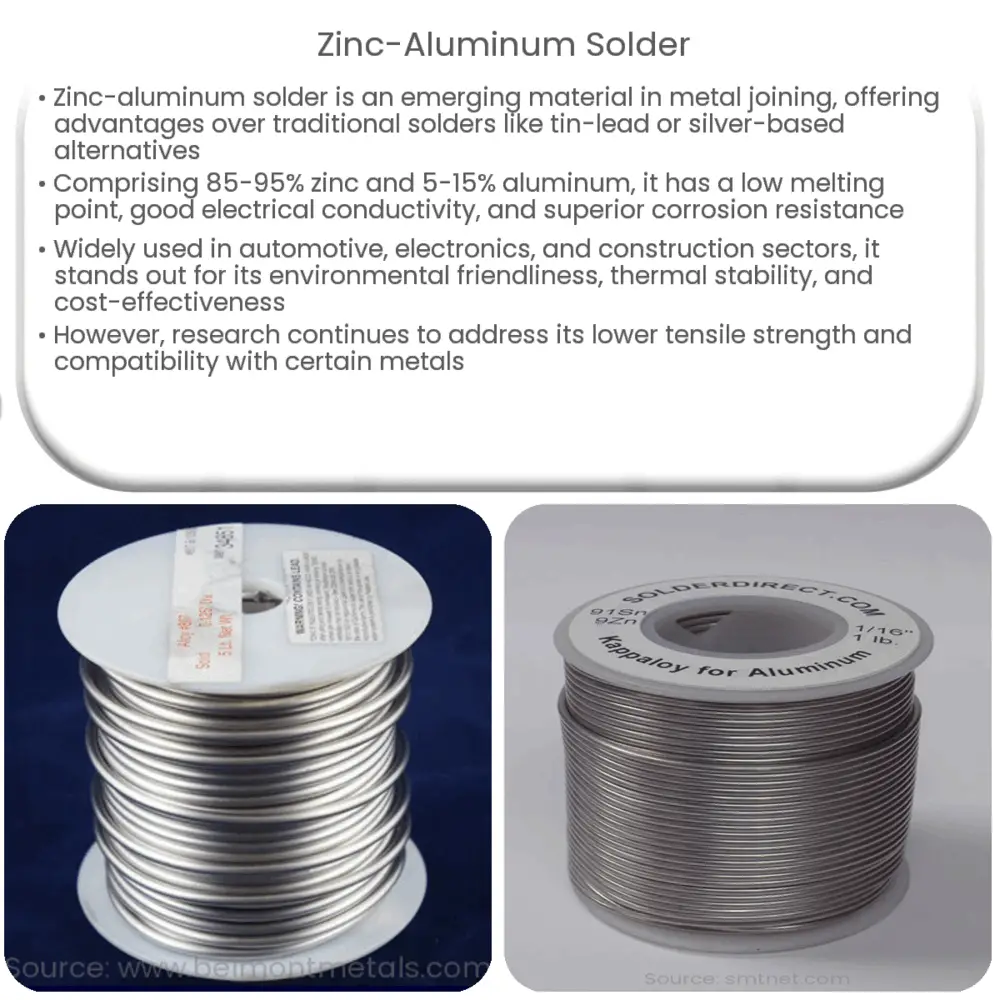
Zinc-Aluminum Solder: The Future of Metal Joining
Introduction
Zinc-aluminum solder is an innovative, cutting-edge material that has been gaining attention in the world of metal joining. With a unique combination of properties, it offers several benefits over traditional soldering alloys such as tin-lead or silver-based alternatives. This article explores the characteristics of zinc-aluminum solder, its applications, and the advantages it provides in various industries.
Composition and Properties
Zinc-aluminum solder is an alloy comprised primarily of zinc (Zn) and aluminum (Al), with minor amounts of other elements to enhance its properties. Its composition typically includes 85-95% zinc and 5-15% aluminum, depending on the specific application requirements. The resulting alloy exhibits a range of desirable properties that make it an attractive choice for metal joining tasks.
Some of the key properties of zinc-aluminum solder include a low melting point, good electrical conductivity, and excellent corrosion resistance. The melting point of this alloy generally lies between 350°C and 450°C, which is significantly lower than that of traditional soldering materials. This lower melting point allows for energy-efficient soldering processes and reduced thermal stress on the components being joined.
Another benefit of zinc-aluminum solder is its high electrical conductivity, which is essential for electronic applications. The alloy’s electrical properties are comparable to those of tin-based solders, ensuring reliable connections in electronic devices.
Applications
Zinc-aluminum solder has a wide range of applications across various industries, thanks to its versatile properties. Some of its common uses include:
- Automotive Industry: Zinc-aluminum solder is increasingly being used in the automotive sector for tasks such as radiator and heat exchanger assembly, as well as joining aluminum engine components. Its corrosion resistance and ability to withstand high temperatures make it ideal for these applications.
- Electronics: In the electronics industry, zinc-aluminum solder provides an alternative to traditional lead-based solders, which have been increasingly restricted due to environmental concerns. Its good electrical conductivity and low melting point make it suitable for assembling printed circuit boards and other electronic components.
- Construction: Zinc-aluminum solder can be used to join metal elements in architectural and construction applications, such as metal roofing, window frames, and door assemblies. Its corrosion resistance and strength ensure long-lasting, durable connections.
In addition to these industries, zinc-aluminum solder is also being explored for use in aerospace, marine, and renewable energy applications, where its unique properties offer significant advantages over traditional joining materials.
Advantages of Zinc-Aluminum Solder
There are several benefits to using zinc-aluminum solder in place of traditional soldering materials, including:
- Environmental Friendliness: One of the most significant advantages of zinc-aluminum solder is that it is lead-free, making it a more environmentally friendly option. With increasing global restrictions on the use of lead due to its toxicity, zinc-aluminum solder provides a viable, eco-friendly alternative for industries that require metal joining.
- Thermal Stability: The lower melting point of zinc-aluminum solder reduces the risk of thermal damage to components during the soldering process. This is particularly beneficial in electronics applications, where heat-sensitive components are common.
- Corrosion Resistance: Zinc-aluminum solder exhibits excellent corrosion resistance, making it suitable for use in harsh environments or applications exposed to moisture and other corrosive elements. This property ensures the longevity and reliability of the soldered joints.
- Cost-effectiveness: Compared to silver-based solders, zinc-aluminum solder is more cost-effective due to the relatively lower cost of zinc and aluminum. This makes it an attractive choice for industries seeking to reduce production costs without sacrificing performance.
Challenges and Future Developments
While zinc-aluminum solder offers many benefits, there are some challenges that need to be addressed. One of the primary concerns is the alloy’s relatively lower tensile strength compared to some traditional solders. This may limit its application in certain scenarios where higher mechanical strength is required. However, ongoing research and development efforts are focused on optimizing the alloy’s composition and processing techniques to improve its mechanical properties.
Another challenge is the compatibility of zinc-aluminum solder with certain base metals. In some cases, it may not form a strong bond with specific metal substrates. Nevertheless, research is underway to explore novel surface treatments and alloy formulations to improve the adhesion and compatibility of zinc-aluminum solder with a broader range of base metals.
Conclusion
Zinc-aluminum solder is a promising material for various metal joining applications across multiple industries. Its unique combination of properties, such as low melting point, good electrical conductivity, and excellent corrosion resistance, make it a versatile and environmentally friendly alternative to traditional solders. With continued research and development, it is expected that zinc-aluminum solder will become an increasingly popular choice for metal joining tasks, driving innovation and sustainability in the world of manufacturing and assembly.



