
The wire-parallel plate separator efficiently removes liquid droplets from gas mixtures, widely used in oil, gas, chemical, and power industries.
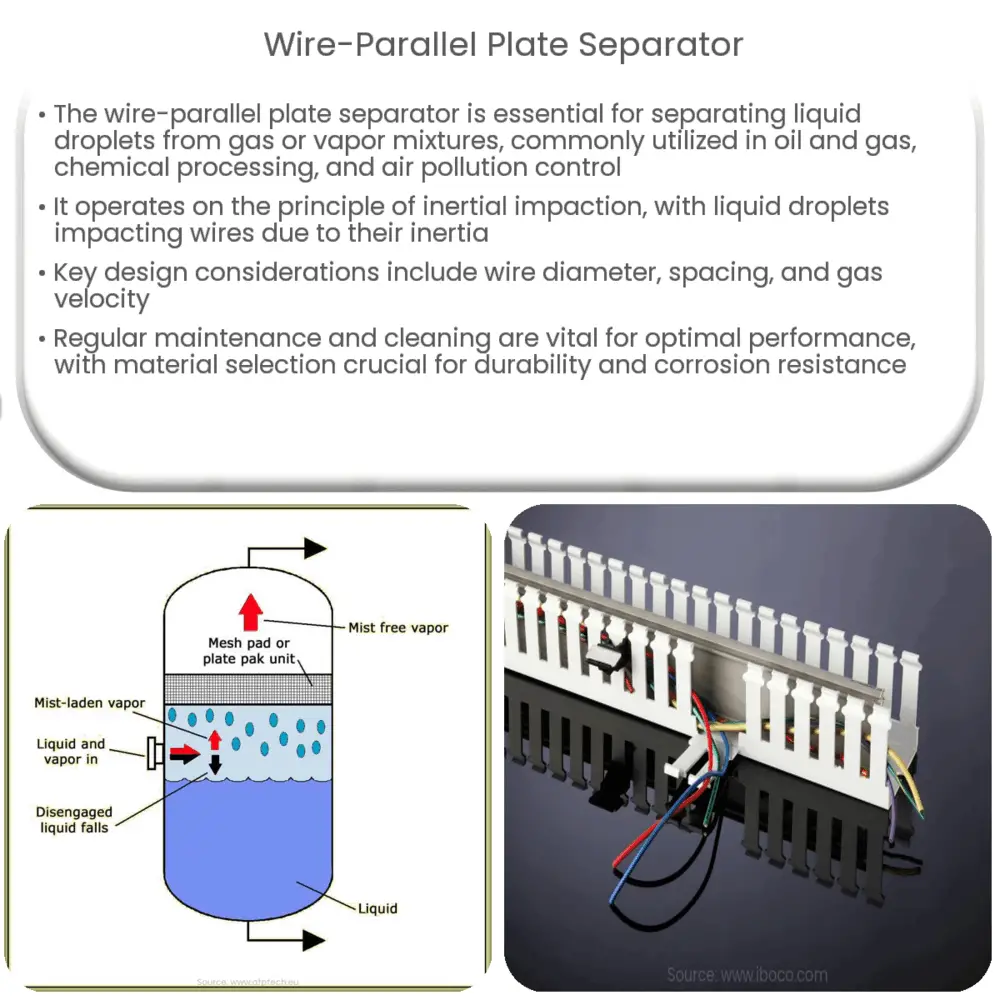
Wire-Parallel Plate Separator: An Overview
Introduction
The wire-parallel plate separator is a crucial component in the separation of liquid droplets from gas or vapor mixtures. It is commonly used in a variety of industries, including oil and gas, chemical processing, and air pollution control. This article aims to provide an overview of the wire-parallel plate separator, its working principle, design considerations, and applications.
Working Principle
The wire-parallel plate separator operates based on the principle of inertial impaction, where liquid droplets are separated from a gas or vapor mixture by their inertia. The gas mixture is forced to flow between parallel plates, which are closely spaced and oriented perpendicular to the flow direction. As the gas flows through the separator, the liquid droplets collide with the plates due to their inertia and are subsequently removed from the gas stream.
In a wire-parallel plate separator, the plates are replaced by a series of parallel wires. The wires are mounted horizontally, with a small gap between them to allow the gas mixture to pass through. The liquid droplets, having a larger inertia than the gas molecules, are unable to follow the flow path and instead impact the wires, where they coalesce into larger droplets. The larger droplets then fall under gravity to the bottom of the separator, where they are collected and drained away.
Design Considerations
There are several factors to consider when designing a wire-parallel plate separator, which can greatly affect its performance and efficiency. Some of these factors include:
- Wire diameter: The diameter of the wires used in the separator has a significant impact on the droplet capture efficiency. Smaller wire diameters typically result in higher capture efficiencies, as the droplets have a greater chance of colliding with the wires. However, smaller wires may also result in a higher pressure drop across the separator, which can reduce the overall efficiency of the system.
- Wire spacing: The distance between the wires is another important factor, as it affects both the pressure drop and the droplet capture efficiency. Smaller gaps between the wires will increase the capture efficiency but may also result in a higher pressure drop. A balance must be struck between these two factors to achieve optimal performance.
- Gas velocity: The velocity of the gas flowing through the separator has a direct effect on the droplet capture efficiency. Higher gas velocities increase the inertial forces acting on the droplets, making them more likely to collide with the wires. However, excessively high gas velocities can lead to re-entrainment of the separated droplets, reducing the overall efficiency of the separator.
Materials and Construction
The choice of materials for the wire-parallel plate separator is crucial for ensuring its durability and resistance to corrosion, especially in harsh operating environments. Common materials used for the wires and support structures include stainless steel, carbon steel, and various alloys. The selection of materials should be based on the specific application, operating conditions, and the nature of the gas and liquid phases being separated.
Maintenance and Cleaning
Regular maintenance and cleaning of the wire-parallel plate separator are essential for maintaining its performance and preventing fouling or blockages. Over time, liquid droplets and solid particles can accumulate on the wires, reducing the efficiency of the separator. Scheduled inspections and cleaning procedures should be implemented to ensure that the separator continues to operate at optimal efficiency.
Applications
Wire-parallel plate separators are used in a wide range of industries and applications, including but not limited to:
- Oil and Gas: In the oil and gas industry, separators are used to remove water and other liquid droplets from natural gas streams to prevent corrosion, hydrate formation, and other issues associated with the presence of liquids in the gas flow.
- Chemical Processing: In chemical plants, wire-parallel plate separators can be used to remove liquid droplets from gas streams to improve product quality, reduce emissions, and protect downstream equipment.
- Air Pollution Control: These separators are often employed in air pollution control systems to remove liquid droplets, such as water or acid mists, from industrial exhaust gases before they are released into the atmosphere.
- Power Generation: In power plants, wire-parallel plate separators can be used to remove water droplets from steam to improve the efficiency of steam turbines and reduce erosion and corrosion.
Conclusion
The wire-parallel plate separator is a vital piece of equipment in numerous industries for the effective separation of liquid droplets from gas or vapor mixtures. By understanding its working principle, design considerations, materials, and applications, engineers can select and optimize the appropriate wire-parallel plate separator for their specific needs. Proper maintenance and cleaning procedures are essential to ensure the long-term performance and efficiency of these separators.