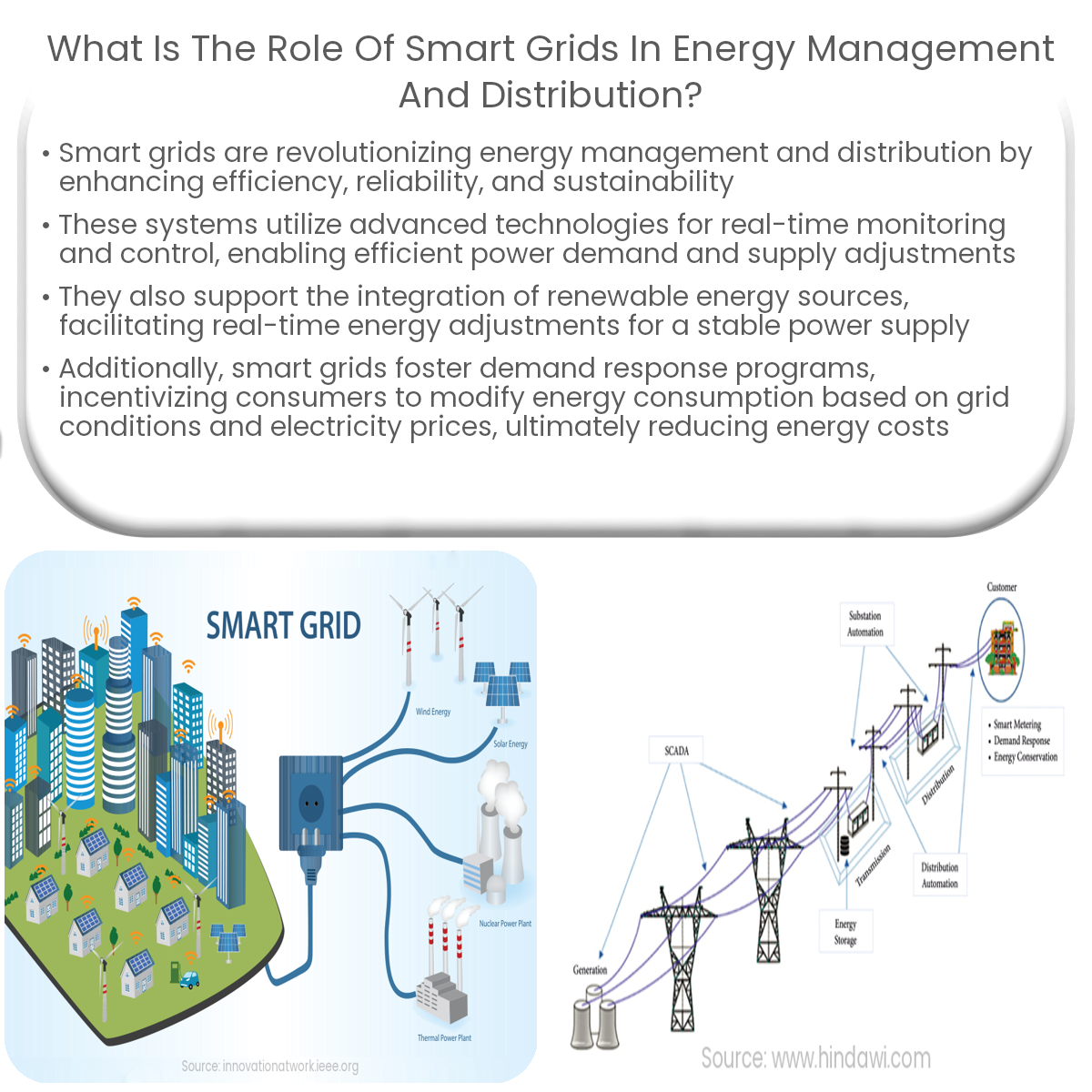
Smart grids improve energy management and distribution by enabling real-time monitoring, integrating renewables, and facilitating demand response.
Smart Grids: Revolutionizing Energy Management and Distribution
Smart grids play a critical role in modernizing energy management and distribution, paving the way for more efficient, reliable, and sustainable energy systems. Integrating advanced communication and control technologies, smart grids enable real-time monitoring, analysis, and adjustments to power demand and supply.
Improved Efficiency and Reliability
One of the main advantages of smart grids is their ability to improve the efficiency and reliability of power distribution. By actively monitoring energy usage, smart grids can identify and reduce energy losses, optimize power generation and distribution, and minimize the risk of outages. Additionally, they facilitate the integration of renewable energy sources and energy storage systems, promoting greener and more resilient power systems.
Integration of Renewable Energy
Smart grids play an essential role in incorporating renewable energy sources, such as solar and wind power, into the grid. They can manage the variable nature of these sources by adjusting energy distribution in real-time, ensuring a stable power supply. Moreover, smart grids support the deployment of distributed energy resources, allowing consumers to generate, store, and sell excess power back to the grid, thereby encouraging the adoption of renewable energy technologies.
Real-time Energy Management
By using advanced sensors, communication systems, and data analytics, smart grids enable real-time monitoring and control of energy consumption. This information empowers consumers to make informed decisions about their energy usage, reducing overall demand and lowering energy costs. Utilities can also utilize this data to efficiently manage power generation, distribution, and pricing, resulting in improved grid operations and reduced operational costs.
Demand Response Programs
Smart grids facilitate the implementation of demand response programs, which incentivize consumers to adjust their energy consumption based on grid conditions and electricity prices. These programs help stabilize the grid, particularly during peak demand periods, by encouraging users to shift their energy usage to off-peak times. Consequently, this reduces the need for additional power generation infrastructure and lowers overall energy costs for both utilities and consumers.
Conclusion
Smart grids play a pivotal role in the future of energy management and distribution, providing enhanced efficiency, reliability, and sustainability in power systems. By integrating advanced technologies and promoting renewable energy adoption, smart grids contribute to the development of greener, more resilient, and cost-effective energy systems for the benefit of both utilities and consumers.