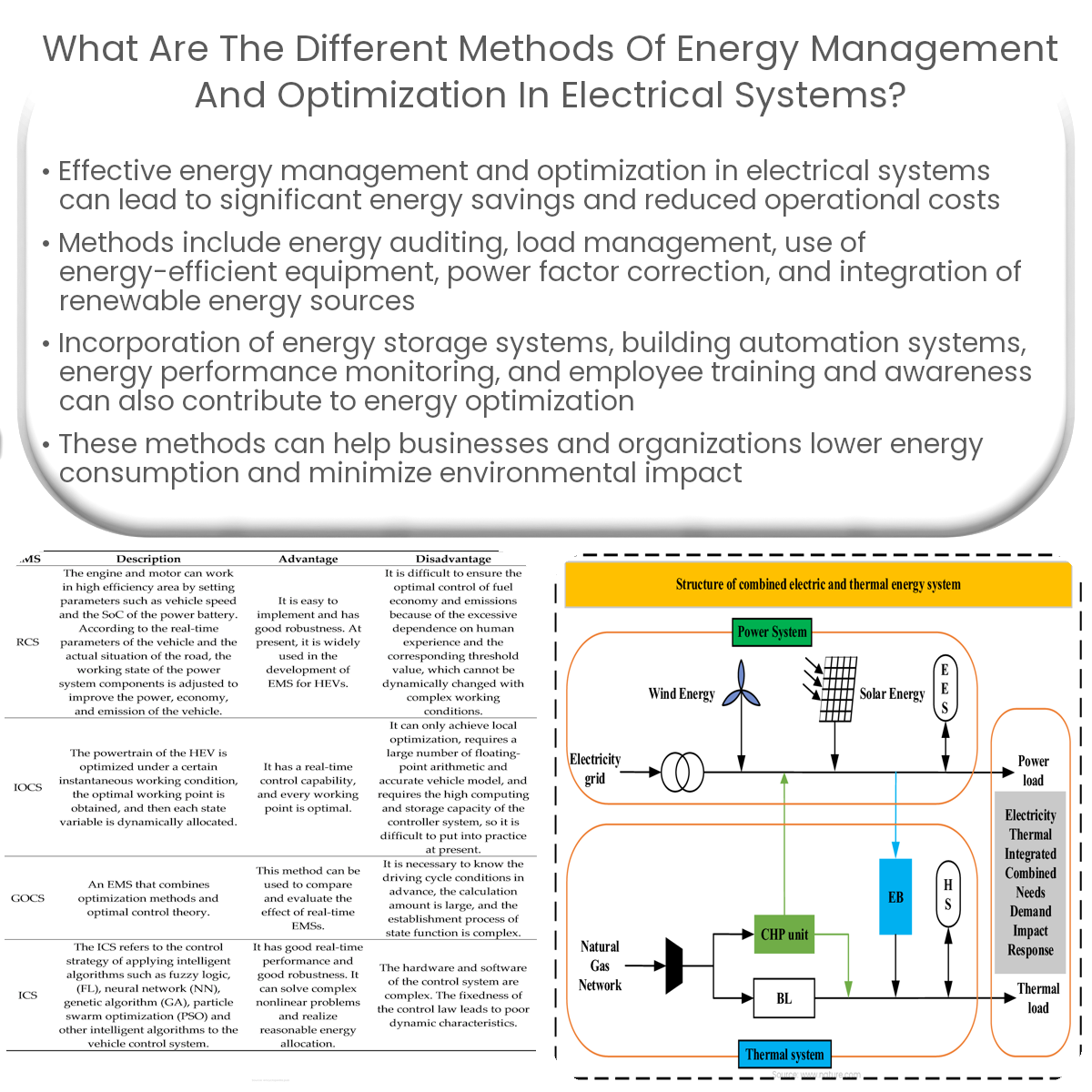
Energy management methods include energy auditing, load management, using energy-efficient equipment, power factor correction, and renewable integration.
Energy Management and Optimization Methods in Electrical Systems
Effective energy management and optimization in electrical systems can lead to significant energy savings, reduced operational costs, and minimized environmental impact. This article highlights the different methods employed in energy management and optimization:
1. Energy Auditing
Energy auditing involves assessing the energy consumption of a facility, identifying energy-saving opportunities, and recommending appropriate measures. By evaluating the energy performance of equipment and systems, it provides a foundation for optimizing energy use.
2. Load Management
Load management involves controlling and optimizing the electrical load in a system to minimize peak demand and reduce energy costs. Techniques include load scheduling, peak shaving, and demand response programs.
3. Energy-Efficient Equipment
Using energy-efficient equipment, such as high-efficiency motors, lighting, and HVAC systems, can significantly reduce energy consumption. Regular maintenance and timely replacement of outdated equipment are crucial for maintaining efficiency.
4. Power Factor Correction
Improving the power factor of electrical systems can result in reduced energy losses and increased system efficiency. This can be achieved by installing capacitors or using other power factor correction methods.
5. Renewable Energy Integration
Incorporating renewable energy sources, such as solar panels or wind turbines, into electrical systems can help reduce reliance on non-renewable energy sources and decrease energy costs.
6. Energy Storage Systems
Energy storage systems, like batteries, can store excess energy during periods of low demand and discharge it during peak hours. This helps in managing peak loads and reducing energy costs.
7. Building Automation Systems
Building automation systems (BAS) enable centralized control and monitoring of electrical systems, optimizing energy consumption by automating various building functions, such as lighting, heating, and cooling.
8. Energy Performance Monitoring
Regular monitoring of energy consumption and system performance is essential for identifying inefficiencies, evaluating implemented measures, and ensuring continuous optimization.
9. Employee Training and Awareness
Training employees and promoting energy-saving behaviors can contribute to energy optimization. Encourage energy-efficient practices and provide regular feedback on energy performance.
By implementing these methods, businesses and organizations can optimize their electrical systems, resulting in lower energy consumption, reduced costs, and a smaller environmental footprint.