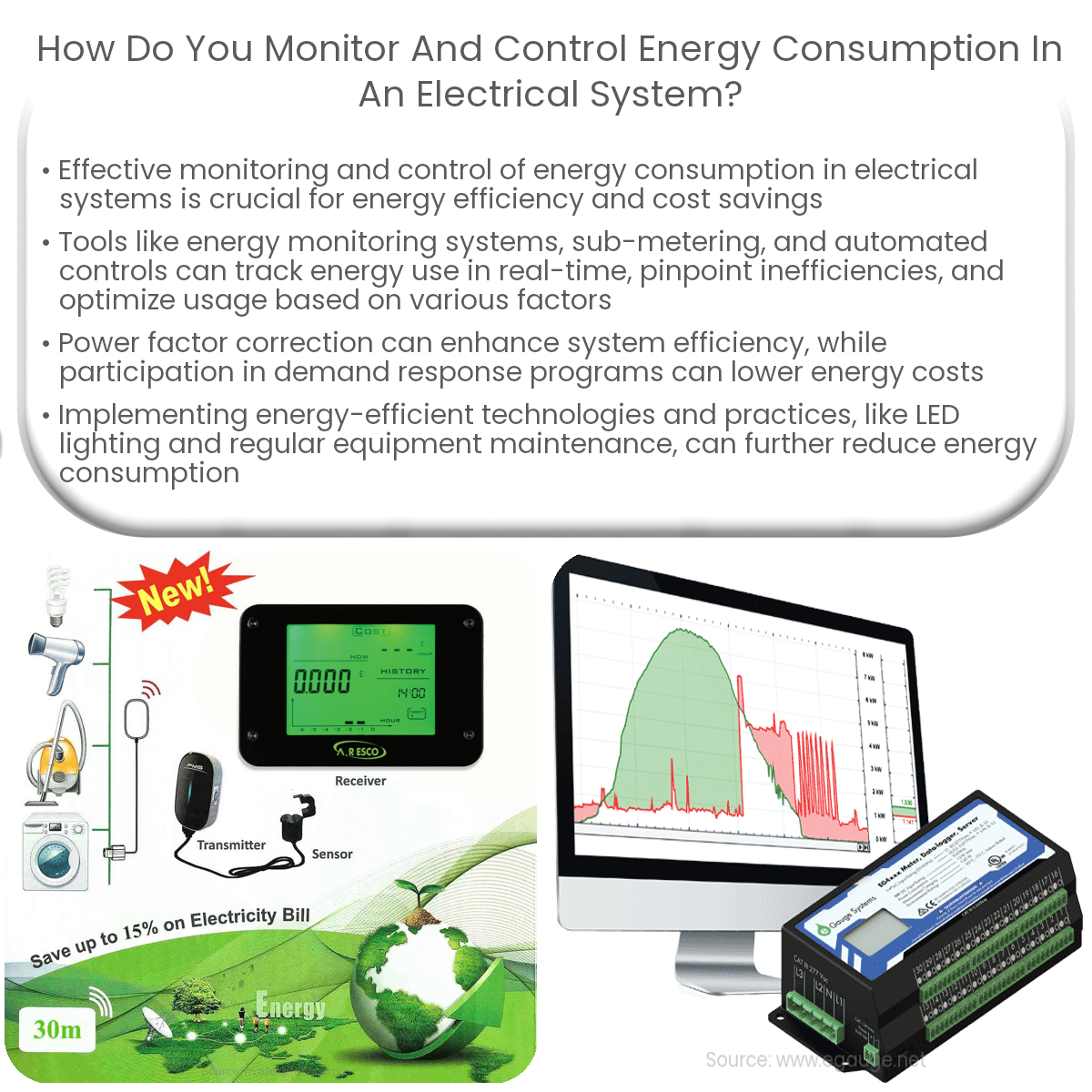
Monitor and control energy consumption by using energy monitoring systems, sub-metering, automated controls, power factor correction, and demand response programs.
Monitoring and Controlling Energy Consumption in Electrical Systems
Effective monitoring and control of energy consumption in electrical systems play a crucial role in achieving energy efficiency and cost savings. Here are some key methods and strategies to help you effectively monitor and control energy consumption in your electrical system.
Energy Monitoring Systems
Energy monitoring systems, such as energy management software and hardware, are essential for tracking energy consumption in real-time. These systems typically include sensors and meters that collect data on various parameters, such as voltage, current, and power factor. This data is then transmitted to a central monitoring station, where it is processed and analyzed to identify inefficiencies and potential cost savings.
Sub-metering
Sub-metering is the practice of installing individual energy meters on specific circuits or equipment within an electrical system. This enables more accurate tracking of energy consumption for different areas and devices, making it easier to identify inefficiencies and implement targeted energy-saving measures.
Automated Controls
Automated control systems, such as building management systems (BMS) or programmable logic controllers (PLCs), can be used to optimize energy consumption by adjusting equipment operation based on factors like occupancy, time of day, and environmental conditions. For example, lighting and HVAC systems can be programmed to turn off or reduce their output when a room is unoccupied.
Power Factor Correction
Improving the power factor of an electrical system can lead to reduced energy consumption and costs. Power factor correction devices, such as capacitors and reactors, can be installed to minimize reactive power and optimize the efficiency of the system.
Demand Response Programs
Participating in demand response programs offered by utility companies is another way to control energy consumption. These programs incentivize users to reduce their energy usage during peak demand periods, which can help in lowering overall energy costs and reducing stress on the grid.
Energy Efficiency Measures
Implementing energy-efficient technologies and practices, such as LED lighting, variable frequency drives, and regular equipment maintenance, can help in reducing energy consumption and improving overall system efficiency.
In conclusion, monitoring and controlling energy consumption in electrical systems require a combination of accurate data collection, advanced control technologies, and proactive energy management strategies. Implementing these measures can result in significant energy savings and contribute to a more sustainable and cost-effective electrical system.