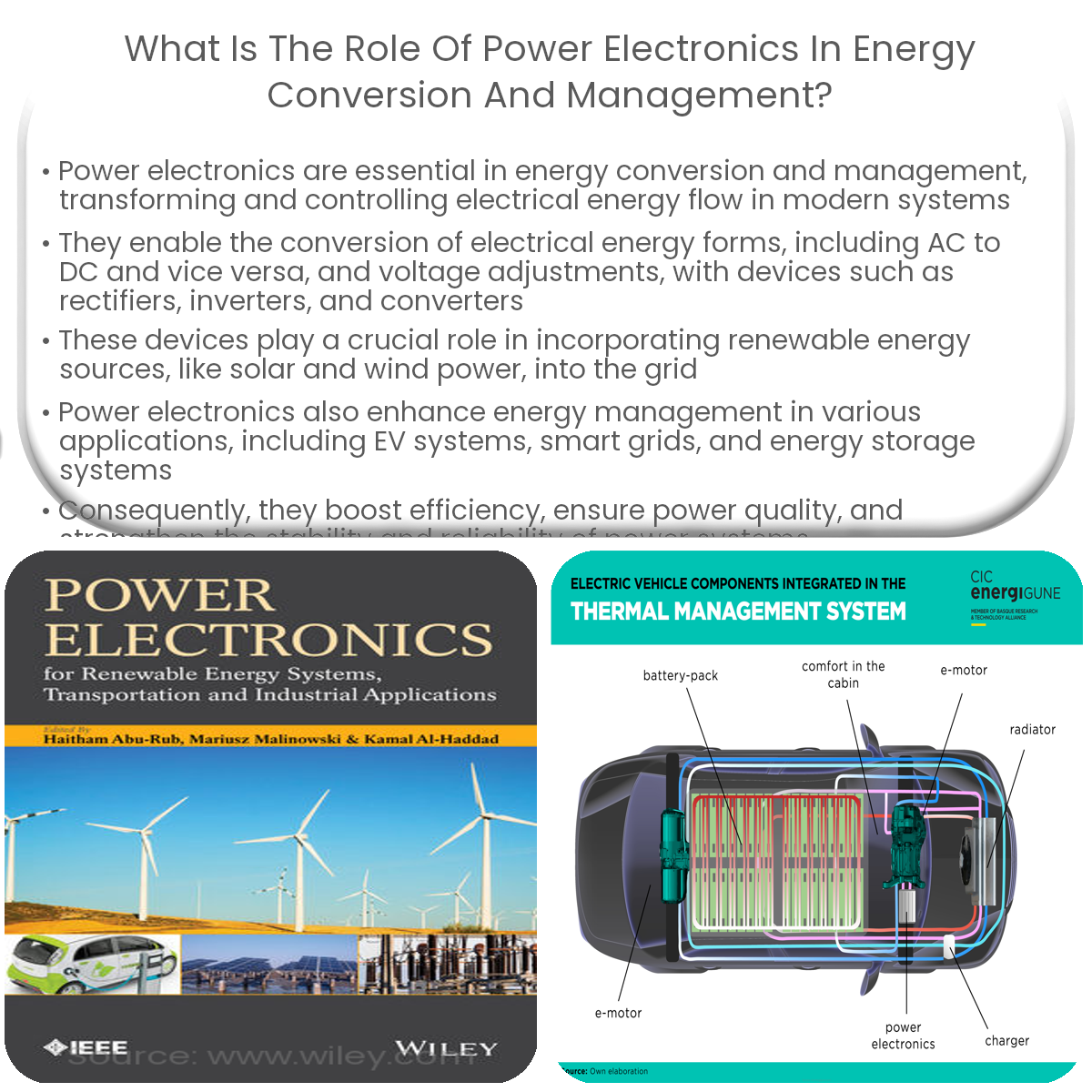
Power electronics play a crucial role in energy conversion and management by enabling efficient control and transformation of electrical energy.
Power Electronics in Energy Conversion and Management
Power electronics play a vital role in energy conversion and management, transforming and controlling the flow of electrical energy in modern electrical systems. It deals with the design and implementation of semiconductor devices, circuits, and systems that operate efficiently and reliably in different applications.
Role in Energy Conversion
Power electronics facilitate the conversion of electrical energy between various forms, such as alternating current (AC) to direct current (DC) or vice versa, and voltage levels. Some key components involved in this process include:
- Rectifiers – Convert AC to DC
- Inverters – Convert DC to AC
- DC-DC converters – Change DC voltage levels
- AC-AC converters – Control AC voltage levels and frequency
These devices are critical in the integration of renewable energy sources, like solar panels and wind turbines, which produce DC power or variable-frequency AC power, into the grid.
Role in Energy Management
Power electronics enable efficient energy management by controlling the flow of electrical power in various systems. They provide precise control, which is essential in applications such as:
- Motor drives and electric vehicle (EV) systems – Power electronics control motor speed, torque, and energy consumption, making EVs more efficient and reliable.
- Smart grids and microgrids – Power electronic devices help in managing the generation, distribution, and consumption of electrical energy, enhancing grid stability and flexibility.
- Energy storage systems – They regulate the charging and discharging of energy storage devices like batteries and supercapacitors, optimizing their performance and life.
- Power quality improvement – Power electronic devices, such as active filters and voltage regulators, address power quality issues like harmonics, voltage fluctuations, and frequency deviations.
In conclusion, power electronics play a critical role in modern electrical systems by enabling efficient energy conversion and management. They are key to integrating renewable energy sources, improving the efficiency of electrical devices, and ensuring the stability and reliability of power systems.