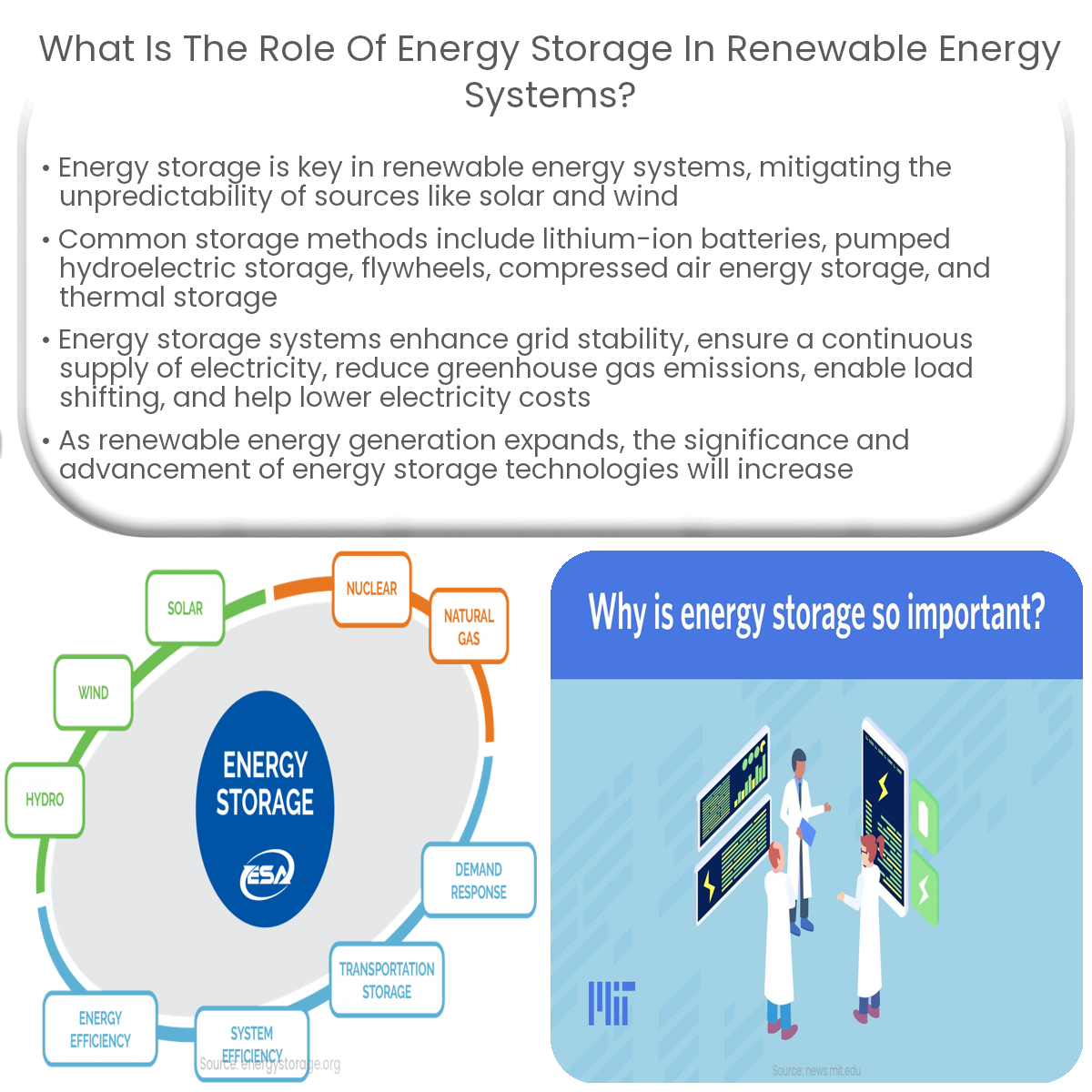
Energy storage is vital in renewable energy systems for ensuring reliable power supply, balancing grid stability, and addressing intermittent generation.
Energy Storage in Renewable Energy Systems
Energy storage plays a crucial role in renewable energy systems by ensuring a reliable and consistent supply of electricity, addressing the intermittency and unpredictability of renewable sources such as solar and wind.
Types of Energy Storage
- Batteries: Rechargeable batteries, particularly lithium-ion, are the most common energy storage solution for residential and commercial renewable systems. They store excess energy produced by solar panels or wind turbines for later use.
- Pumped Hydro: Pumped hydroelectric storage is a large-scale energy storage solution that stores excess energy by pumping water uphill to a reservoir, which is later released through a turbine to generate electricity during periods of high demand.
- Flywheels: Flywheels store kinetic energy in a rotating mass, which can be converted back into electrical energy when required. This method is particularly useful for short-term storage and grid stabilization.
- Compressed Air: Compressed air energy storage (CAES) involves compressing air and storing it in underground caverns. The stored air is later released, driving a turbine to generate electricity.
- Thermal Storage: Thermal storage systems, such as molten salt, store excess energy as heat, which can be later used to generate steam and produce electricity.
Benefits of Energy Storage
- Grid Stability: Energy storage can help maintain the stability of electrical grids by providing power during peak demand periods and absorbing excess energy during periods of low demand.
- Reliability: Energy storage systems can provide backup power during outages, ensuring a continuous supply of electricity.
- Reduced Emissions: By enabling a higher penetration of renewable energy sources in the grid, energy storage can help reduce greenhouse gas emissions from fossil fuel-based power plants.
- Load Shifting: Energy storage allows for the storage of excess energy produced during off-peak periods, which can be used during peak demand times to reduce the need for additional power generation.
- Cost Savings: Energy storage can help lower electricity costs by reducing the need for additional power plants and transmission infrastructure.
Conclusion
Energy storage plays a vital role in the integration of renewable energy sources into power systems, providing a stable and reliable power supply. As renewable energy generation continues to grow, the importance of energy storage will increase, driving further advancements in storage technologies.