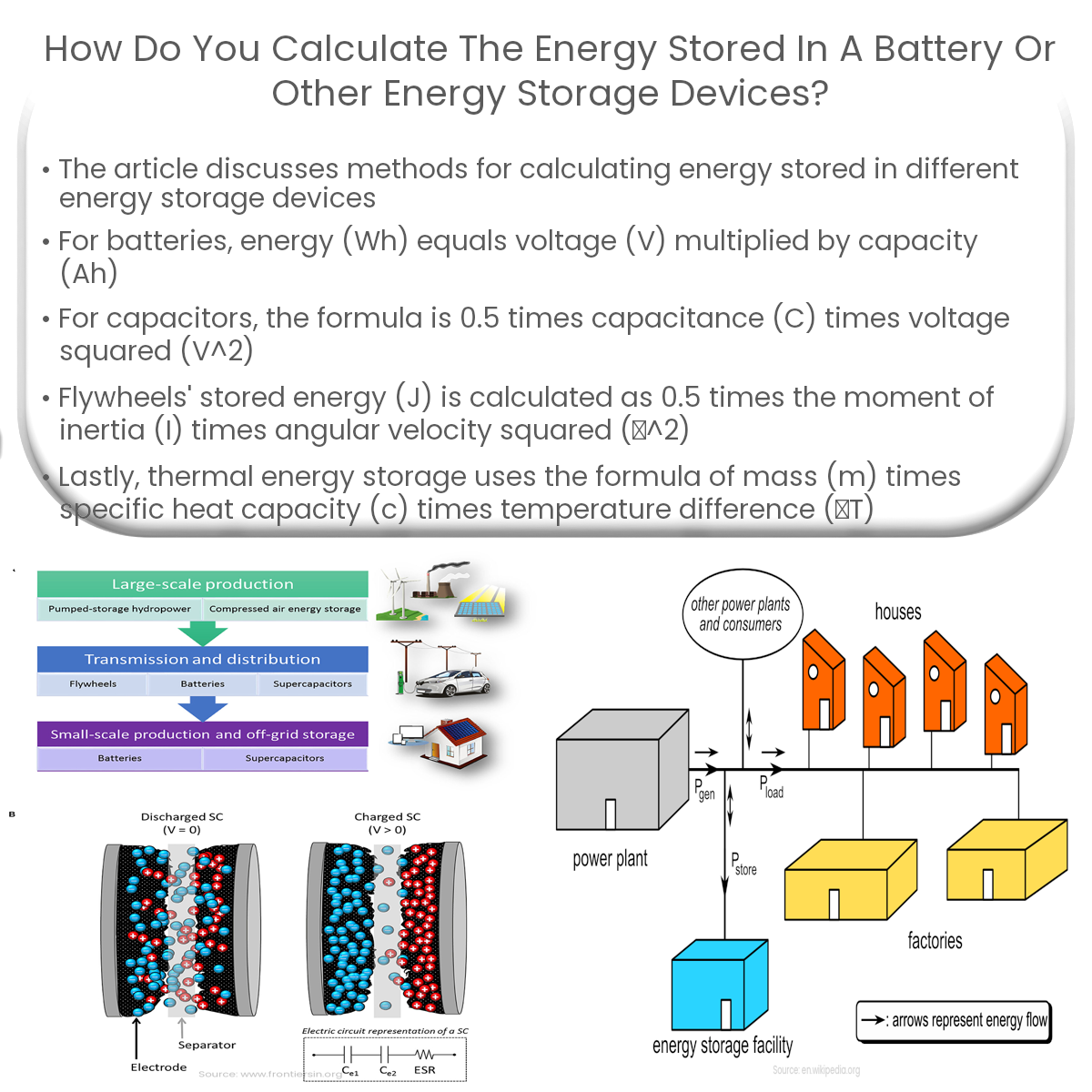
Energy stored can be calculated using specific formulas for batteries, capacitors, flywheels, and thermal storage systems based on their properties.
Calculating Energy Stored in Energy Storage Devices
Energy storage devices such as batteries, capacitors, and flywheels play a crucial role in managing and optimizing the use of energy resources. To understand the energy storage capacity of these devices, it is essential to know how to calculate the energy stored in them. In this article, we will explore different methods for calculating the energy stored in batteries and other storage devices.
Batteries
To calculate the energy stored in a battery, you need to know its voltage (V) and its ampere-hour (Ah) rating, which indicates the battery’s capacity. The formula to calculate the energy stored in a battery (in watt-hours) is:
Energy (Wh) = Voltage (V) × Capacity (Ah)
It is important to note that the actual usable energy may be less than the calculated value due to factors like the battery’s efficiency and discharge rate.
Capacitors
Capacitors store energy in the form of an electric field. To calculate the energy stored in a capacitor, you need to know the capacitance (C) in farads and the voltage (V) across the capacitor. The formula to calculate the energy stored in a capacitor (in joules) is:
Energy (J) = 0.5 × Capacitance (C) × Voltage2 (V2)
Flywheels
Flywheels store energy in the form of kinetic energy due to their rotation. To calculate the energy stored in a flywheel, you need to know its moment of inertia (I) and its angular velocity (ω) in radians per second. The formula to calculate the energy stored in a flywheel (in joules) is:
Energy (J) = 0.5 × Moment of Inertia (I) × Angular Velocity2 (ω2)
Thermal Energy Storage
Thermal energy storage systems store energy in the form of heat or cold. To calculate the energy stored in a thermal energy storage system, you need to know the specific heat capacity (c) of the storage medium, its mass (m), and the temperature difference (ΔT) between the storage medium and the environment. The formula to calculate the energy stored in a thermal energy storage system (in joules) is:
Energy (J) = Mass (m) × Specific Heat Capacity (c) × Temperature Difference (ΔT)
In summary, calculating the energy stored in energy storage devices involves understanding the specific characteristics of the storage device and applying the appropriate formulas. This information can help in designing and optimizing energy systems for various applications.